Mississippi Titles After a Private Sale
Buying or selling an ATV or UTV privately in Mississippi can feel like navigating a maze blindfolded, especially when it comes to getting that all-important title transferred. Many folks assume a simple handshake and cash transaction are enough, only to find themselves stuck later, unable to prove ownership or facing headaches with state officials. This guide is here to untangle the complexities of obtaining a Mississippi title for your off-road machine after a private sale, ensuring you understand every step and avoid common pitfalls.
The Importance of a Proper Bill of Sale in Mississippi Private Sales
When you're dealing with a private sale of an ATV or UTV in Mississippi, whether you're the buyer or the seller, the bill of sale isn't just a formality—it's the absolute backbone of the entire transaction. Without a properly executed, detailed bill of sale, you're essentially operating on faith, and that's a risky place to be when hundreds or thousands of dollars are on the line, not to mention your legal ownership. This document serves as undeniable proof that the transfer of ownership occurred, outlining the terms and protecting both parties from potential disputes down the road. It's the paper trail that validates your purchase or sale, and without it, you might find yourself hitting a dead end when you try to get your machine titled.
What a Mississippi Bill of Sale Must Include
A truly effective bill of sale for an off-road machine in Mississippi needs to be comprehensive. It’s not just a scrap of paper saying "I sold this ATV." It needs to clearly identify the machine, the parties involved, and the financial specifics of the transaction. Think of it as the complete story of how that ATV or UTV moved from one owner to another.
First and foremost, it must contain the full legal names, addresses, and contact information for both the buyer and the seller. This establishes who was involved. Then, the description of the ATV or UTV itself needs to be precise. This means including the make, model, year, and crucially, the Vehicle Identification Number (VIN) or serial number. This unique identifier is what ties the document directly to that specific machine, leaving no room for ambiguity. You'd be surprised how many folks forget to check that VIN against the actual machine! The sale price, date of sale, and the method of payment should also be clearly stated. Was it cash? Check? A combination? This detail prevents disagreements about what was actually paid. Any specific conditions of the sale, such as "as-is" clauses, should also be included. For those who aren't comfortable drafting legal documents from scratch, platforms like LawDepot offer templates that can help ensure all these critical details are covered, making the process much smoother and more professional.
Why You Need More Than Just a Handshake
In the South, a handshake can still mean a lot, but when it comes to a significant purchase like an ATV or UTV, it simply doesn't hold up in the eyes of the law or the county tax collector. Relying solely on a verbal agreement leaves both the buyer and the seller vulnerable. For the buyer, without a solid bill of sale, proving you actually own the machine can be incredibly difficult if the seller later disputes the sale or if there's an issue with a lien that wasn't disclosed. You'll need that documentation when you go to your county tax collector's office to apply for your new title.
For the seller, a lack of documentation means you could potentially be held liable for something that happens with the machine after you've sold it. What if the buyer gets into an accident? Without proof of sale, you might find yourself in a sticky situation, trying to prove you no longer own the machine. A robust bill of sale clearly delineates the moment ownership transferred, severing your legal ties to the machine. It’s about protecting your assets and your peace of mind. Plus, if the buyer never gets the machine titled in their name, that machine might still show up in records associated with you, potentially causing headaches with tax or liability issues.
Steps for the Buyer to Get a Title After a Private Sale
So, you've just bought a shiny (or mud-caked, depending on your preference!) ATV or UTV from a private seller in Mississippi. Congratulations! Now comes the critical next step: getting that machine titled in your name. This isn't just a suggestion; [ATVs Made After July 2025 Must Be Titled] by law. This process, while seemingly straightforward, has specific requirements and timelines you need to adhere to, or you could face delays and unnecessary complications. It's not like buying a used bicycle; there's a clear process set out by the state to ensure proper ownership is recorded.
Gathering Your Documents for Titling
Before you even think about heading to the county tax collector’s office, you need to have your ducks in a row. The most important document you’ll need from the seller is a properly executed bill of sale, as we just discussed. This needs to be complete and accurate, including all the machine's identifying information and the transaction details. If the machine is new enough to have previously been titled, you’ll also need the original title, signed over to you by the previous owner. Make absolutely sure the seller’s signature on the title matches their name as it appears on the title. Any discrepancies can cause a serious hiccup.
For machines that were new but never previously titled (perhaps it was an older model that sat in a dealer's inventory for a while or bought before titling was mandatory and then resold), you'll need the Manufacturer's Certificate of Origin (MCO). This is essentially the birth certificate for the machine. Without either an MCO or a properly endorsed title, getting your new title becomes significantly more complex, often requiring a title bond. You’ll also need valid identification for yourself, proof of your Mississippi residency, and the funds for the various fees and taxes. Make copies of everything for your records before you hand over the originals.
Visiting Your County Tax Collector
Once you've got all your documents in hand, your next stop is your local county tax collector's office. This is where the magic happens – or where you find out if you missed a step! When you arrive, be prepared to present all the documents you've gathered. The clerk will review your bill of sale, the previous title (or MCO), and your identification. They will then help you fill out the necessary application forms for your new title.
This is also the point where you'll pay your [Mississippi Sales Tax at 7 Percent] on the purchase price of the machine, as well as the [Mississippi Title Fee of $9]. Don't be surprised by the sales tax, it's a significant part of the cost of buying a machine in the state. The tax collector's office is the official gateway for these transactions, so patience and politeness go a long way. They're there to help, but they also have strict rules to follow. If you have any questions or uncertainties about your paperwork, it’s best to ask them directly during your visit. They can offer specific guidance based on your county's procedures.
Understanding the 30-Day Window
One crucial detail many private buyers overlook is the timeline for titling their new machine. Mississippi law stipulates that you have a [Mississippi's 30-Day Application Window] from the date of purchase to apply for your title. This isn't just a suggestion; it's a legal requirement. Missing this deadline can lead to penalties, typically in the form of late fees added to your title application cost. While these fees might not break the bank, they are an unnecessary expense that can be easily avoided by being proactive.
This 30-day window is in place to ensure a timely and accurate transfer of ownership records. The state wants to know who legally owns which machine, and a prompt titling process helps maintain clear records. If you're a buyer, mark your calendar the day you complete the sale and make it a priority to visit the county tax collector. If you foresee any issues that might delay your application, such as waiting for a crucial document from the seller, communicate promptly with the seller and, if necessary, with your county tax collector's office. Proactivity within this 30-day period will save you from potential headaches and extra costs.
Responsibilities for the Seller in a Private Transaction
Selling your ATV or UTV privately in Mississippi isn't just about handing over the keys and collecting cash; it comes with its own set of responsibilities to ensure a smooth, legal, and hassle-free transfer of ownership. Many sellers, especially first-timers, might not fully realize what's required of them beyond agreeing on a price. However, understanding your obligations can save you from future liability and help your buyer complete their titling process without a hitch. A responsible seller ensures the buyer has everything they need, making for a positive transaction for everyone involved.
Providing Necessary Paperwork
As the seller, your primary responsibility is to furnish the buyer with all the necessary paperwork to legally transfer ownership. This begins, of course, with a well-drafted and signed bill of sale, which protects both you and the buyer. Make sure it includes all the details previously mentioned: buyer and seller information, machine details (make, model, year, VIN), sale price, and date. If the machine was manufactured after July 2025, it must have a title. If it was manufactured before that date, it may have a title if a previous owner opted for a voluntary title. If it has one, you must provide the original Mississippi title, properly signed over to the new owner. This includes signing in the designated "seller" section, often on the back of the title. Ensure your signature matches your name exactly as it appears on the title.
If the machine is older and has never been titled, but you possess the original Manufacturer's Certificate of Origin (MCO), that document should be endorsed over to the new owner as well. For older machines that never had an MCO (perhaps it was lost or destroyed, or the machine predates easy MCO access), the bill of sale becomes even more critical. If you've financed the machine and a lien is recorded, you must also provide proof that the lien has been satisfied and released. This ensures the buyer receives a clear title, free of encumbrances. Providing clear, accurate, and complete paperwork is the seller’s biggest contribution to a smooth transaction.
Understanding Liens and How to Clear Them
A common hurdle in private ATV/UTV sales is dealing with a lien. If you financed your machine through a bank, credit union, or even a dealership, there's likely a lienholder recorded on your title. This means the lender legally owns a portion of your machine until the loan is fully paid off. As a seller, you cannot legally transfer a clear title to a buyer until that lien is satisfied and released. Attempting to do so without informing the buyer is not only unethical but could have serious legal repercussions.
Before you even list your machine for sale, check your title for any recorded liens. If there is one, you'll need to pay off the remaining balance of your loan. Once paid, the lender will typically send you a lien release document, or they will electronically notify the state that the lien has been satisfied. It’s crucial to obtain this official lien release from your lender. The buyer will need this document when they apply for their new title to prove that the machine is free and clear of any outstanding debt. If you don't have the physical lien release, the buyer could face significant delays or even be unable to title the machine until it's provided. This process ensures that the buyer truly owns the machine, rather than inheriting someone else's debt.
Protecting Yourself After the Sale
Once the money has changed hands and the machine is gone, many sellers breathe a sigh of relief and consider the deal done. However, there are a few extra steps you can take to fully protect yourself after the sale is complete. First, keep detailed records of the sale, including a copy of the bill of sale, the buyer's contact information, and any photographs you took of the machine at the time of sale. This documentation can be invaluable if any dispute arises later.
Consider submitting a "Notice of Sale" or similar document (if your county offers one, though Mississippi doesn't have a statewide mandatory one for ATVs like it does for cars) to your county tax collector's office. While not always required for ATVs, it's a proactive step that formally notifies the state that you no longer own the machine, removing your name from its associated records. This can protect you from future liability, such as if the new owner uses the machine illegally or fails to title it promptly. Additionally, if you had insurance on the machine, make sure to contact your insurance provider to cancel the policy or remove the ATV from it. Don't assume the policy automatically ends when the machine is sold. Taking these final steps ensures a clean break and protects your interests long after the new owner rides off into the sunset.
Navigating Special Circumstances in Private Sales
While a straightforward private sale usually involves a clear title and a detailed bill of sale, the real world often throws curveballs. You might encounter situations where the paperwork isn't quite so neat, or where crucial documents are missing. These special circumstances can make the titling process seem daunting, but thankfully, Mississippi has procedures in place to help navigate most of them. Understanding these options is key to successfully titling your ATV or UTV, even when the path isn't perfectly clear.
When the Original Title is Missing: The Title Bond Process
One of the most common and frustrating scenarios is buying an ATV or UTV from a private seller only to discover the original title is missing. Perhaps it was lost, stolen, or never properly transferred through previous owners. Don't despair, because Mississippi offers a solution: the title bond procedure. This process allows you to get a new title even without the original, providing a mechanism to prove ownership when the paper trail is broken.
Essentially, a title bond, often referred to as a "bonded title," is a type of surety bond that protects previous owners and the state against claims of prior undisclosed ownership or liens. To get a bonded title, you'll first need to apply for one through your county tax collector's office. They will guide you through the process, which typically involves obtaining a bond from a surety company for a value that is usually 1.5 times the machine's value. This bond acts as an assurance, stating that if someone else comes forward within a certain period (usually three years) with a legitimate claim of ownership, they can be compensated from the bond. Once the bond is in place, and all other requirements are met, the state can then issue you a new title, with the "bonded" notation. It's a lifesaver for situations where [How a Mississippi Title Bond Replaces Lost Paperwork].
Buying a Machine Without a Manufacturer's Certificate of Origin
The Manufacturer's Certificate of Origin (MCO) is, as mentioned, the "birth certificate" for an off-road machine. It’s the initial document proving it was legally produced and that it's now entering the chain of commerce. For machines that were new after the titling cutoff date, an MCO or a title is mandatory. But what if you’re buying an older machine, perhaps one built before titling became mandatory, and the seller never had an MCO or it's long since been lost? This is a situation where the bill of sale becomes even more critical.
In these cases, especially for older machines that may have changed hands many times, the county tax collector might accept a very detailed bill of sale, along with proof of previous ownership, like old registration documents or even sworn affidavits from previous owners. The more documentation you can provide that establishes a clear chain of custody, even without the MCO, the better your chances. The county office will likely want to verify the VIN or serial number to ensure the machine isn't stolen. Sometimes, they might still require a title bond, even without the MCO, if there's any doubt about the ownership history. It’s always best to call your specific county tax collector’s office ahead of time to discuss your unique situation if you're missing an MCO for an older machine.
Addressing Missing Serial Numbers or VIN Plates
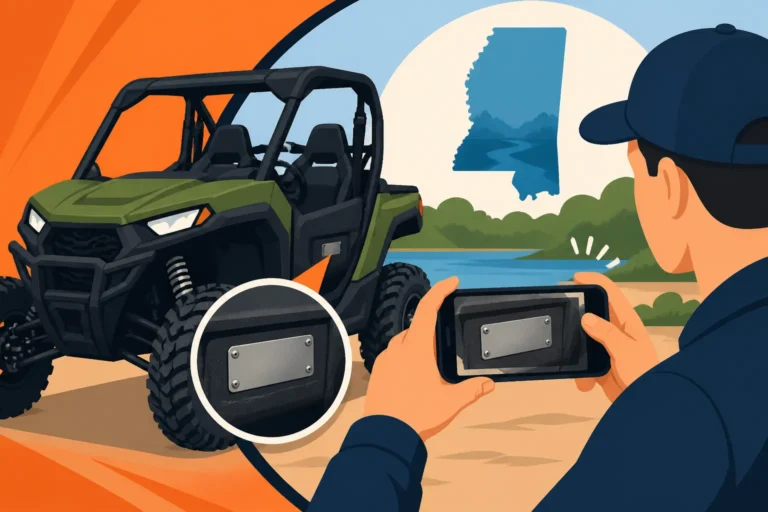
This is perhaps the trickiest situation a buyer can face in a private sale, and it should raise a significant red flag. The Vehicle Identification Number (VIN) or serial number is the unique identifier for every ATV or UTV. It’s absolutely crucial for titling, registration (where applicable), and proving ownership. If you encounter a machine where the VIN plate is missing, has been tampered with, or is unreadable, proceed with extreme caution.
Buying a machine with a compromised or missing VIN could mean you're inadvertently purchasing a stolen vehicle. In Mississippi, as in most states, it is illegal to possess or attempt to title a vehicle with an altered or missing VIN. If you find yourself in this situation, do not complete the purchase without thorough investigation. You should contact local law enforcement or your county tax collector’s office for guidance. They can often run a check on the machine based on other identifying features or help you understand the legal implications. In some very rare cases, if the machine can be definitively proven to be legitimate and the VIN was genuinely lost through wear and tear, there might be a process to apply for a state-issued VIN. However, this is a complex and lengthy process, and it’s usually reserved for extreme circumstances. For a private sale, a missing VIN should generally be a deal-breaker unless you have ironclad proof of the machine's legitimate history and are willing to undertake significant legal and administrative hurdles.
Costs and Fees Associated with Private Sale Titling
When you buy an ATV or UTV privately in Mississippi, the price you negotiate with the seller isn't the final cost of getting that machine legally in your name and ready to ride. There are several additional fees and taxes that you, as the buyer, will be responsible for paying to the state. Budgeting for these extra costs upfront is essential to avoid any surprises and ensure a smooth titling process. These costs are a standard part of vehicle ownership transfer and help fund state services.
The Standard Mississippi Title Fee
Let's start with the easiest one: the actual title fee. In Mississippi, the fee to obtain a title for your ATV or UTV is a modest [Mississippi Title Fee of $9]. This fee is consistent across all counties and is a flat rate regardless of the machine's value or type. It's a small price to pay for the official document that formally establishes your legal ownership of the off-road machine. When you visit your county tax collector's office, this will be one of the line items you'll pay, often alongside the sales tax. While it's a minor expense, it's still a mandatory one that needs to be factored into your overall budget for your new-to-you machine.
Mississippi's 7 Percent Sales Tax on Machines
This is typically the most significant additional cost you'll face when titling an ATV or UTV after a private sale. Mississippi levies a [Mississippi Sales Tax at 7 Percent] on the purchase price of off-road vehicles. This rate is specific to ATVs, UTVs, motorcycles, and boats, and it's higher than the sales tax rate for standard automobiles in the state. So, if you bought a machine for $5,000, you'll owe $350 in sales tax.
The sales tax is calculated on the agreed-upon purchase price as stated on your bill of sale. It's crucial that the bill of sale accurately reflects the actual transaction amount, as county tax collectors are accustomed to seeing fair market values. If the stated price seems unusually low, they might question it. This tax is due at the time you apply for your title at the county tax collector's office. It's not optional, and you won't get your title without paying it. Many new buyers often overlook this substantial cost, so it's vital to include it in your financial planning before finalizing a private purchase. Remember, this tax applies whether you buy from a dealer or a private individual.
Optional Fast Track Titling: When Speed Costs More
Sometimes, you need your title in a hurry. Maybe you're planning a trip soon, or you just prefer not to wait the standard several weeks for your title to arrive in the mail. For these situations, Mississippi offers an optional "Fast Track" titling service. This expedited service can significantly reduce the processing time, getting you your title much faster than the standard six-week waiting period.
The [Mississippi Fast Track Fee of $30] is an additional charge on top of your standard $9 title fee and any applicable sales tax. So, if you opt for the fast track, you'd pay $39 for the title itself, plus the 7 percent sales tax. This service is typically handled at a specific location, often referred to as the "Fast Track Title Counter" in Clinton, where applications are processed with priority. While the standard process can take [Mississippi Titles Take About Six Weeks], a fast track title can often be issued in a matter of days. It's a convenience that comes with an extra cost, but for those who value speed and immediate proof of ownership, it can be well worth the investment. Be sure to ask your county tax collector if they can facilitate fast track applications or if you need to travel to the designated fast track office.
| Cost Item | Amount/Rate | When to Pay | Where to Pay | Notes |
|---|---|---|---|---|
| Mississippi Title Fee | $9 | At time of title application | County Tax Collector's Office | Mandatory for all titled ATVs/UTVs. |
| Mississippi Sales Tax | 7% of purchase price | At time of title application | County Tax Collector's Office | Applies to the agreed-upon sale price from the bill of sale. |
| Mississippi Fast Track Fee | $30 (optional) | At time of title application | County Tax Collector's Office / Fast Track Counter | For expedited title processing. Added to the $9 title fee. |
| Lien Recording Fee | $5 (if applicable) | If financing a purchase | County Tax Collector's Office | Paid by the buyer if a lien is being placed on the title. |
| Title Bond | Varies | If original title is missing | Surety Company | Typically 1.5 times the machine's value. Required if applying for a bonded title. |
Common Pitfalls and How to Avoid Them in Private Sales
The allure of a good deal on a privately sold ATV or UTV can sometimes make buyers overlook critical details, leading to significant headaches down the road. While private sales offer flexibility and often better prices than dealerships, they also come with inherent risks. Being aware of these common pitfalls and knowing how to avoid them is crucial for a successful and secure transaction in Mississippi. It's about protecting your investment and ensuring you don't end up with a machine that's more trouble than it's worth.
Verifying Ownership and Machine History
This is perhaps the most critical step in a private sale: ensuring the person selling you the ATV or UTV is the legitimate owner and that the machine itself has a clean history. Many issues, from stolen machines to undisclosed liens, stem from a failure to verify these details. Always ask for the seller's identification and compare the name on their ID to the name on the title (if one exists). If the seller is not the person listed on the title, there needs to be a very clear and documented chain of ownership that explains why.
Beyond personal identification, you should thoroughly inspect the machine's Vehicle Identification Number (VIN) or serial number. Compare it against the VIN listed on the title, MCO, or bill of sale. If there's any discrepancy, walk away immediately. It's also wise to check if the machine has been reported stolen. While Mississippi doesn't have a single statewide database easily accessible to the public for ATV theft, you can sometimes ask local law enforcement to run a VIN check or use national databases if you have access. Some online services also offer VIN checks for a fee. Don't rush this part of the process; a thorough check here can save you immense grief later.
Avoiding Scams and Fraudulent Sales
Unfortunately, the private sale market can be a hunting ground for scammers. Being vigilant and recognizing red flags can protect you from becoming a victim. One of the biggest warning signs is a price that seems too good to be true. If a machine is significantly underpriced compared to similar models, there's likely a reason, and it's usually not a good one. Be wary of sellers who refuse to meet in person or insist on communicating only through email or text messages, especially if they are vague about their location or the machine's history.
Always inspect the machine in person before agreeing to purchase, and never send money sight unseen. Be cautious of sellers who demand payment through unusual methods like wire transfers, gift cards, or cryptocurrency, as these are often untraceable. If the seller pressures you to make a quick decision, claiming other buyers are waiting, take a step back. A legitimate seller will be transparent, willing to answer questions, and patient enough to let you do your due diligence. For the bill of sale, consider using a reputable template from a service like LawDepot to ensure all legal safeguards are in place, even if you are just meeting a seller in person. Trust your gut; if something feels off, it probably is.
What Happens if You Don't Title Your Machine
For machines manufactured after July 2025, titling your ATV or UTV is not just a good idea; it's a legal requirement in Mississippi. Even for older machines that may have been voluntarily titled, failing to transfer that title into your name can lead to a host of problems. The most immediate consequence is that you won't have official proof of ownership. This can make it impossible to sell the machine legally in the future, finance it, or even make an insurance claim if it's stolen or damaged.
Without a title in your name, the machine might still be officially associated with the previous owner. This could lead to them being wrongly implicated in incidents involving the machine, or you could face issues if there's an undisclosed lien that remains on the previous owner's record. Furthermore, if you are stopped by law enforcement and cannot provide proof of ownership, you could face questions, fines, or even have your machine impounded. While [Mississippi Does Not Register ATVs] for road use, the titling process is crucial for establishing and documenting legal ownership. Neglecting to title your machine within the 30-day window can also result in late fees when you eventually do get around to it. It’s a foundational step that, if skipped, can create a ripple effect of complications for years to come.
Disclaimer
This article is for general informational purposes only and does not constitute professional advice. Laws, prices and regulations vary by location and change over time. Consult a qualified professional for guidance on your specific situation.