State Parks Require a Helmet for Every Rider
Planning an ATV or UTV ride at a Mississippi state park? A helmet is part of the preparation for every rider, not just children or the person driving. The practical challenge is knowing what to bring, what else the park may require, and how to check that a particular park allows your machine before you load it.
What the helmet rule means at a Mississippi state park
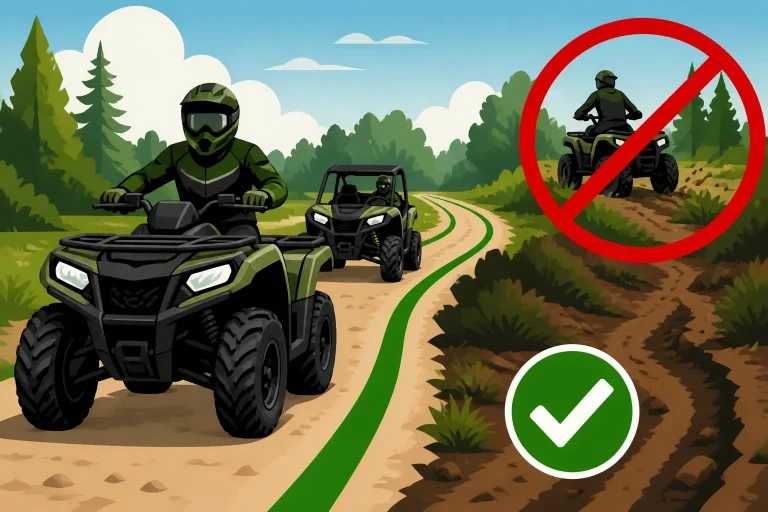
At a Mississippi state park that permits ATV or UTV use, plan for every person riding the machine to wear a helmet. That includes the driver and each passenger. Do not assume a helmet is needed only for young riders, or that a passenger can skip one because the ride is short or slow.
This is a park-use requirement, separate from the general rules that apply to riding on public land. A rule that sets a helmet requirement for riders under 16 does not necessarily describe the stricter conditions a state park may set for everyone entering its riding area. For the difference between age-based rules and park requirements, see [Mississippi Rules for Riders Under 16] and Mississippi State Park Helmet Requirements.
The requirement also does not mean that every Mississippi state park has ATV trails. Park access depends on the individual property and its rules. Check Which Mississippi State Parks Allow Machines before planning a trip; a helmet cannot make riding legal in a place that does not allow the machine.
Treat the helmet as riding gear, not as an optional extra to decide about at the gate. If a rider arrives without one, the group may have to leave that person out of the ride or postpone the outing. A park employee may also ask riders to follow other conditions, such as signing a waiver or meeting age and equipment rules. Requirements can differ by park, so confirm the full checklist with the park before travel.
| Before the ride | What to do |
|---|---|
| Every rider | Bring a properly fitting helmet and wear it while riding |
| Helmet acceptance | Confirm the park’s accepted helmet standard and condition requirements |
| Park access | Verify the specific park allows your ATV or UTV |
| Riders under 16 | Check age, supervision, and safety-certificate requirements |
| Park paperwork | Ask whether a waiver, identification, or other documents are required |
| Visiting riders | Check whether any park-specific pass or proof is needed |
A helmet requirement is only one part of permission to ride. A state park’s rules govern use inside its property, while trail access, passes, permits, and machine restrictions may have separate requirements. For the broader picture, read Mississippi State Park ATV Rules.
Choosing a helmet the park is likely to accept
A helmet that fits well and is intended for motorized riding is a sensible starting point, but do not rely on appearance alone. Check for the certification marking required by the park and make sure the helmet is designed for the type of riding you will do. Requirements can be more specific than “wear a helmet,” so ask the park which standard it accepts rather than guessing.
A good helmet should sit level on the head, feel snug without causing painful pressure, and stay in place when the rider moves their head. The chin strap should fasten securely. A helmet that rocks, slides over the eyes, or can be pulled off easily is not providing a dependable fit. If the helmet is for a child, fit it to that child rather than buying a larger one to grow into.
Inspect a helmet before each trip. Check the shell, liner, strap, buckle, and retention system for damage or loose parts. A helmet that has been in a significant impact may need replacement even if the outside looks acceptable. Follow the manufacturer’s instructions for care and replacement, and do not modify the helmet in a way that could affect its protection or the park’s acceptance of it.
If purchasing online, including through Amazon, verify the exact model and certification details rather than relying on a listing title or a seller’s general claim. Check the markings on the helmet when it arrives and confirm they match the park’s requirement. Keep enough time to exchange it if the size or certification is wrong; discovering a poor fit at the trailhead is too late.
Helmets for passengers
Passengers need helmets too. Before departure, check that every passenger has a helmet that fits securely and is suitable for riding. A spare helmet can help if someone forgets theirs, but it should not be treated as a universal solution: helmets fit differently, and sharing headgear that is damaged, poorly adjusted, or the wrong size can undermine the purpose of the rule.
The vehicle must also be designed to carry the passenger. A helmet does not make an extra passenger safe or permitted on a machine that has no passenger seat. Review Mississippi State Park Passenger Rules and the vehicle’s own instructions before bringing a second rider.
Check permits, waivers, and other park rules separately
A helmet is not a permit, and having a permit or pass does not automatically satisfy the park’s helmet requirement. Before setting out, confirm the rules in three separate areas: whether the property allows your machine, whether you need a pass or other authorization, and what safety conditions apply to each rider.
Start with the park itself. Ask whether ATVs, side-by-sides, or both are allowed, and whether access is limited to specific routes or areas. Do not assume that permission for one type of machine covers another. Width, passenger capacity, trail conditions, and equipment restrictions can all matter.
Next, ask about paperwork. A park may require a signed waiver, identification, or proof that a young rider meets applicable safety requirements. The steps can vary by park, so use the instructions for the property you plan to visit. Mississippi State Park Waiver Steps explains why it is worth handling this before arriving, while Mississippi State Park Age Proof covers the separate question of proving a rider’s age when requested.
Finally, check the rules for the machine and its equipment. Some park rules may cover spark arrestors, noise, passengers, or other operating conditions. A compliant helmet will not resolve a problem with a machine that fails an equipment check. See Mississippi State Park Spark Arrestor Rules for one example of a separate requirement riders may need to consider.
If you are visiting from another state, do not assume that a permit or sticker from home will meet Mississippi requirements. Find out what Mississippi requires for visitors and what the park itself requires. Mississippi Has No Sticker for a Visiting Machine and Mississippi Visitors From Alabama can help clarify the state-level side, but the park remains the best source for property-specific rules.
A practical way to avoid surprises is to call the park before loading up. Ask concise questions and write down the answers:
- Is this type of ATV or UTV allowed at this park?
- Which areas or trails can it use?
- Must every rider wear a helmet, and which standards are accepted?
- Are there requirements for children, passengers, or adult supervision?
- Is a waiver, pass, or proof of safety training required?
- Are there equipment, sound, width, or operating restrictions?
- Are the riding areas open, and have recent conditions changed access?
Rules and trail conditions can change. Confirm them close to the trip, especially after severe weather or before traveling a long distance. If staff give you a requirement that differs from a general summary, follow the current instructions for the park you are visiting.
A simple helmet check before leaving home
A short pre-trip check helps keep the helmet rule from becoming a last-minute problem. Do it for each rider, including children and passengers.
- Confirm the park allows the machine. Check the property’s ATV or UTV access rules and the areas where riding is permitted.
- Verify the helmet requirement. Ask which certification or helmet type the park accepts. Do not assume an ordinary bicycle helmet qualifies.
- Fit each helmet to its rider. Adjust the retention system and chin strap, and check that the helmet stays level and secure.
- Inspect for damage. Look over the shell, inner liner, strap, buckle, and other fastening parts. Replace a helmet that is damaged or has been involved in a serious impact.
- Pack required paperwork. Bring any pass, identification, waiver confirmation, or safety documentation the park requests.
- Recheck the rules and conditions. Confirm that access is still open and ask about any temporary restrictions before you head out.
Make the check routine rather than relying on memory. Keeping each rider’s properly fitted helmet with their riding gear can prevent a forgotten helmet from disrupting the trip. For families, check children’s fit again as they grow; a helmet that fitted well last season may no longer stay secure.
The key takeaway is straightforward: at a Mississippi state park where ATV or UTV riding is allowed, prepare for every rider to wear a helmet, and verify the park’s accepted standard before you go. Then check access, permits, waivers, and machine rules separately. That small amount of preparation makes it easier to arrive ready to ride—and avoids confusing a helmet requirement with permission to use a trail.
Disclaimer
This article is for general informational purposes only and does not constitute professional advice. Laws, prices and regulations vary by location and change over time. Consult a qualified professional for guidance on your specific situation.