Mississippi Filming Permits on Forest Land
If you’re planning to film an ATV or UTV ride in a Mississippi national forest, a camera in your hand does not automatically mean you need a permit. The details matter: whether the filming is personal or part of a production, what equipment and crew you bring, and whether your activity affects public access. Here’s how to check before you arrive.
When filming on Mississippi forest land may need approval
“Filming permit” can mean different things depending on the land manager and the production. A rider casually recording a trip for personal use is not necessarily in the same situation as a production that brings a crew, sets up lighting, blocks a trail, or uses forest land as a commercial location.
On national forest land, contact the relevant Forest Service office before filming if your plans involve organized production activity, special equipment or staging, exclusive use of an area, or changes to normal public access. The office can tell you whether your particular project needs a special-use authorization, another approval, or no permit. Requirements can depend on current rules and the details of the shoot, so don’t assume that a rule you heard about applies to every kind of video.
A video being posted online, earning advertising revenue, or promoting a business can raise questions, but those facts alone may not settle the permit question. The scale and impact of the activity matter too. Describe the project clearly when you ask, rather than relying on labels like “personal” or “commercial.”
| Planned activity | What to check before filming |
|---|---|
| Recording your own ride with a phone or small camera | Ask whether ordinary recreational recording is allowed in the area and follow all trail rules |
| Bringing a production crew, support vehicles, or substantial equipment | Ask the Forest Service whether a permit or other authorization is required |
| Setting up lights, staging, props, or a fixed filming area | Get written direction before setting up |
| Filming in a way that could block a trail or affect other visitors | Ask about location approval, timing, and access conditions |
| Using a drone | Check both Forest Service restrictions and aviation requirements before flying |
| Filming for a paid service, guided ride, or organized event | Ask about filming authorization as well as rules for the underlying business or event |
A permit for filming, if required, is separate from permission to ride. A video shoot does not authorize an ATV or UTV to use a closed road, trail, or area. Mississippi does not have one statewide OHV registration sticker that serves as permission to ride on every public property. Check the access rules for the specific forest and route, including Mississippi National Forest OHV Passes and What a Mississippi Forest Pass Does Not Cover.
Personal recording versus an organized production
A practical way to assess your plans is to look at what you will bring and how you will use the site. One rider using a helmet camera while traveling on an open, designated route has a different footprint from a team bringing several vehicles, stands, lights, and a generator to film repeated takes.
Before the shoot, ask whether your plans involve any of these:
- A crew beyond the riders and passengers already using the trail
- Large or fixed equipment, props, lighting, or sound gear
- Support vehicles that need to travel or park off normal routes
- A reserved location, repeated takes, or an area temporarily cleared for filming
- A production schedule that could delay or redirect other visitors
- Filming connected to a paid service, promotional campaign, or organized event
These are reasons to contact the land manager, not a definitive checklist of permit triggers. The office can explain how the rules apply to your particular project. If you’re organizing a group ride as part of the filming, also ask whether event approval is needed; Mississippi Event Permits for a Ride covers the separate event question.
How to check with the right forest office
“Forest land” is not a single jurisdiction. Mississippi has national forest land, state-managed land, private timberland, and other properties, each with its own land manager and access conditions. First identify who manages the exact location where you plan to film. A public-looking road or trail may cross property with different rules along the way.
For a national forest location, contact the Forest Service office responsible for that area. If you’re not sure which office to call, use Which Forest Office to Call About Trail Access. Ask the office to confirm the land manager and whether the proposed filming location is open to the vehicles and activities you have in mind. A pass or an open trail does not, by itself, answer the filming-permit question.
When you contact the office, have a concise project description ready. Include:
- The forest, trail, road, or general location you want to use.
- Your proposed dates and the amount of time you expect to be there.
- The number of riders, crew members, and vehicles.
- The type of equipment you plan to bring, including drones, lights, stands, or generators.
- Whether the video is personal, promotional, part of a paid production, or tied to an event or service.
- Whether you need to park, stage equipment, repeat takes, or limit access for any period.
- How the group will travel to and from the filming area.
Ask directly whether you need written authorization, what activities it would cover, and whether any conditions apply to location, timing, equipment, or group size. If the answer is that no permit is required, ask whether there are still restrictions on the planned setup. Keep the reply and any authorization with your production information.
Avoid treating a casual phone conversation as permission to make a more extensive shoot. If your plan changes—for example, you add a drone, more vehicles, a crew, or a staged scene—contact the office again. An approval for one activity or location may not cover another.
A good next step is to check the route itself. Forest roads and trails can have closures or restrictions that change access, and not every road shown on a map is open to ATV or UTV use. Review How to Read a Forest Service Trail Map and Checking Trail Conditions Before You Load the Trailer. If your project includes paid guiding or operating a riding service, ask about those rules separately; filming approval would not substitute for any required business authorization. See [Mississippi Commercial Guiding Rules].
Drones, trail access, and filming-day planning
A drone adds a separate set of checks. Approval to film on forest land does not automatically authorize a drone flight, and compliance with aviation rules does not automatically mean a flight is allowed at a particular forest location. Before bringing one, check with the land manager about local restrictions, closures, launch and landing locations, and whether your planned operation needs additional authorization. Also review applicable Federal Aviation Administration requirements.
Do not assume that a drone can fly over a trail because the operator is standing on a public road or because the video is for personal use. The location, airspace, wildlife concerns, nearby visitors, and temporary restrictions can all affect the plan. Filming With a Drone Over a Southern Forest is useful background, but confirm the current rules for your exact location before the shoot.
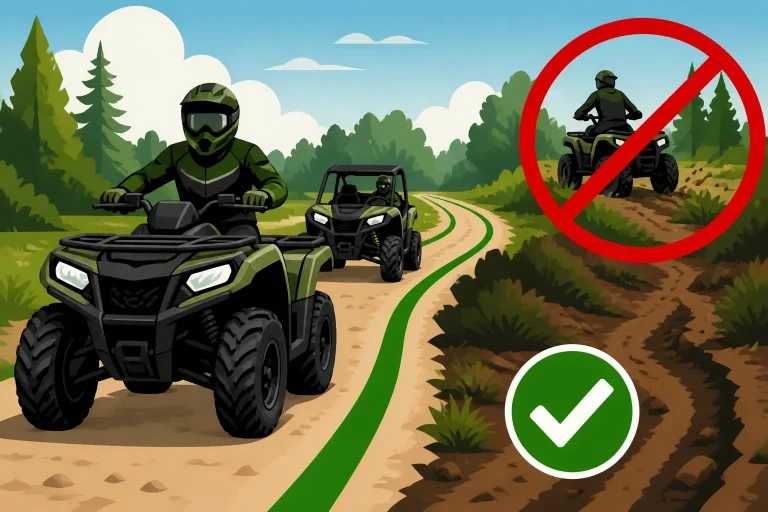
For an ATV or UTV production, the ride itself still needs to follow the forest’s access rules. Use only routes open to your machine, obey posted signs and barriers, and do not move a gate or route around a closure to get a shot. Forest access may also have vehicle limits, pass requirements, age rules, or other conditions. Check the relevant guidance on Mississippi Group Size on Forest Trails if you’re bringing several riders, and confirm the area’s requirements before each visit.
Build time into your plan for ordinary trail users. A national forest is shared public land, not a private set. Don’t block a route, pressure other visitors to leave, or stage equipment where it could create a hazard. If a desired shot would require closing or controlling access, explain that to the Forest Service in advance rather than improvising on site.
A simple filming-day checklist helps reduce avoidable problems:
- Carry any written permit or approval and follow its conditions.
- Bring proof of any required riding pass and keep it available.
- Confirm the route is open and suitable for the width and type of machine.
- Park and stage only where allowed; keep access points clear.
- Keep crew and equipment within the authorized area.
- Pause filming when other visitors need to pass.
- Do not fly a drone until both land-use and aviation requirements are checked.
- Leave the site as you found it and remove all equipment and waste.
If the forest office says your production needs a permit, ask about the application process, review time, insurance or site requirements, and any limitations on the number of people or vehicles. Don’t announce a location, accept bookings, or promise a production date until you understand whether approval is necessary and how long it may take. If filming is not approved, ask whether a smaller setup, different date, or alternative location would be acceptable.
The safest approach is to separate three questions: Are you allowed to ride there? Are you allowed to conduct this filming activity there? Are you allowed to use a drone there? Confirm each one with the right authority. A riding pass answers only the access question it covers; it does not automatically serve as a filming or drone permit.
Disclaimer
This article is for general informational purposes only and does not constitute professional advice. Laws, prices and regulations vary by location and change over time. Consult a qualified professional for guidance on your specific situation.