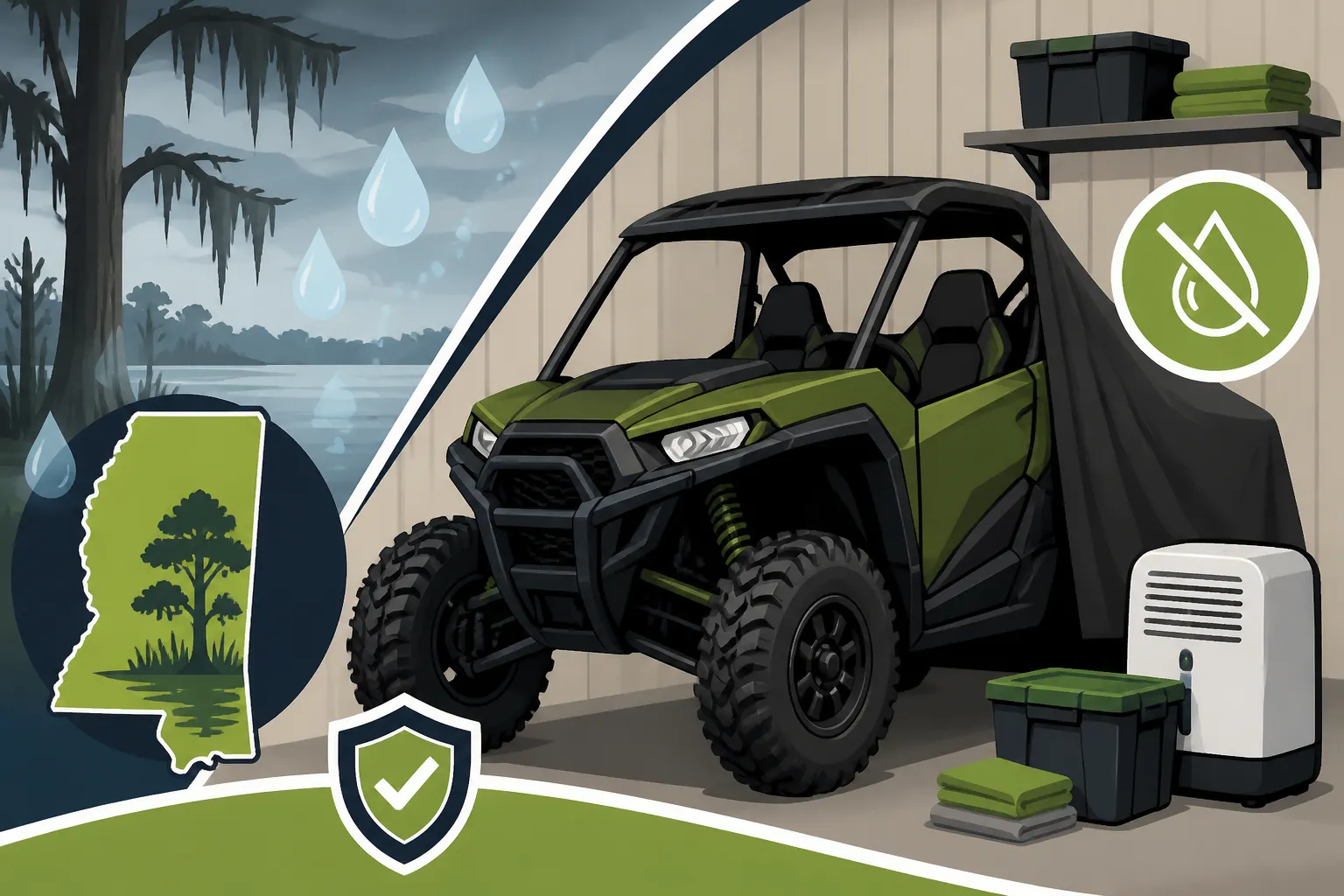
Storing a Machine Through a Humid Southern Winter
Oh, the dread of tucking away your beloved ATV or UTV for the colder months, especially here in the humid embrace of the South! Many of us in Mississippi know the struggle: you store your machine with the best intentions, only to pull it out months later to find rust spots, stiff cables, or even unwelcome critter nests. This guide is all about giving you the battle plan to conquer the Southern winter, ensuring your off-road companion emerges from storage ready for mud, trails, and adventure, not the mechanic's shop.
Understanding the Southern Winter Storage Challenge
Storing an ATV or UTV anywhere comes with its own set of concerns, but doing it in Mississippi adds a unique layer of complexity due to our famously humid climate. It's not just about cold; it's about the relentless moisture and fluctuating temperatures that can wreak havoc on your machine if not properly addressed. You might think "winter" means dry, crisp air, but here in the Magnolia State, it often means damp, foggy mornings and sporadic warm spells.
The Humidity Factor: A Silent Killer
Mississippi's humidity is truly a silent killer for stored machinery. Even in winter, the air often holds a significant amount of moisture, creating a prime environment for rust, corrosion, and the insidious growth of mold and mildew. Think about those steel components—your frame, suspension arms, brake rotors—they are all susceptible. A thin film of moisture, often invisible to the naked eye, can sit on these surfaces for weeks, slowly eating away at the protective coatings and leading to unsightly and damaging oxidation. Beyond rust, electrical connections can corrode, fuel systems can attract moisture leading to separation, and even rubber and plastic parts can degrade more quickly under persistent dampness. This isn't just about aesthetics; it directly impacts the longevity and safety of your machine.
Temperature Swings and Condensation Woes
Our Southern winters aren't like the consistently frigid North. We get those deceptive warm fronts in January, followed by a sharp drop in temperature overnight. These temperature swings are a major problem because they cause condensation. When warm, humid air comes into contact with colder surfaces—like the metal of your engine block, fuel tank, or frame—it cools rapidly, and the moisture in the air condenses into liquid water. This internal sweating can occur in your fuel tank, inside your engine, and even within your electrical housings. Condensation in the fuel tank can lead to water contamination, which spells big trouble for your carburetor or fuel injectors. In the engine, it can dilute your oil, compromising its lubricating properties and leading to premature wear when you finally fire it up in spring.
Critters and Unwanted Guests Seeking Shelter
Beyond the environmental factors, a stored ATV or UTV offers a tempting sanctuary for all sorts of small critters looking to escape the winter chill. Mice, rats, squirrels, and even insects like wasps and spiders see your machine as a perfect, cozy home. They'll chew through wiring, build nests in air boxes, exhaust pipes, and under seats, and leave droppings that are not only gross but can also be corrosive. Imagine pulling out your machine, eager for a ride, only to find a shredded wiring harness or a clogged air filter. It’s a common frustration for riders across Mississippi, and preventing it is a crucial part of winter storage. Taking proactive steps against these unwelcome tenants can save you a world of headaches and expensive repairs later on.
Essential Steps Before Winter Storage
Properly preparing your ATV or UTV for its winter slumber is paramount to ensuring it's ready to hit the trails come spring. Think of it as a pre-sleep routine for your machine – a few hours of effort now can save you days of frustration and potentially hundreds of dollars in repairs later. Don't skip these steps, especially with Mississippi's unique climate working against you.
Thorough Cleaning and Drying
Before anything else, give your machine the most thorough bath of its life. Caked-on mud, grime, and even dust hold moisture and can accelerate corrosion. Use a pressure washer carefully, avoiding direct blasts to sensitive areas like electrical components, bearings, and seals. Pay special attention to the underside, suspension components, and any nooks and crannies where mud likes to hide. Once clean, let your machine air dry completely. Better yet, use an air compressor or leaf blower to force water out of all those hidden spots. For an extra layer of protection against the humidity, consider applying a good quality protectant or wax to painted and plastic surfaces. Some riders even use a silicone spray on metal parts to create a barrier against moisture. Ensuring everything is bone-dry before storage is non-negotiable in our damp climate.
Fuel System Preparation for the Long Haul
The fuel system is particularly vulnerable during storage, especially with today's ethanol-blended gasoline, which readily absorbs moisture. There are two main schools of thought here:
- Fill the Tank: Top off your fuel tank with fresh, premium gasoline mixed with a high-quality fuel stabilizer. Filling the tank minimizes the air space, which in turn reduces the opportunity for condensation to form inside the tank. The stabilizer prevents the fuel from degrading and turning to varnish, which can clog carburetors and fuel injectors. Run the engine for about 10-15 minutes after adding the stabilizer to ensure it circulates throughout the entire fuel system, including the carburetor or injectors.
- Drain the Tank (for carbureted machines): If your machine is carbureted, some mechanics recommend draining the fuel tank and carburetor completely. This eliminates the possibility of stale fuel or varnish buildup. However, this leaves metal parts exposed to air and potential corrosion unless you spray a fogging oil into the empty tank and carburetor to coat the internals. For fuel-injected machines, draining isn't typically recommended due to the complexity of the system; stabilizing a full tank is usually the preferred method. Whichever method you choose, make sure you understand the implications for your specific machine.
Battery Maintenance is Non-Negotiable
A neglected battery is almost guaranteed to be dead or severely damaged after a few months of storage, especially if temperatures fluctuate. First, disconnect the battery terminals, starting with the negative cable first. Give the battery and terminals a good cleaning to remove any corrosion. Store the battery in a cool, dry place – not on a concrete floor, which some older beliefs claim drains batteries (though modern batteries are less susceptible to this, it's still good practice to place it on wood or a mat). The most critical step is to connect it to a smart trickle charger or battery maintainer. This device will monitor the battery's charge level and provide a small, continuous charge to keep it topped off, preventing sulfation and ensuring it's ready to go when you are. If you don't have a maintainer, you'll need to periodically charge the battery every few weeks with a standard charger.
Tire Care and Suspension Support
Don't forget your tires and suspension system. Over time, tires can develop flat spots if the machine sits in one position, especially if they're under-inflated. Inflate your tires to their maximum recommended pressure, which is usually higher than the riding pressure, to help prevent flat spotting. Better yet, if possible, lift the machine onto jack stands or blocks so the tires are off the ground. This takes all the weight off the tires and suspension components, preserving their integrity. While the machine is lifted, clean and lubricate all suspension pivot points, bushings, and linkages. A good waterproof grease applied to zerk fittings will protect against moisture intrusion and keep parts moving freely. Think about the impact of [Mississippi Mud and What It Does to a Machine] – any preventative maintenance on your suspension will pay off.
Choosing the Right Storage Environment
Once your ATV or UTV is meticulously prepped, the next crucial step is finding the ideal spot to keep it safe and sound through the Mississippi winter. The environment where you store your machine plays a massive role in how it fares against humidity, pests, and the elements. A little thought now can prevent a lot of heartache later.
Garage or Shed Considerations
Most riders opt for a garage or shed, and for good reason—they offer shelter from rain, direct sun, and a first line of defense against curious critters. However, not all garages or sheds are created equal, especially in our humid climate. A sealed, insulated garage with good airflow is vastly superior to a drafty, unsealed shed with a dirt floor. If you're using a shed, make sure it’s structurally sound and as airtight as possible to minimize moisture and pest entry. Check for gaps around doors, windows, and foundations. Consider adding a vapor barrier to the floor if it's dirt or gravel to prevent ground moisture from evaporating into the storage space. Adequate ventilation is also key; stagnant, humid air encourages mold and rust. Even in winter, opening a door or window for a few hours on a dry, sunny day can help air things out, but always ensure the machine is secure.
Covers and Moisture Barriers
Choosing the right cover is more nuanced than you might think. A heavy-duty, waterproof cover might seem like the best option, but in a humid environment like Mississippi, it can sometimes trap moisture underneath the cover, creating a miniature sauna where condensation thrives. Breathable covers made from materials like treated polyester or specific non-woven fabrics are often a better choice. These covers repel water from the outside but allow moisture vapor to escape from underneath, preventing that suffocating, damp environment. Avoid simply throwing a tarp over your machine; tarps are notorious for trapping moisture. If your storage space has a dirt or concrete floor, placing a heavy-duty plastic sheeting or tarp under the machine can act as an additional moisture barrier, preventing dampness from wicking up from the ground.
Humidity Control Solutions
If you're truly serious about protecting your investment from Mississippi's humidity, active humidity control might be worth considering for an enclosed space. A small dehumidifier in a garage or shed can make a remarkable difference, pulling excess moisture out of the air. While these require an electrical outlet and regular emptying (or a drain hose), they offer the best protection. For those without power, or for smaller, more contained spaces, desiccant packets (like silica gel or calcium chloride absorbents) can absorb moisture from the air. These won't be as effective as a powered dehumidifier, but they can help in a pinch, especially if placed near the machine's engine or in storage compartments. Remember, the goal is to keep the air around your machine as dry as possible to prevent rust and mildew.
Additional Winterization Tips and Legal Considerations
Beyond the core tasks, there are a few more steps you can take to ensure your ATV or UTV is completely ready for its winter nap. These details might seem minor, but they contribute significantly to the machine's longevity and your peace of mind. Also, it's a good time to think about the paperwork side of things, even when your machine is just sitting still.
Fluid Changes and Lubrication
Consider performing any scheduled fluid changes before storage, rather than waiting until spring. Old engine oil contains contaminants and acids that can become corrosive during long periods of inactivity. Fresh oil and a new filter provide clean lubrication from day one of your spring rides. Similarly, check your coolant levels and condition; make sure it's rated for freezing temperatures, even if Mississippi rarely sees prolonged hard freezes. Brake fluid is hygroscopic, meaning it absorbs moisture over time, so if it's due for a change, do it now. Lastly, don't forget to grease all moving parts, suspension linkages, and drive shafts. Use a good quality, waterproof grease to protect against our omnipresent humidity. This ensures that when you roll it out of storage, everything moves smoothly, and those vulnerable joints are protected.
Protecting Electronics and Wiring
Modern ATVs and UTVs are packed with sensitive electronics and intricate wiring harnesses, all of which are susceptible to moisture and critter damage. Before storage, it's a good idea to inspect visible wiring for any signs of wear or damage. You can use dielectric grease on electrical connections to create a waterproof barrier and prevent corrosion. For any exposed connectors or terminals, consider spraying them with a non-conductive, moisture-displacing lubricant. As mentioned earlier, mice and other rodents love to chew on wires, so ensuring your storage area is as pest-free as possible is key. Some riders even place dryer sheets or peppermint oil-soaked cotton balls around the machine, as critters supposedly dislike the smell, though effectiveness varies.
Legal and Insurance Aspects of Storage
While your machine is stored away, it's a good time to review your insurance policy. Even though [Mississippi Has No Insurance Mandate] for ATVs, many riders choose to carry comprehensive coverage. Make sure your policy covers theft and damage that could occur while the machine is stored, whether it's in your garage, a shed, or a rented storage unit. Theft, fire, or even damage from a falling tree can happen while your machine is not in use. Having proper [Mississippi Theft Coverage in a Shed] can save you from a huge financial loss. If you've financed your machine, your lender will almost certainly require full coverage.
This is also a good moment to ensure all your important documents are in order and safely stored, separately from the machine. You'll want to keep your [What Your Bill of Sale Must Show], title if you have one (remember, [Mississippi Does Not Register ATVs] but optional titling started in 2025), and insurance policy details somewhere secure. Should you ever need to make a claim, or even just verify ownership for something like [Mississippi Title Questions Collectors Hear], having these papers readily accessible is vital. You might even consider using a service like LawDepot to draft a simple inventory document, listing the machine's details, accessories, and condition before storage, especially if it's a high-value item or if you plan to sell it in the spring. This kind of documentation can be incredibly useful for insurance purposes or if you need to prove the machine's condition at a later date, providing a clear record that LawDepot can help you formalize.
Documenting Your Machine's Condition
Finally, before you button everything up for the winter, take detailed photographs or even a video of your ATV or UTV from all angles. Document its current condition, noting any existing scratches, dents, or accessory installations. This serves as a valuable record, not only for potential insurance claims but also if you decide to sell the machine later. It can prove the condition of the machine at the time of storage, protecting both you and a future buyer. Having a clear visual record, perhaps with a dated LawDepot inventory list, can be incredibly helpful for your peace of mind. These photos can be critical evidence if, for example, something happens to the machine while it’s stored, or if there’s a dispute about its condition when it comes time for [Selling a Titled Machine in Mississippi].
Remember, a little effort now translates into a lot of enjoyment later, ensuring your machine is ready for the call of the wild Mississippi trails come spring!
Disclaimer
This article is for general informational purposes only and does not constitute professional advice. Laws, prices and regulations vary by location and change over time. Consult a qualified professional for guidance on your specific situation.