400 Acres of Ponds and Pits
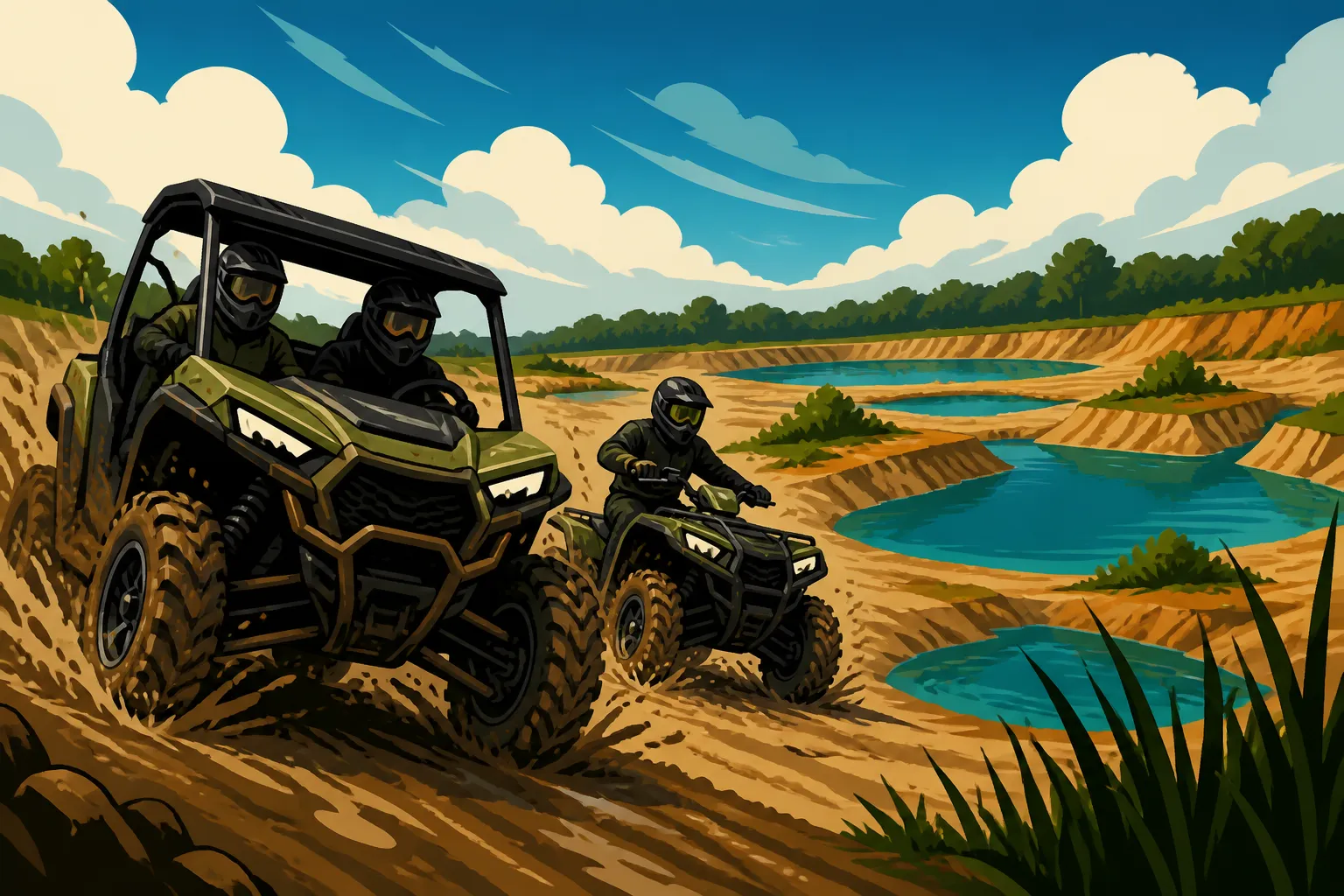
A riding area described as 400 acres of ponds and pits can sound like an all-day playground, but the acreage alone does not tell you which routes are open, how deep the water is, or whether your machine is suited to the terrain. This guide explains how to plan a Mississippi visit, assess the risks, and ride responsibly around ponds, mud, and changing ground.
What 400 Acres of Ponds and Pits Can Mean for a Ride
Understand the difference between property size and rideable terrain
A 400-acre property is not necessarily 400 acres of open trail. Some land may be underwater, wooded, muddy, reserved for particular activities, or closed temporarily. Even a large site can have a relatively small network of routes that are appropriate for your ATV or side-by-side.
Ponds and pits can also mean very different things from one part of a property to another. One water feature might be a shallow, firm-edged pond, while a nearby pit could have a steep bank, soft bottom, or sudden drop-off. From the seat of a machine, those distinctions may be hard to judge—especially if the water is cloudy or the edge is covered by grass.
Before you go, ask the property operator what the acreage includes and which areas are actually available for riding. Clarify whether water features are intended for riding through, are strictly scenery, or are off-limits. If the property has marked routes, ask whether the marks distinguish ordinary trails from mud holes, water crossings, or closed areas.
For a wider comparison of privately operated riding areas, see [Mississippi Private Mud Parks]. If you are exploring riding opportunities around the Perkinston area, [Mississippi Riding Near Perkinston] can help you think about the broader local riding context without assuming that every nearby property has the same access rules.
Treat ponds and pits as hazards, not invitations
A water-filled pit can look calm and shallow while hiding a steep bank, deep rut, submerged debris, or a soft bottom that will not support a machine. Ponds may have slick edges and sudden changes in depth. After rain, familiar ground can shift: a crossing that was manageable on a previous visit may become deeper, softer, or harder to exit.
Do not enter water simply because another rider did. They may know the bottom, have a different machine, or be taking a risk you would rather avoid. If there is no clear indication that a crossing is open and safe, stop and ask staff. Do not rely on a phone map or a view from the trail to establish water depth.
Plan a route that lets you turn around before reaching uncertain ground. Keep a safe distance from steep banks, avoid riding close to the edge of a pit, and never use a machine to test water that you cannot confidently assess. A tow strap or winch may help with some recoveries, but neither makes an unknown water crossing safe. If your group cannot explain how it would recover a stuck or damaged machine without putting someone in danger, choose a different route.
Plan Your Visit Before You Load the Trailer
Confirm access, rules, and conditions directly
Private riding areas can set their own entry procedures and rules. Before making the drive, confirm that the property is open to visitors, that your type and size of machine are permitted, and that the trails you want to ride are available. Ask about required waivers, age or passenger rules, sound or equipment restrictions, and whether the property has specific rules for riding near water.
Rain can change a mud park quickly. A route may be closed to protect the trail surface, prevent vehicles from getting stranded, or keep riders away from unsafe water. Ask about recent conditions and whether closures are in place. A social post, old review, or map pin may not reflect what staff will allow on the day you arrive.
A planning tool such as onX Offroad can help you organize your route and review surrounding roads, but it should not replace the property’s directions or permission. Confirm the entrance location and arrival instructions with the operator, particularly if you are unfamiliar with rural roads or arriving with a trailer. You can also review [Mississippi Trail Conditions After Rain] for practical considerations when wet weather changes the riding day.
| Before you go | What to confirm | Why it matters |
|---|---|---|
| Access | Open status, entry process, and where to check in | A mapped location does not guarantee permission to ride |
| Machine | Whether your ATV or UTV is allowed and any size limits | Narrow routes or soft ground may not suit every machine |
| Terrain | Which trails and water features are open | Ponds and pits can have changing depth and footing |
| Weather | Recent rain, closures, and expected conditions | Water levels and trail firmness can change quickly |
| Safety | Waivers, rider requirements, and emergency procedures | Each private property may set its own rules |
| Facilities | Parking, wash area, fuel, and restroom availability | Helps you prepare for a full day away from town |
Pack for recovery, heat, and a long day outdoors
Bring the essentials you would want even if your ride goes exactly to plan: drinking water, a charged phone, a first-aid kit, eye protection, sturdy footwear, and weather-appropriate clothing. Mississippi heat and humidity can make a demanding ride feel harder than expected. Keep water accessible rather than buried under gear, and take breaks before fatigue affects your judgment.
For recovery, carry equipment that matches your machine and know how to use it. A suitable tow point, recovery strap, gloves, and basic tools can be useful, but avoid attaching a strap to an unsuitable component or standing in the line of tension. If a machine is deeply stuck or partly submerged, pause and ask for help rather than escalating the situation with repeated throttle or an improvised pull.
If you use onX Offroad or another navigation app, download or prepare the information you need before entering an area with weak reception. Keep the property’s contact information and directions available separately. A digital map can support orientation, but private-property boundaries, posted signs, and staff instructions take priority over what appears on a screen.
Ride Ponds, Mud, and Pits With Good Judgment
Choose routes that match your machine and experience
A trail that is manageable on a light ATV may be difficult for a heavier side-by-side, especially when the ground is saturated. Wider machines also need more room to turn, and their weight can make recovery more complicated in soft mud. Ask the operator which routes are appropriate for your machine rather than choosing based only on the appearance of a trail entrance.
If you are new to deep mud, begin with a firm, clearly marked route and ride with someone experienced. Avoid following a group into a hole simply because their machines made it through. Their tires, ground clearance, snorkel setup, and recovery equipment may be different from yours. If you are specifically seeking mud-focused riding, [Mississippi Trails With Deep Mud] can help you consider the kinds of terrain and preparation that may be involved.
Use a steady pace and leave room between machines. Following too closely can leave you with no safe stopping distance if the rider ahead loses traction or stops unexpectedly. On narrow trails, agree on how your group will handle oncoming traffic and recovery stops. Keep the route clear where possible, and do not block access roads while discussing where to ride next.
Protect the machine and the property
Water and mud can reach parts of a machine that are expensive or difficult to repair. Avoid entering water above the depth recommended for your specific machine, and do not assume that an accessory such as a snorkel makes every crossing safe. Water can still enter through vulnerable components, and mud can conceal obstacles that damage tires, suspension, or the underside.
Riding around a pond can also damage its bank. Repeated wheel spin, abrupt turns, and cutting new paths can erode the edge and make it less safe for everyone. Stay on designated routes, respect barriers, and do not widen a trail to get around a muddy section. A detour that seems harmless can create a new hazard or damage the property.
After the ride, inspect the machine for packed mud, debris, and signs of water exposure. Follow the manufacturer’s maintenance guidance, and do not treat a rinse as a substitute for checking critical components. If the property has a wash area, confirm its location and use rules before you need it. [Mississippi Trails With Wash Stations] offers another useful planning angle for riders who want to know what cleanup options to ask about.
Make the Day Safer and More Enjoyable
Set group expectations before anyone starts riding
A group ride is easier to manage when everyone agrees on the plan. Decide who will lead, who will bring a basic first-aid kit, and how the group will handle a machine that breaks down. Tell a friend who is not riding where you are going and when you expect to check in. If the property has a check-in process or emergency instructions, make sure every rider knows them.
Keep the group together without crowding. At a junction, stop in a safe place and make sure the last rider knows which route to take. If someone wants to try a more challenging section, the rest of the group should not feel pressured to follow. A rider who chooses the easier route is making a sensible decision, not holding everyone back.
Private-property rules are part of the ride plan, not paperwork to skim at the gate. Read the waiver and posted signs, and ask staff about anything that is unclear. Rules concerning passengers, alcohol, pets, hours, and closed areas can differ between parks. For background on what to ask before arrival, see [Mississippi Private Park Waivers and Rules]. If alcohol policies matter to your group, check the operator’s specific instructions and the related guidance in [Mississippi Private Park Alcohol Rules].
Use maps as a planning aid, not permission
A digital map can help you understand the general area, mark a meeting point, or keep track of your planned route. onX Offroad may be useful for this sort of preparation, particularly when you want to keep route notes together before leaving home. Still, a map layer cannot tell you whether a pond edge is stable, whether a trail has flooded, or whether a private operator has closed a section.
If you use onX Offroad, save the information you expect to need before you arrive and keep your phone protected from water and impacts. Do not spend a difficult crossing looking down at a screen. Stop in a safe place to check directions, and follow the property’s signs and staff guidance if they conflict with a route you had planned.
When your visit is over, take all trash and gear with you, report any hazard or damaged trail to staff, and avoid leaving a recovery strap or other equipment behind. Thoughtful riding helps keep a private area usable and safer for the next group. Before your next trip, compare the day’s conditions with [Mississippi Trail Etiquette Locals Expect] and consider whether the weather calls for an easier route or a different riding plan.
Disclaimer
This article is for general informational purposes only and does not constitute professional advice. Laws, prices and regulations vary by location and change over time. Consult a qualified professional for guidance on your specific situation.