25 Miles at a City Park
A 25-mile trail network can sound like an easy day out, until you arrive unsure which routes are open, whether your machine fits, or how much riding your group can comfortably manage. Meridian’s city park offers a chance to explore off-road trails near town, but mileage alone doesn’t tell the whole story. This guide explains how to plan a safer, less frustrating visit.
What 25 Miles at a City Park Really Means
Trail mileage is not necessarily one continuous loop
A park described as having 25 miles of trails may include several connected routes, shorter loops, and sections that branch off from a main trail. That is different from a single 25-mile circuit. Your actual ride could be shorter or longer depending on which routes are open, how you navigate intersections, and whether you retrace part of your route to return to your starting point.
This matters especially if you are riding with children, newer riders, or anyone who tires easily. A map may make two trails look close together, but a slow pace, muddy ground, and frequent stops can turn a modest outing into a full day. Decide on a comfortable first loop instead of setting out with the goal of covering every mile.
Treat the mileage as a description of the overall trail network, not a promise that every mile is open or suitable for every machine. Before leaving, check current park information and any posted notices about closures, construction, weather, or permitted vehicle types. For context on the park and its place among local riding options, see [Meridian OHV Park's Acres in Mississippi] and [Mississippi Riding Near Meridian].
Match the park and route to your machine
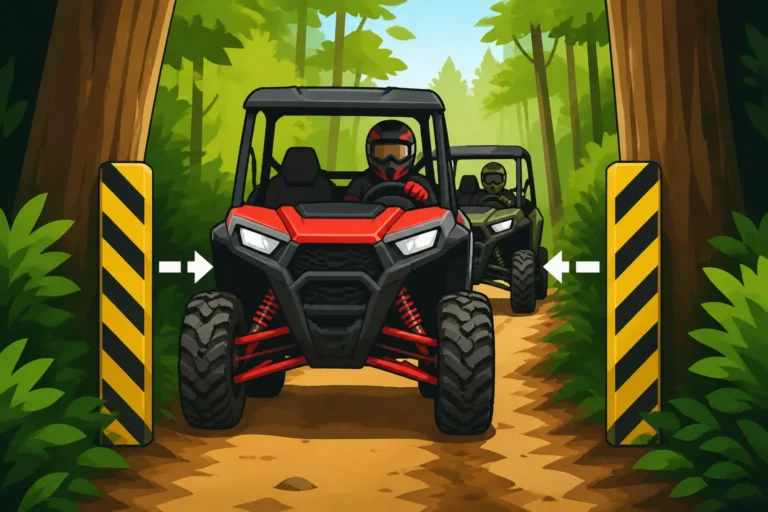
An ATV and a side-by-side do not always have the same access. A route that works for a narrow quad may be unsuitable for a wider UTV, and some trail systems set machine-width limits. Do not assume that a trail shown on a map is automatically appropriate for your vehicle.
Before you travel, confirm which types of off-road vehicles the park allows and whether any width or other equipment restrictions apply. This is a particularly important step if you have a full-size side-by-side, a youth quad, or a machine with accessories that make it wider than its original setup. The overview at [Mississippi Trails That Allow Side-by-Sides] can help frame the question, but the park’s own rules should guide your decision.
A mapping app such as onX Offroad can help you plan and keep track of a route, especially when several branches make it easy to lose your bearings. Still, a digital map is not a substitute for posted trail signs or current park guidance. Use it as a planning aid, and stop to check signs whenever the mapped route and the trail on the ground seem inconsistent.
How to Plan a Ride Without Overdoing It
Choose a realistic first route
Start with your group rather than with the mileage number. A confident rider on a familiar machine may cover ground quickly in dry conditions, while a family group making frequent stops may progress much more slowly. Give beginners time to get comfortable with the trail surface, turns, and other park users before choosing a longer route.
A practical plan is to identify a shorter starting loop and agree on a point where the group can reassess. If everyone is feeling good and the route is open, continue. If a rider is tired, a machine is acting up, or the ground is rougher than expected, turn back before the ride becomes stressful. This kind of flexible plan is more useful than promising everyone a full 25-mile day.
If you use onX Offroad or another mapping tool, save the route information you need before the ride and learn how to use it while you still have a reliable signal. Make sure the person leading knows how to return to the starting area, and have a clear regrouping plan if riders become separated. Apps can make navigation easier, but the group should not depend on a phone being available every moment.
Check conditions before loading the trailer
Rain can change an off-road route quickly. A trail that feels firm in dry weather may become slick, deeply rutted, or difficult to climb after a storm. Wet conditions can also make it harder to see rocks, roots, and washed-out sections. Check for weather-related closures and recent condition updates before setting out, rather than relying on a report from a previous weekend.
Do not interpret a temporary closure as a minor inconvenience to work around. A closed gate, barricade, or posted notice is a signal to stay off that section. Riding around a closure can damage the trail, put riders into an unsafe area, and create problems for the park and its neighbors. For a broader checklist, see [Mississippi Trail Conditions After Rain] and [Checking Trail Conditions Before You Load the Trailer].
Pack for a day that may take longer than planned. Bring drinking water, basic first-aid supplies, a charged phone, and the tools or recovery items that make sense for your machine and experience. In warm Mississippi weather, heat and humidity can wear riders down even when the trail itself is not especially difficult. Take breaks before people are exhausted, and do not let a tight schedule push the group into riding faster than conditions allow.
Riding Safely on a Shared Trail Network
Follow signs and ride at a pace your group can handle
At a city park, trails may have different surfaces, turns, and levels of challenge. A route that looks simple on a map can include uneven ground or a tight turn that is difficult for a less experienced rider. Follow posted signs, slow down where visibility is limited, and leave room between machines so the rider behind has time to react.
Do not assume that every rider on the trail is moving at the same speed or has the same experience. When meeting another group, slow down and give everyone space to pass safely. Keep children close enough to supervise, and agree in advance on what the group should do if someone stops or falls behind. A simple rule, such as stopping at major intersections until everyone catches up, can prevent a minor gap from turning into a confusing search.
A route-planning app may help you understand where a trail branches, but it cannot tell you how fast to ride or whether a particular section is appropriate for the least experienced person in your group. Use onX Offroad to support navigation if it suits your planning style, while letting trail signs, conditions, and the abilities of your riders determine the pace. For more preparation ideas, see [Mississippi Trail Etiquette Locals Expect] and [Mississippi Trail Difficulty Ratings].
Keep your machine and your group ready for the return trip
A machine problem is easier to manage near the starting point than several miles into a ride. Before unloading, check the basics: tires, controls, fuel, lights if needed for the conditions, and any gear that must be secured. Make sure helmets and protective equipment fit properly. If a machine has been modified, inspect accessories that could affect its width or handling.
Agree on a simple plan before the group starts. Decide who leads, who stays behind the least experienced rider, and where everyone will stop if the group gets separated. Keep the pace slow enough for the last rider to remain comfortable. If someone needs a break, stop somewhere safe rather than leaving them to catch up alone.
It also helps to keep your route modest enough that you have time and energy to return without rushing. A family that completes a shorter loop together may have a better visit than a group that pushes to cover every available mile. If you want to compare the park with other nearby options, [Mississippi ATV Trails: Where to Ride] and [Mississippi Weekend Riding Itineraries] offer useful next steps for planning a broader outing.
A Practical Visit Checklist
Confirm the details that can change
Before making the drive, verify park access, operating information, vehicle rules, and any temporary closures through the appropriate official park or local source. Do not rely on an old social media post or a map label as proof that a trail is open today. Conditions, access rules, and individual route availability can change.
Check whether your machine is permitted and whether any width restrictions apply, particularly if you are bringing a UTV. Confirm where visitors should enter or park, and find out whether the park requires a pass, waiver, or other paperwork. Avoid guessing about fees or requirements; check the park’s own information before you leave home.
Make sure the group understands the plan before the first machine moves. Pick a manageable starting route, identify a regrouping point, and leave enough time to get back without hurrying. If you are using onX Offroad, prepare the map ahead of time, but treat park signs and official updates as the authority for what is open and allowed.
| Before you go | What to check | Why it matters |
|---|---|---|
| Park access | Current operating information and closures | A listed trail network does not guarantee every route is open |
| Machine fit | Allowed vehicle types and any width limits | A route suitable for an ATV may not suit every UTV |
| Conditions | Recent rain, trail notices, and surface conditions | Mud and erosion can change difficulty and safe access |
| Group plan | Lead rider, regrouping points, and a turnaround option | Keeps newer riders from feeling pressured to continue |
| Navigation | Signs, a map, and a return route | Helps prevent confusion at trail junctions |
| Equipment | Helmets, water, basic supplies, and machine checks | Makes a delay or minor issue easier to handle |
The main advantage of a 25-mile network is choice: you can tailor the ride to your group rather than trying to cover a fixed distance. Confirm access before you go, start with a route that suits the least experienced rider, and leave room to adjust if the trail or weather is not what you expected. That is a better recipe for a relaxed day than treating every listed mile as a target.
Disclaimer
This article is for general informational purposes only and does not constitute professional advice. Laws, prices and regulations vary by location and change over time. Consult a qualified professional for guidance on your specific situation.