Mississippi Trails With Sand
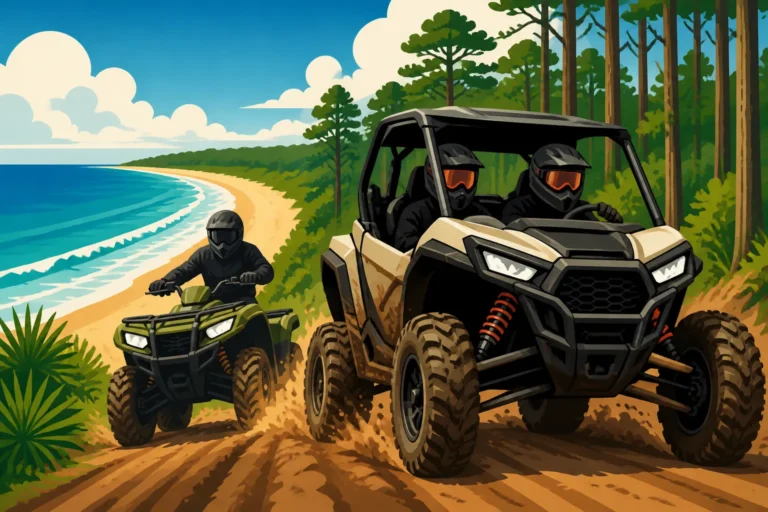
Loose sand can make a Mississippi ride feel very different from packed dirt: the front end may wander, tires can dig in, and a dry-looking trail can hide soft patches. The tricky part is finding places where sand is actually part of the riding experience, rather than assuming every pine-forest road is open to ATVs. This guide covers what to look for and how to prepare.
Where to look for sandy ATV trails in Mississippi
Mississippi’s sandy riding can be tied to the state’s pine country, private off-road parks, and changing trail conditions. But “sandy area” does not automatically mean there is a legal, maintained route for your machine. Check the trail operator’s current description, access rules, and closures before you load up.
For a wider overview of riding options around the state, start with [Mississippi ATV Trails: Where to Ride]. The right destination depends on more than terrain: machine width, whether the route is open to your vehicle type, and whether you need a pass or a day-use ticket all matter.
Public trails and forest access
Bethel OHV Trail is a useful place to investigate if you want a designated public trail system. It is associated with Holly Springs National Forest in north Mississippi, and its trail network is commonly described as forest riding rather than a purpose-built sand park. Expect natural surfaces to vary along a route; don’t assume that every segment will be loose sand or that conditions will stay the same throughout the day. Read [Bethel OHV Trails in Mississippi] before planning around it.
A forest setting can make a ride feel remote, but public land access is not blanket permission to ride wherever a road or track appears. Forest roads, trails, and closed routes can have different rules. Use the official forest information and signs at the trailhead to confirm which routes are open to your machine. [Mississippi National Forest Riding Explained] can help clarify the difference between riding in a national forest and having access to a designated OHV trail.
If you are hoping for a sand-heavy ride, call or check the operator’s information before making the drive. Ask whether the route is open to ATVs, UTVs, or both, and whether there are width restrictions. A sandy section that works well for a narrow quad may not be suitable or permitted for a wider side-by-side. The details in [Mississippi Trails With Width Limits] are especially useful when you are comparing destinations.
Private parks and mixed-terrain riding
Private off-road parks may offer a more varied mix of trails, open areas, and softer ground, but their terrain and rules differ. Red Creek Off-Road is one destination riders can research when comparing private riding options in the state. Before you set out, confirm what terrain is currently available, whether the park is open on your intended day, and which machines are allowed. See [Red Creek Off-Road in Mississippi] for a closer look.
At any private park, call ahead if your main goal is sand. A park may have sandy stretches without being a dedicated sand track, and a route described as “easy” can still become challenging when it is churned up by traffic. Ask whether the sand is loose or packed, whether there are marked beginner routes, and whether recent weather has changed the trail layout.
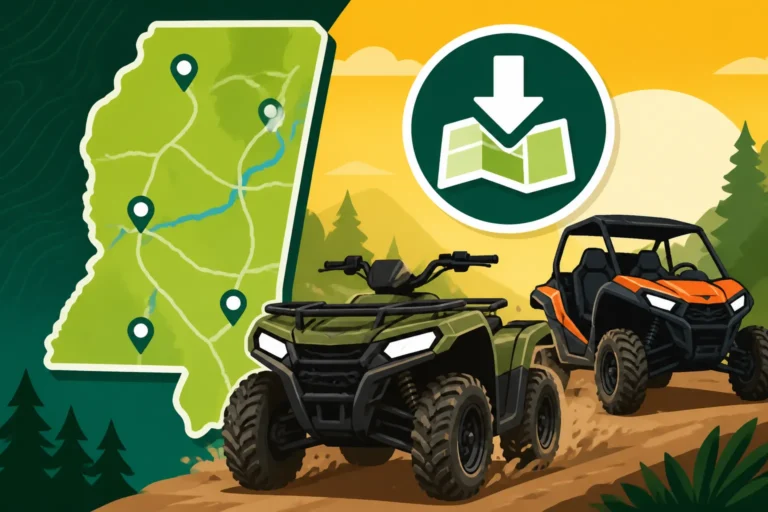
Treat maps as planning tools, not proof that a route is open. A map app such as onX Offroad can help you orient yourself and save locations, but it should not replace the park’s own trail map, posted closures, or landowner permission. Check the map against the operator’s latest information, particularly if you are visiting an unfamiliar area or following a group ride route.
What riding in sand feels like and how to handle it
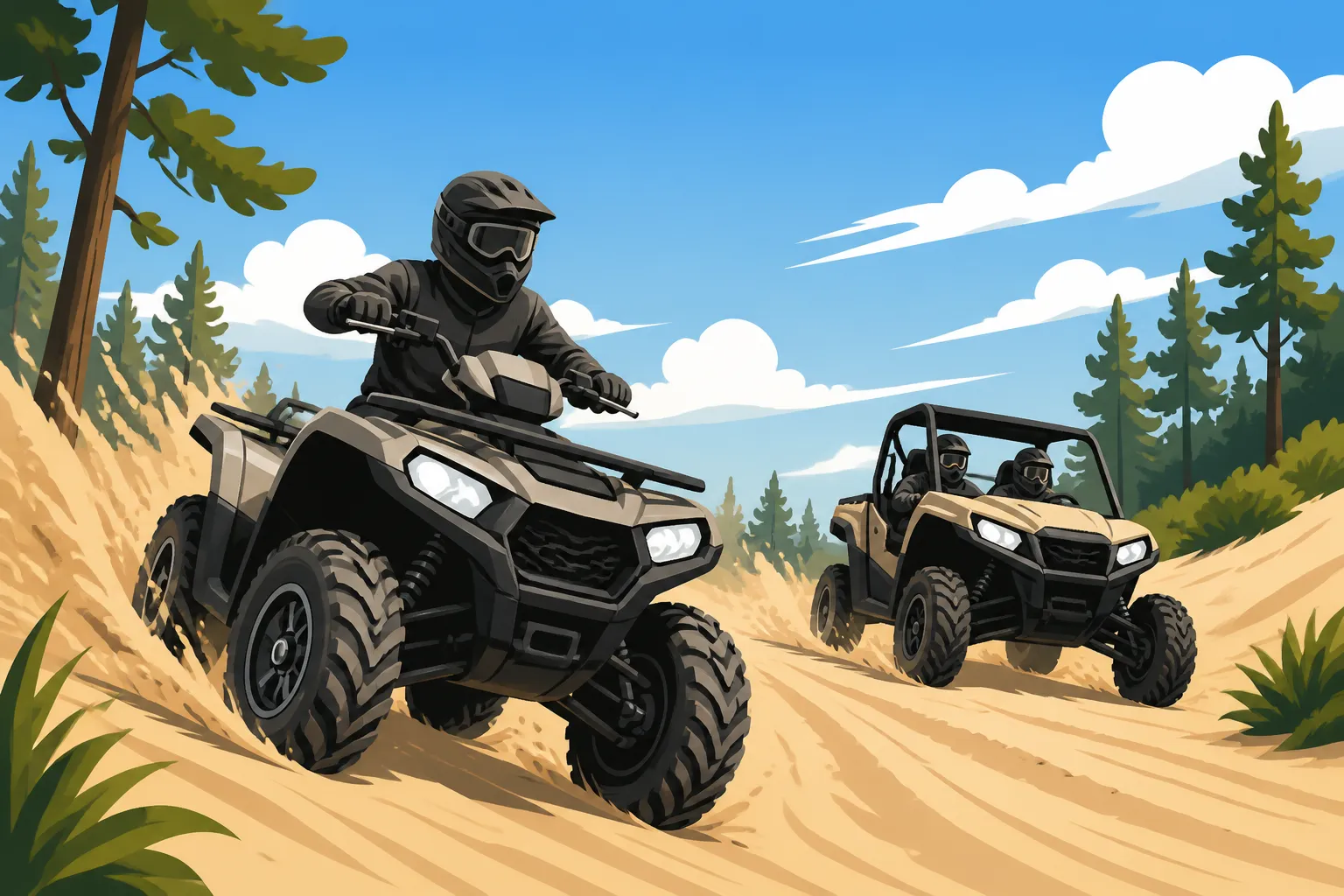
Sand changes how an ATV or UTV responds. On firm ground, a small steering correction may feel predictable. In loose sand, the tires can push around or follow grooves, and the machine may feel as if it is floating. That can unsettle new riders, especially when they grip the handlebars tightly and try to force the front end to track perfectly straight.
The goal is not to fight every movement. Smooth throttle, relaxed steering, and enough space from the rider ahead give you more control than sudden corrections. If you are new to sand, start slowly on an easy, permitted section and build up only when the surface and your comfort level allow it.
Use steady inputs and leave room
Try to keep a consistent pace through a soft section rather than abruptly accelerating, braking, or turning. Too little momentum can let the tires dig in; too much speed can make it harder to respond to ruts, turns, or other riders. There is no single speed that suits every machine or trail, so adjust to the surface, visibility, and posted rules.
Leave more following distance than you would on packed ground. Sand can reduce traction and increase stopping distance, and the rider ahead may suddenly slow or get stuck. If someone is struggling, do not crowd them or swing around without checking that the route is clear. On a narrow trail, wait for a safe place to pass.
Avoid sharp turns at speed. A wide, gradual line is often easier to manage than a quick change of direction, especially where loose sand has been pushed into berms or ruts. If you feel the machine begin to wander, ease off your grip and make gentle corrections rather than yanking the bars. For a UTV, keep passengers seated and belted according to the machine’s design, and avoid abrupt maneuvers that could unsettle the vehicle.
Match your tires and machine to the surface
Tire setup affects how a machine behaves, but there is no universal pressure or tire choice that is right for every ATV, UTV, rider, and terrain. Follow the vehicle and tire manufacturer’s guidance, and avoid making adjustments based on a number someone casually gives you at the trailhead. If you are unsure, ask a qualified technician familiar with your machine.
A heavy utility UTV can behave differently from a light sport quad. It may carry more weight through soft ground and need a careful line choice to avoid getting bogged down. A narrow ATV may fit trails that are closed to wider machines, while a larger side-by-side may need broader routes and more room to turn. Confirm vehicle-width rules before the trip rather than discovering them at the gate.
Carry basic recovery gear appropriate to your vehicle and know how to use it. A shovel, gloves, and a suitable tow or recovery strap can be helpful, but recovery should never put someone beneath an unsupported machine or in the path of a loaded strap. If you ride with a group, agree on how you will help a stuck rider before anyone gets buried in soft ground.
| Riding situation | Why sand makes it harder | A safer approach |
|---|---|---|
| Steering through loose ground | The front tires may follow ruts or drift | Keep your grip relaxed and make gradual corrections |
| Stopping behind another rider | Soft ground can increase stopping distance | Leave extra space and slow down early |
| Climbing a sandy rise | Tires may spin or dig in | Use a smooth, controlled approach and avoid sudden throttle |
| Passing on a narrow track | Loose edges can be unstable | Pass only where the route is wide and visibility is clear |
| Riding after rain | Sand may be firmer in some places and soft or rutted in others | Check conditions and closures before departing |
Plan the trip before you hitch up
A sandy trail day can be frustrating before you even reach the trail if the destination is closed, your machine is too wide, or you arrive without the required pass. Verify practical details in advance. Then check again on the day of the ride, because weather, maintenance, hunting activity, or park schedules can change access.
Use [Mississippi ATV Trail Map Downloads] to understand what mapping resources may be available, and confirm that the map covers the specific place you plan to ride. onX Offroad can help you save a route or mark a meeting point, but it is wise to keep an operator-issued map or a written address as a backup. Cell service can be unreliable in wooded areas, so do not depend on a live map loading once you are already deep into a ride.
Check openings, closures, and weather
Before leaving home, confirm the trail or park is open and that your vehicle type is allowed. Ask about any width limit, pass, day-use ticket, waiver, helmet rule, or age requirement. If you are visiting a forest trail, read its access information and pay attention to all posted signs. If you are visiting private land, follow the park’s rules and stay within designated riding areas.
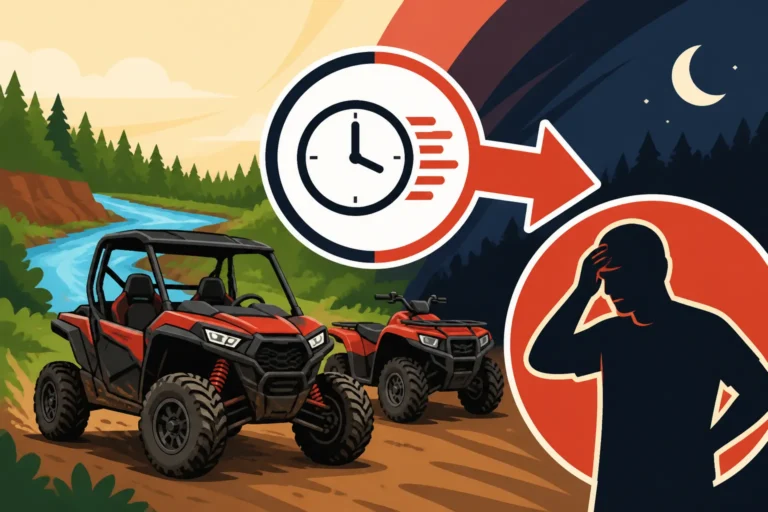
Weather can change a sand ride in ways that are not obvious from a forecast alone. Rain may firm up some sandy sections, while also creating standing water, washouts, or muddy approaches. A dry spell can leave loose sand more difficult to manage. Check [Mississippi Trail Conditions After Rain] and use [Checking Trail Conditions Before You Load the Trailer] as a reminder to verify conditions before committing to a long drive.
If you are traveling with a group, make sure everyone knows the meeting location and the plan if someone gets separated. Share the trailhead address, save a map offline where possible, and agree to regroup at clear landmarks. A group leader should also know who is riding which machine and whether anyone is new to loose terrain.
Pack for recovery, heat, and a long day
Even a short ride can turn into a long one when someone gets stuck or a route takes longer than expected. Bring drinking water, basic first aid supplies, eye protection, gloves, and clothing suited to the forecast. In warm weather, plan for breaks rather than waiting until everyone is already overheated. Keep food and personal items secured so they do not bounce loose over rough ground.
Before loading, inspect tires, brakes, lights, and the machine’s recovery points. Check that the trailer is properly hitched and that every vehicle is secured. A quick pre-ride look can catch a low tire or loose strap at home, when it is easy to fix, instead of at the trailhead.
Sand can work into moving parts and bodywork, particularly after a full day of riding. Once home, follow the manufacturer’s cleaning and maintenance recommendations. Rinse away grit where appropriate, but avoid directing high-pressure water into bearings, seals, electrical connections, or other sensitive areas. If the machine has been submerged or has taken on water, follow the manufacturer’s instructions and seek service if you are unsure what needs inspection.
Choose a route that fits your group
The best Mississippi sand ride is not necessarily the one with the deepest or loosest ground. It is the place that is open, legal, suitable for your machine, and comfortable for the least experienced person in your group. A route that lets a beginner practice steady control can be a better day out than a challenging stretch that leaves everyone tense.
Before you go, use this checklist:
- Confirm the trail or park is open on your planned date.
- Verify that your ATV or UTV is allowed and meets any width limits.
- Ask whether sand is a meaningful part of the route or only an occasional surface.
- Check pass, ticket, waiver, helmet, and age requirements.
- Review weather and trail-condition updates close to departure.
- Save directions and a map, and share the plan with your group.
- Carry water, basic tools, and recovery equipment you know how to use.
- Follow signs, stay on authorized routes, and turn around if conditions are unsafe.
If your group includes riders with different experience levels, choose a destination with clear route choices and an easy way to regroup. Make sure a newer rider can stop safely without blocking the trail, and do not pressure anyone to attempt a section they are uncomfortable with. A good ride leaves room for people to learn at their own pace.
For sand-specific planning, call the destination and ask direct questions: “Which routes are open to my machine?” “Are there loose sandy sections today?” “Have recent rains changed access?” “Where should a beginner start?” Those answers are more useful than relying on a broad description or an old map pin. With a little checking ahead, you can spend less time guessing at the gate and more time enjoying the ride.
Disclaimer
This article is for general informational purposes only and does not constitute professional advice. Laws, prices and regulations vary by location and change over time. Consult a qualified professional for guidance on your specific situation.