Mississippi Parks With Motocross Tracks
Mississippi riders looking for a motocross track can run into a frustrating mix of outdated listings, trail-only parks, and venues with rules that differ by machine. This guide explains which Mississippi riding areas are associated with motocross tracks, how they differ from trail systems, and what to check before loading your ATV, UTV, or dirt bike.
Mississippi parks associated with motocross tracks
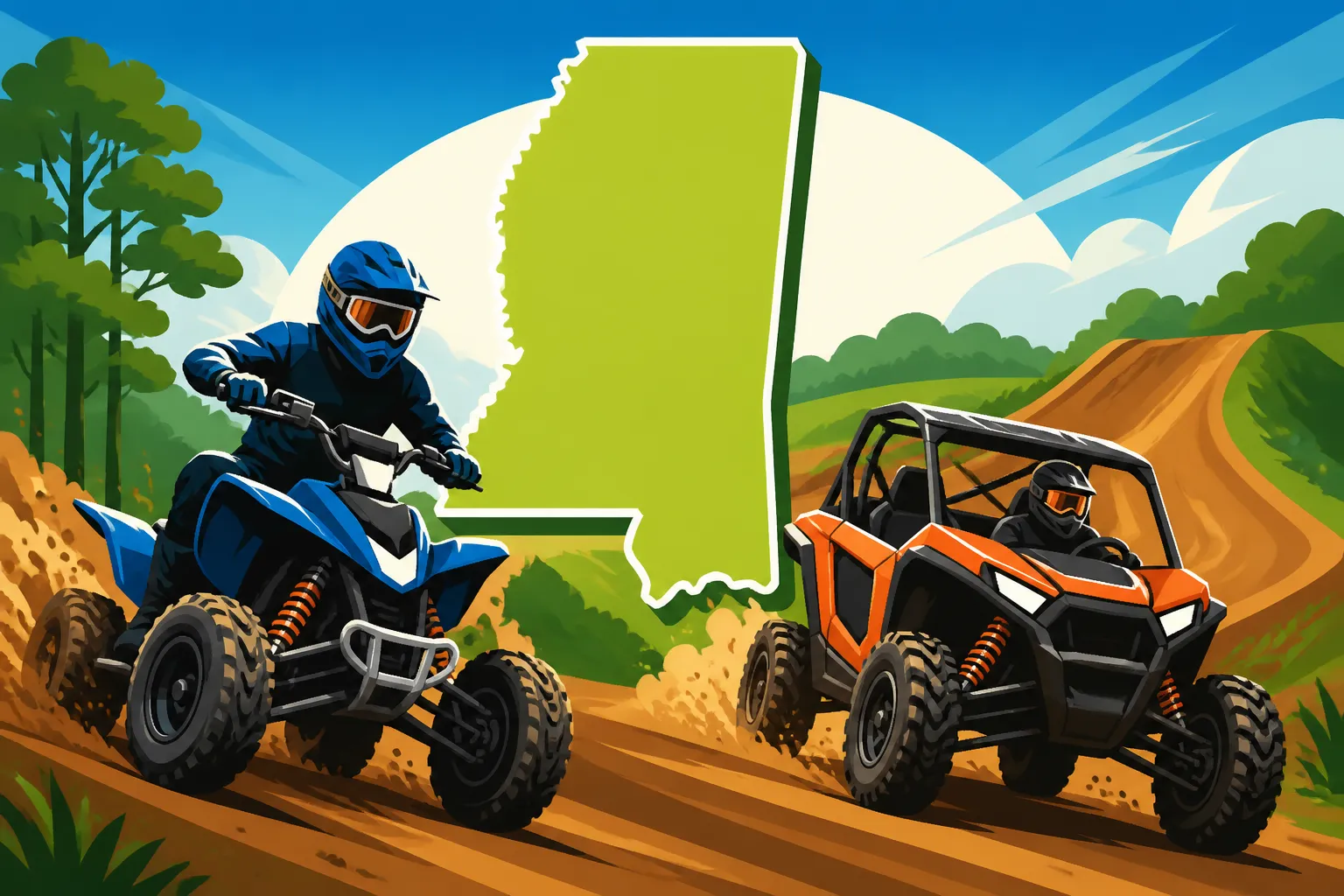
A motocross track is not the same thing as a network of woods trails. It is a purpose-built course with turns, jumps, and other features that require their own rules and riding skills. In Mississippi, Meridian OHV Park is a notable option to investigate for motocross-style riding; Red Creek Off-Road is also associated with a track for younger riders.
The details that matter most before a trip are not just whether a track exists, but whether it is open, what machines it allows, and whether the track suits the riders in your group. Facilities can change their schedules, conditions, or access rules, so call or check the park’s official channels before setting out.
Meridian OHV Park
Meridian OHV Park is a useful place to look into if your group wants more than a single trail loop. It is associated with multiple riding opportunities, including motocross tracks, as well as off-road riding areas. That combination can make it worth considering for a mixed group—provided each rider checks which areas are open to their specific machine.
Do not assume every vehicle can use every feature. A dirt bike, sport ATV, utility ATV, and side-by-side differ in width, handling, and turning radius. A course intended for bikes or smaller ATVs may not accommodate a wide UTV, even if the wider park allows UTV riding elsewhere. Ask the park specifically which tracks are open to your vehicle rather than relying on a general statement that the property is “ATV friendly.”
Meridian OHV Park is also a good example of why it helps to distinguish track riding from trail riding. A course may be closed while another riding area remains open, or conditions may affect one part of a property more than another. Check the park’s current notices and ask about the exact track you plan to ride. For broader park information, see [Meridian OHV Park's Acres in Mississippi] and [Two Motocross Tracks at One Park].
Red Creek Off-Road and younger riders
Red Creek Off-Road is associated with a pee-wee track, making it a potential option for families looking for a smaller-rider setting. A pee-wee track is not automatically suitable for every child or beginner, though. The rider still needs a machine that fits, protective gear, supervision, and enough control to follow the park’s rules.
Before you leave home, ask whether the smaller track is open to your child’s type of machine and experience level. Find out whether the park sets minimum ages, requires a parent or guardian to remain nearby, or has a separate check-in process for younger riders. A child who is comfortable on a flat yard may feel overwhelmed by even modest track features, so choose a course that matches their actual skill rather than their age alone.
For a family day, also ask what else is available for adults or siblings who are not using the pee-wee track. A small-rider course can be a good part of a group outing, but it may not provide the kind of riding everyone expects. Confirm track access, general riding options, and any age or safety rules together. [Red Creek's Pee-Wee Track for Small Riders] and [Mississippi Parks With Pee-Wee Tracks] offer related background.
Choose a track that fits your machine and experience
A park name alone does not tell you whether a particular course is a good fit. Track width, surface, jumps, turns, and traffic patterns all matter—and so does the machine you plan to bring. A rider arriving with a wide side-by-side may discover that the track they had in mind is intended for bikes or smaller quads.
It is worth being candid about experience, too. A motocross track can be demanding even when it looks manageable from the parking area. If you are new to track riding, start with the easiest suitable area, take time to observe the course, and avoid following faster riders into features you are not ready to handle.
Dirt bikes, ATVs, and side-by-sides are not interchangeable
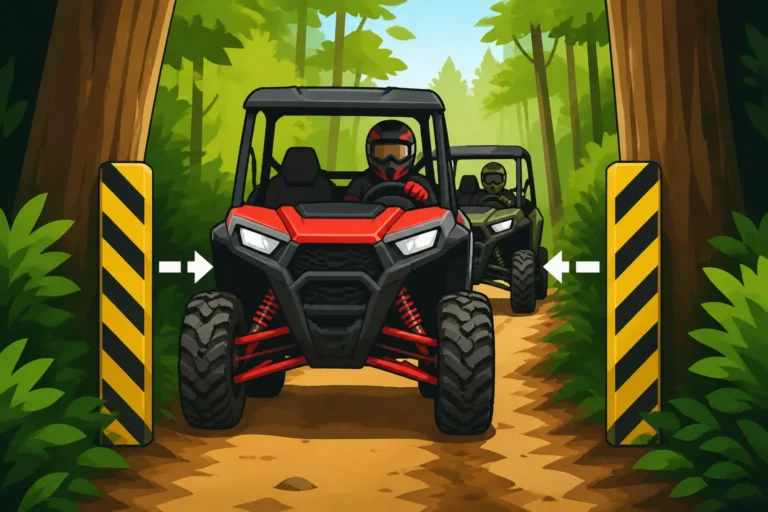
Dirt bikes are narrow and can lean through turns in ways an ATV or UTV cannot. ATVs need room to corner and may react differently on berms and jumps. Side-by-sides are wider and heavier, so a track built around bikes or small quads may not be appropriate for them. Ask the park about the vehicle category—not just whether “off-road vehicles” are allowed.
For a side-by-side, request the track’s width restrictions and whether the course is designed for that vehicle. For an ATV, ask whether the track permits quads, whether there are size or tire restrictions, and whether the operator separates riders by machine type or ability. If you are bringing a youth machine, confirm that the track allows it and that the rider meets the facility’s requirements.
A useful question is: “Can my exact machine ride on the specific track I’m planning to use?” Have the make, model, and approximate width ready. This avoids the frustrating situation of arriving with a trailer, unloading, and learning that the desired course is not open to your vehicle. For general trail options beyond track riding, see [Mississippi Trails That Allow Side-by-Sides].
Match the course to the rider
A first-time rider does not need to prove anything on the biggest course. Start by watching a few laps, looking at how riders enter turns, and noticing the height and spacing of jumps. If a feature looks beyond your comfort level, ride around it if permitted or choose a different route. A cautious first session is more useful than a trip that ends with a bent machine or an injury.
Families should take an especially practical approach. A child may be excited by a motocross track, but excitement is not the same as readiness. Check that the machine fits the rider, that they can reach and operate the controls, and that they can stop reliably. Keep a close eye on fatigue, since concentration and control can slip after repeated laps, especially in Mississippi heat.
More experienced riders should still leave space for others and respect any posted direction of travel. Passing, stopping, and regrouping in a safe area matter on a busy course. If a track has separate sessions or areas for different ability levels, use them. The goal is to find a challenging ride that remains predictable—not to turn a shared course into a race against strangers.
Check access, conditions, and park rules before you go
A park that appears on a map or in an old online post may not be open on the day you plan to ride. Private facilities can change access, operating days, fees, or riding rules. Weather can also affect surfaces and closures, particularly at parks with dirt, sand, or muddy sections.
A quick call before departure can save hours of driving. Ask whether the park is open, whether the track itself is operating, and whether your machine is allowed on it. If you are using a trail map or navigation app such as onX Offroad to plan the drive, treat the map as a planning aid rather than confirmation that a gate or course is open. Confirm access directly with the park.
Questions to ask before loading the trailer
Use a short checklist when contacting a park. It helps you get answers that a broad website listing may not cover:
- Is the facility open on the day we plan to visit?
- Is the motocross track open, or only other riding areas?
- Which machine types are allowed on that track?
- Are there width, age, experience, or equipment requirements?
- Are helmets or other protective gear mandatory?
- Do riders need to sign a waiver or complete a check-in?
- Are there closures, wet-weather restrictions, or special event hours?
- Is camping available, and does it require a separate reservation?
If the answer to “Is the park open?” is yes, follow up with “Is the track open?” Those are not necessarily the same thing. A property may allow access to trails while closing a course for maintenance, an event, or poor conditions.
Write down the information you receive, especially if you are coordinating several vehicles or families. A quick note with the park’s instructions can prevent confusion at the gate. If you are using onX Offroad to organize a route or share a destination with your group, double-check the entrance location and final directions with the park; a pin is not a substitute for access permission.
Weather and surface conditions in Mississippi
Rain can change a track quickly. Packed dirt may become slick, while loose surfaces can develop ruts or soft spots. Even if a park is open, the conditions may not suit a beginner, a youth rider, or a heavier machine. Ask whether recent weather has affected the track and whether staff recommend particular areas for the day.
Heat deserves attention too. A long session on a machine, protective clothing, and an exposed course can wear riders down faster than expected. Bring drinking water, take breaks, and do not wait until someone feels unwell before stopping. For children, build in frequent rest periods and watch for signs that they are getting tired or distracted.
After riding in wet or muddy conditions, inspect the machine before hauling it home. Mud and water can hide damage or collect around components that need cleaning. Check the tires, brakes, controls, and visible fasteners, and follow the manufacturer’s care guidance. If you want a broader look at what to expect after wet riding, see [Mississippi Mud and What It Does to a Machine].
Motocross track or trail system
If your main goal is to ride a course with jumps and turns, a motocross track may be the right choice. If you want a longer outing through wooded routes or a less structured ride, a trail system may be more suitable. Some facilities offer more than one kind of riding, but access for one activity does not guarantee access for another.
This distinction matters when you are planning for a group with different machines and expectations. A rider hoping for a technical trail day may not enjoy repeated laps on a short course. A beginner who wants to practice turns may not get much from a long trail route. Decide what kind of ride the group wants before choosing a destination.
What each type of riding area offers
| Riding area | Typical experience | Best questions to ask |
|---|---|---|
| Motocross track | Repeated laps on a defined course with turns and features | Is the track open, and are my machine and skill level suitable? |
| Pee-wee track | A smaller course intended for younger or smaller riders | What ages and machines are allowed, and what supervision is required? |
| Trail system | Routes through wooded or open terrain rather than a lap-based course | Which trails are open to my vehicle, and what are the width limits? |
| Mixed-use OHV park | More than one type of riding area on the same property | Which sections are open today, and do rules differ by area? |
A trail system can be a better fit for a side-by-side, but never assume that from the word “OHV.” A park may have narrow routes, machine-specific limits, or designated areas. Ask about the vehicle rules for the exact trail or section you plan to use.
Track riding, on the other hand, often means sharing a confined course with riders moving at different speeds. Pay attention to signs and staff directions, and do not stop in a blind turn or on a jump face. If you need to pull over, move to a safe area according to the park’s instructions.
Don’t confuse a motocross venue with a public trail
A motocross track may be privately operated, while a trail system may be managed by a city, forest agency, or another land manager. Each setting can have different access conditions, fees, operating rules, and safety requirements. A track’s permission to ride on its property does not grant permission to ride nearby roads, fields, or timberland.
Before planning a long drive, identify the actual destination and the kind of access it offers. Use the park’s official directions, confirm the entrance, and avoid shortcuts across land that is not part of the riding property. Mapping tools such as onX Offroad can help you orient yourself and plan a route, but confirm boundaries, current access, and closures with the land manager.
It is also easy to mix up parks in neighboring states when searching broadly. Check the location before you make a booking or set a route; a popular off-road park may be outside Mississippi. The distinction matters for travel time and for understanding which rules apply. See [Muddy Bottoms Is in Louisiana, Not Mississippi] for a related example.
Plan a safer and smoother track day
A good track day starts before the trailer leaves the driveway. Confirm access, check the machine, pack the right gear, and agree on a plan for keeping the group together. These simple preparations are especially helpful when riding with children or friends who have different levels of experience.
For navigation, save the park’s address and entrance details before you leave. Mobile service can be unreliable in rural areas, so do not depend on being able to search for directions at the last minute. onX Offroad may be useful for organizing routes and locating nearby riding areas, but park staff remain the best source for current access information.
Pack for the ride, not just the drive
Bring a properly fitting helmet and protective gear appropriate to your machine and the park’s rules. Gloves, eye protection, boots, and durable clothing can make a long day more comfortable and help protect against common riding hazards. For younger riders, check fit before departure rather than discovering at the gate that a helmet shifts or a strap will not secure properly.
Pack water, snacks, basic tools, and anything needed to manage minor problems. Bring the machine’s key documents if the park asks for proof of ownership or other information, and keep emergency contacts accessible. For a group, agree on a meeting point in case riders get separated. A plan is particularly useful when one adult is supervising children while others are riding.
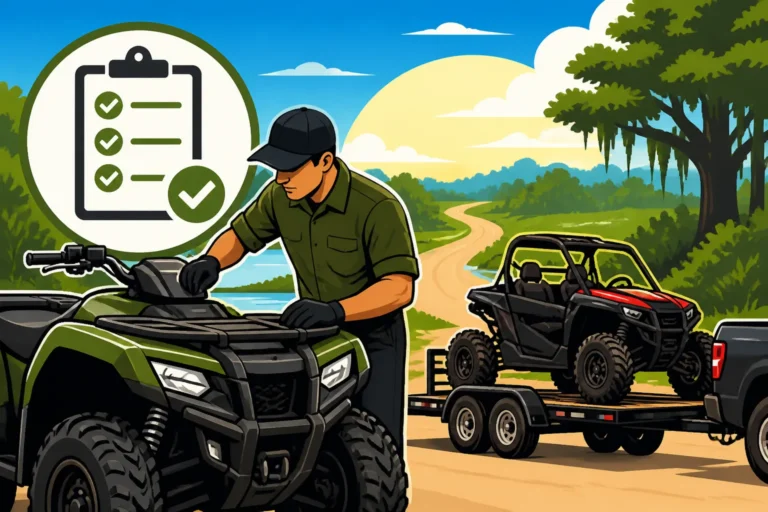
Inspect the ATV, UTV, or dirt bike before loading it. Look for obvious tire damage, loose parts, fluid leaks, and controls that do not work as expected. Secure the machine properly on the trailer and bring the tie-downs you need. A little time spent checking equipment can prevent an avoidable breakdown on the way to or from the park.
Respect shared spaces and leave room to learn
Follow the posted rules even when the course looks quiet. Park staff may manage direction of travel, rider separation, speed, or access to certain features for reasons that are not obvious from the parking area. If you are unsure, ask before riding rather than guessing.
Keep a realistic pace, particularly when sharing the track with faster riders. Do not chase someone else’s line or attempt a jump simply because another rider makes it look easy. Take breaks when concentration fades, and stop if the machine is not behaving normally. A useful first visit is one where riders leave wanting to return—not one where they have pushed past their limits.
If you are deciding between a park and a forest trail for another outing, compare access and trail conditions before you travel. [Mississippi National Forest Riding Explained] covers a different kind of riding experience, while [Mississippi Trail Conditions After Rain] is relevant when weather may affect a trail trip. For a broader list of places to investigate, see [Mississippi Parks With Motocross Tracks] and [Mississippi Trails With Camping].
Disclaimer
This article is for general informational purposes only and does not constitute professional advice. Laws, prices and regulations vary by location and change over time. Consult a qualified professional for guidance on your specific situation.