Mississippi Trails With Day Fees
Paying a day fee does not always mean the same thing at every Mississippi riding area: one gate may charge for trail access, while another fee covers a private park, camping, or a required pass. This guide explains how to compare day-use options, what to confirm before loading your ATV or UTV, and how to avoid arriving with the wrong machine or paperwork.
What a day fee usually covers
A day fee is generally tied to access for a particular riding area or visit. It may cover trail use, entry to a private park, or access to facilities, but the details depend on who manages the property. A payment at the gate is not automatically permission to ride every trail nearby, and it may not include camping, rentals, or other add-ons.
Before you go, identify the exact place you plan to ride and confirm what its fee covers. A useful starting point is [Mississippi ATV Trails: Where to Ride], then check the individual riding area’s own rules and access information.
Public trail access and private park admission are different
At a public OHV area, a fee or pass may be connected to designated trail access and land-management rules. At a privately operated park, admission is set by the operator and may come with park-specific conditions, such as a waiver, operating hours, machine restrictions, or rules about passengers. The word “day fee” can describe either arrangement, but the obligations are not necessarily interchangeable.
That distinction matters if you are planning a weekend near a national forest. A nearby private mud park may have its own admission process, while the forest has separate rules for where off-highway vehicles are allowed. A pass or receipt for one place does not grant access to another. For more on the public-land side, see [Mississippi National Forest Riding Explained].
When planning, write down the exact name of the trail system or park—not just the county or forest. Then ask the manager or land office whether the payment is for a day, a machine, a rider, or a vehicle carrying the machine. Those details can affect how a family or group budgets and checks in.
A receipt is not a substitute for riding permission
A receipt proves that a payment was made; it does not necessarily prove that a particular trail is open or that your machine meets its requirements. A trail can be closed because of weather, maintenance, hunting access, or a land-management decision even if you have already paid for a pass or admission.
This is especially important when a group splits up. If one rider buys access at a park, another rider should not assume the same ticket covers a separate machine, passenger, or later visit. Ask whether access is assigned to a person, a machine, or a specific date, and keep the receipt or confirmation available during the ride.
Use the same care with maps and trail apps. Tools such as onX Offroad can help you plan a route and understand the general area, but a mapped route is not proof that a road or trail is open to ATVs. Check the land manager’s current guidance and posted signs before riding.
Mississippi riding areas to check for day access
Mississippi has a mix of public OHV trail opportunities and privately operated riding parks. Their access arrangements are not uniform, so it is best to treat every destination as its own trip-planning question. Confirm the location, entry process, and machine rules directly before you leave home.
Bethel OHV Trail
Bethel is one of the public OHV destinations riders often consider when planning a Mississippi trail day. Its trail network has machine and access requirements that riders should check before towing a wide side-by-side or bringing a group with different types of machines. Start with [Bethel OHV Trails in Mississippi] and confirm current access conditions through the appropriate trail or land-management information.
A day at Bethel calls for more than checking whether the trailhead is open. Verify which routes are available to your machine, whether access requires a pass or day-use payment, and what proof of payment or permit riders need to carry. Width restrictions can be decisive: a machine that is legal to own and ride elsewhere may not fit a particular trail system’s limits.
Weather can also change the plan. A trail that looks suitable on a map may be closed after heavy rain, and soft or damaged surfaces can make a ride unpleasant or unsafe. Check [Bethel's Wet Weather Closures in Mississippi] and [Mississippi Trail Conditions After Rain] before driving a long distance. If conditions are uncertain, call or check the responsible office rather than relying on an old social post or a map pin.
Private parks such as Red Creek
Private parks can be appealing when riders want a managed riding area, a variety of terrain, or facilities close to the trails. Red Creek Off-Road is one Mississippi destination riders may research for a day ride. Its operating schedule, admission details, and available amenities should be verified with the park before traveling. The overview at [Red Creek Off-Road in Mississippi] can help you identify the destination to investigate.
When contacting a private park, ask whether the day fee applies per rider, per machine, or per vehicle. Also ask whether the fee includes access to every open riding area, whether a waiver is required, and whether a helmet or other safety equipment is mandatory under park rules. If you are bringing children, ask about age-specific restrictions and whether youth machines are permitted on the routes you hope to use.
Do not assume that a private park’s facilities will be open whenever its trails are. A park may have distinct schedules for riding, camping, cabins, concessions, or rentals. Confirm what is available on your planned date, whether reservations are needed, and what happens if weather affects operations. For a broader look at privately operated options, see [Mississippi Private Mud Parks].
Meridian and other local riding options
Riders researching the eastern part of the state may come across Meridian OHV Park. Before counting on it for a day trip, verify that the area is operating, open to the public on your intended date, and suitable for your machine. The listing [Meridian OHV Park in Mississippi] is a useful starting point, but final details should come from the park or the managing authority.
For any local riding area, ask what the day-use payment actually covers. Some facilities may have separate rules for trail use, events, parking, or other amenities. If an area is hosting a special event, normal admission arrangements may not apply. The same is true when a local site has limited hours or closes sections for maintenance.
It is worth having a backup destination, especially when your plans depend on a long tow. Before leaving, confirm the address, entrance location, check-in process, and whether trailers can be parked at the trailhead. If the destination is closed, do not improvise by riding an unmarked road or crossing private land. A closed gate or posted sign is a reason to stop and find another authorized place to ride.
Compare fees and rules before you choose
The lowest advertised admission is not always the least expensive day out. A location may have extra charges for passengers, additional machines, camping, rentals, or special amenities. Conversely, a pass may cover access beyond one visit, depending on the specific program. Compare the complete trip rather than focusing only on the first number you see.
| What to compare | Questions to ask | Why it matters |
|---|---|---|
| Access payment | Is there a day fee, pass, or separate admission? | The payment structure differs by location |
| Who is covered | Is access charged per rider, machine, or group? | A family or multi-machine group may need more than one payment |
| Machine limits | Are there width, weight, or vehicle-type restrictions? | Your ATV or UTV may not be allowed on every trail |
| Hours and closures | Is the area open on your planned day? | Weather, maintenance, or events can change access |
| Included facilities | Are parking, camping, rentals, or other amenities included? | “Admission” may cover only trail access |
| Required documents | Is a receipt, pass, waiver, or ID required? | Missing paperwork can delay or prevent entry |
| Refund policy | What happens if the area closes or conditions change? | Policies vary between public and private destinations |
Build a realistic day-trip budget
Start with the access payment, then add the costs that can catch a group off guard: fuel for the tow vehicle and machines, food, water, protective gear, trailer needs, and possible overnight lodging. If the destination charges separately for multiple riders or machines, calculate those payments before leaving. Do not assume one person’s purchase covers everyone in the group.
A family outing can have a different cost pattern from a solo ride. For example, a parent taking one youth machine and one adult machine should ask whether admission is based on each machine, each rider, or both. A group with several UTVs should confirm whether the fee changes by vehicle type or size. A short call can prevent a frustrating surprise at the gate.
Keep room in the budget for a backup plan. If rain closes the preferred trail, a nearby park may have separate admission, different operating days, or no availability. Checking the cancellation or refund policy ahead of time helps you decide whether to travel, reschedule, or choose another legal riding area.
Confirm machine fit before paying
Machine restrictions are not minor details. A trail system may impose a width limit, and a side-by-side can exceed it even if it is otherwise suitable for off-road use. Ask for the specific measurement method the park or trail manager uses. Do not rely only on a model’s advertised width if you have added aftermarket wheels, tires, or accessories.
You should also check whether the riding area distinguishes between ATVs, UTVs, dirt bikes, and youth machines. Some routes may be open to one type of vehicle but not another. If the rules mention a maximum width or weight, compare the requirement with your machine’s specifications and the manager’s interpretation before buying access.
For a family group, confirm whether children can ride independently, whether passengers are allowed, and whether each machine must have a particular safety feature. Requirements can differ between public land and private parks. A machine that passes the gate at one location may not meet the conditions at another.
Plan the ride before you reach the gate
A smoother riding day begins with a few practical checks at home. Confirm the access details, prepare your documents, and make sure everyone understands the rules. These small steps are especially valuable when the trailhead is far from a town or cell service is unreliable.
Check opening status and conditions
Start by checking the official channel for the trail or park, then contact the manager if anything is unclear. Ask whether the specific trails you want are open—not just whether the overall property is open. A location can operate while certain routes are closed, and the trails suitable for an ATV may differ from those available to a UTV.
Weather is a major factor in Mississippi. Heavy rain can make low-lying routes muddy, create standing water, or prompt temporary closures. Even if the gate is open, a trail may not be a good fit for a novice rider or a machine with limited clearance. Check the destination’s updates close to departure and again before you turn onto a long rural access road.
Maps are useful for orientation, but they are not the final authority on access. onX Offroad can help you review terrain and plan where to stage, but match what you see in an app against current official information and signs on the ground. If a route appears to cross a closed road, private property, or an area marked off-limits, do not treat the digital line as permission.
Prepare payment and required paperwork
Ask what payment methods are accepted before you leave. A remote gate or small operation may have different options from a larger facility, and a payment terminal may not work reliably in an area with weak service. If the operator offers advance purchase or online booking, confirm how you will show proof at check-in and whether the payment is transferable if your plans change.
Bring the items the destination requires, which may include identification, a day ticket, a pass, a signed waiver, or proof of an age-specific safety credential. Keep those items accessible rather than buried in a trailer or packed away with camping gear. A quick check before unloading can save time for the entire group.
If you are visiting a public forest trail system, do not assume a private-park receipt satisfies public-land requirements. Likewise, do not assume a forest pass gets you into a private park. The access rules belong to the land manager or operator for that specific destination. For youth riders, confirm any course, supervision, or helmet requirements that apply before the trip.
Pack for a full day off pavement
Bring water, food, first-aid supplies, basic tools, and the gear needed for the terrain. In hot weather, plan for shade and regular water breaks; in wet conditions, pack dry clothes and protect phones and paperwork. Make sure the trailer is secure, the tie-downs are in good condition, and the tow vehicle has what it needs for the route home.
A paper map or offline map can be helpful if cell service drops. Share the destination and expected return time with someone who is not riding. If the group separates on the trails, agree in advance on a meeting point and a simple plan for regrouping. These habits are more useful than trying to coordinate everything through a phone with no signal.
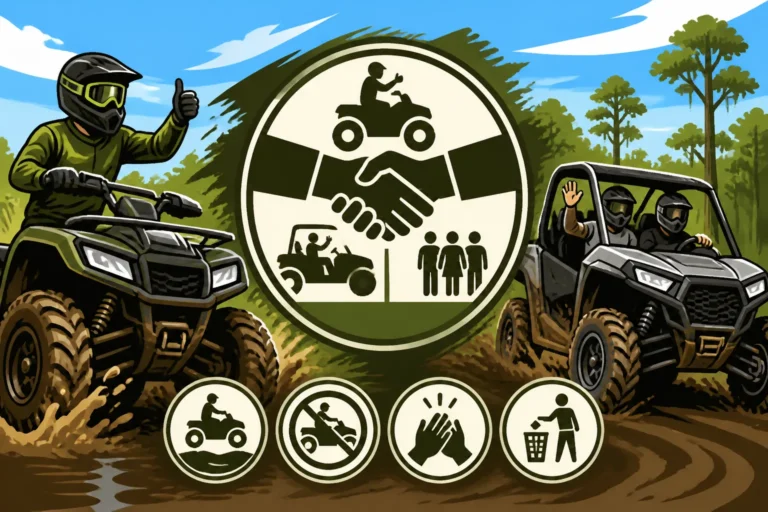
Finally, take care of the property. Stay on authorized trails, follow posted speed and noise rules, and pack out trash. Respecting closures helps protect access for future riders, and it keeps a fun day from turning into a dispute with a landowner, ranger, or park operator.
Common day-fee mistakes to avoid
Most frustrating day-trip problems are preventable. They tend to come from assuming that access rules are standardized, relying on outdated information, or discovering machine restrictions only after reaching the entrance. A little verification before departure can spare you a long drive home without riding.
Assuming a nearby trail is included
A forest, town, or region can contain more than one kind of riding opportunity, each managed separately. Paying at one place does not grant access to a nearby private park, an unmarked route, or a closed forest road. If your itinerary includes two destinations, confirm each one independently and budget for its own requirements.
This is also why trail maps need context. A mapped road may be intended for other users or may not be open to OHVs. Before following a route, confirm that it is authorized for the type of machine you are riding. Keep an eye out for posted signs and gates, even when the map suggests a connection.
If you are building a route around a particular area, make sure the trail system itself—not merely the general region—is an approved riding destination. [Mississippi Trails With Day Fees] is the topic of this guide, but each location’s access and payment rules still need to be checked individually.
Showing up with the wrong machine or group
A wide UTV, a youth ATV, or a machine with modified equipment may face restrictions that do not apply to every visitor. Confirm vehicle dimensions, passenger rules, age requirements, and any sound or safety equipment standards before buying a ticket. If the manager gives you a verbal answer, write down the details and repeat them back so there is no confusion.
Group size matters, too. A park may have limited parking, special event rules, or a reservation process for larger parties. Ask whether each rider checks in separately and whether everyone needs to arrive together. If the group includes beginners, ask which trails are easiest and whether the park has a route map or a recommended starting area.
Do not plan around a machine’s appearance or the fact that it has ridden at another facility. Rules vary, and modifications can change fit or compliance. The safest approach is to provide the make, model, and relevant measurements when you call.
Relying on old posts or word of mouth
A friend’s advice can be helpful, but it may describe a past season, a different entrance, or a temporary arrangement. Social media posts and third-party listings can also remain visible after hours, access rules, or trail conditions change. Use them as leads, not as final confirmation.
Before setting out, check the official source closest to the decision: the park operator for a private facility, or the responsible public-land office for a managed trail. Confirm the date, access status, fees or pass requirements, machine limits, and weather-related closures. If you cannot get a clear answer, consider choosing a destination with confirmed access rather than gambling on a long tow.
When you arrive, follow the signs and instructions even if they differ from what you expected. If there is a question about payment or access, stop at the office or gate and ask before unloading. Starting the day with a clear answer is far easier than trying to resolve a misunderstanding after the machines are on the trail.
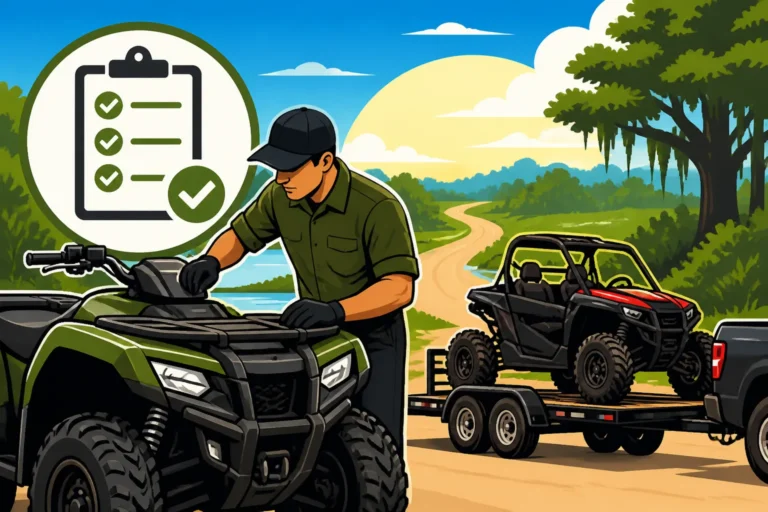
A practical checklist for a Mississippi riding day
Use this checklist the evening before your trip and once more before leaving. It is a simple way to catch the details that are easy to forget when you are loading a trailer, organizing a group, and trying to beat the heat.
- Confirm the exact trail or park name and entrance address.
- Check that the area and the specific trails you want are open.
- Ask whether access is a day fee, pass, or separate admission.
- Confirm whether payment applies per rider, machine, or group.
- Verify width, weight, vehicle-type, age, and passenger rules.
- Ask whether reservations, waivers, identification, or safety credentials are required.
- Check accepted payment methods and what proof you need to carry.
- Review weather, trail conditions, and any temporary closures.
- Confirm parking and trailer arrangements.
- Pack water, food, first-aid supplies, protective gear, and basic tools.
- Save the official contact details and an offline map.
- Tell someone where you are riding and when you expect to return.
If the answer to any key question is unclear, pause before you load up. Mississippi riding areas can offer very different experiences, from managed forest routes to privately operated mud parks, but access rules are specific to each destination. Verifying those details is part of planning the ride—not an inconvenience to deal with at the gate.
Disclaimer
This article is for general informational purposes only and does not constitute professional advice. Laws, prices and regulations vary by location and change over time. Consult a qualified professional for guidance on your specific situation.