Mississippi LSV Registration Rules
It's incredibly frustrating when you just want to understand the rules for taking your off-road machine, or something similar, onto the local roads, only to find a tangled mess of state laws, local ordinances, and often conflicting advice. Many folks in Mississippi get confused between ATVs, golf carts, and Low-Speed Vehicles (LSVs), assuming they're all interchangeable or that simple modifications can change their legal status. This guide is here to untangle that confusion, specifically breaking down what an LSV truly is in Mississippi and walking you through the actual registration rules so you can ride legally and with peace of mind.
Understanding What an LSV Is in Mississippi
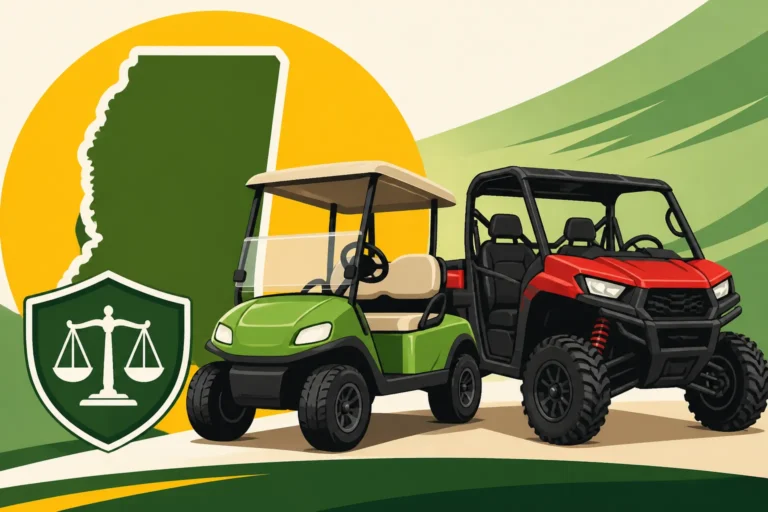
Let's start by setting the record straight. In Mississippi, a Low-Speed Vehicle, or LSV, isn't just a golf cart with a few extra bells and whistles, and it's certainly not an ATV that someone slapped a turn signal kit on. It's a distinct class of vehicle with its own specific legal definition and requirements. This distinction is absolutely critical because the rules governing where and how you can operate an LSV are vastly different from those for a standard golf cart or an off-road ATV. Failing to understand this can lead to fines, citations, and a whole lot of headache.
Defining a Low-Speed Vehicle (LSV)
Under Mississippi law, a Low-Speed Vehicle is precisely defined. Imagine a small, often electric, four-wheeled vehicle that looks a bit like a golf cart but is built with more robust safety features. To be classified as an LSV, it must be capable of reaching speeds of at least 20 miles per hour (mph) but not more than 25 mph. This isn't just a suggestion; it's a hard limit. If your vehicle goes slower than 20 mph, it’s not an LSV. If it goes faster than 25 mph, it's generally considered a regular motor vehicle and falls under entirely different rules, likely requiring full car registration and highway compliance.
Beyond speed, LSVs are required to have a specific set of safety equipment. This isn't optional; it's what makes them legal for limited road use. Think about what you'd expect on a small car: headlights, taillights, turn signals, stop lights, a rearview mirror (or mirrors, to see both sides), seatbelts for all designated seating positions, and a parking brake. Many also have a windshield and windshield wipers. Crucially, an LSV must also have a Vehicle Identification Number (VIN) and meet federal safety standards for low-speed vehicles. If you're looking at aftermarket accessories to enhance your vehicle's safety features, companies like SuperATV offer a range of lights, mirrors, and signal kits that could help a vehicle meet these equipment requirements, but remember, the underlying vehicle itself must still be designed and capable of meeting the speed and structural standards to truly be an LSV.
Why LSVs Are Different from Golf Carts and ATVs
The biggest frustration for many riders in Mississippi comes from trying to navigate the murky waters between these three types of machines. The truth is, the state treats them all very differently. A golf cart, while useful, is typically slower (often maxing out around 15-20 mph), usually lacks the full suite of safety equipment like seatbelts and turn signals, and its legality on public roads rests almost entirely on specific [Mississippi Golf Cart Statutes] and local municipal ordinances. What's legal in Hattiesburg might be completely illegal just a few miles down the road in another town.
ATVs, or All-Terrain Vehicles, are designed for off-road use, period. Mississippi law is quite clear: [Can You Ride an ATV on the Road in Mississippi?] The answer is almost universally no, with very few exceptions and usually only for crossing, not riding. ATVs lack the basic safety equipment of an LSV, are designed for unstable terrain, and typically have higher centers of gravity, making them inherently less safe for paved road use. You might add lights or a horn, but it doesn't magically transform it into a street-legal vehicle or an LSV.
An LSV bridges this gap. It's built to operate on pavement, albeit at lower speeds, and comes with factory-installed safety features that make it a recognized, albeit limited-use, motor vehicle. This is why it has its own distinct registration process, unlike ATVs which are generally not registered for road use, or golf carts which often have no state registration and rely solely on local rules. Understanding these foundational differences, particularly what constitutes an LSV according to [Mississippi Low-Speed Vehicle Statutes], is the first and most important step toward legal operation.
The Mississippi LSV Registration Process
Alright, so you’ve got an LSV that meets all the criteria – it's got the speed, the safety equipment, and a proper VIN. Now comes the exciting part: getting it legally registered so you can enjoy those local low-speed cruises. This isn't as simple as just slapping a sticker on it. There's a specific process to follow, and gathering your paperwork beforehand will save you a world of frustration.
Required Documentation for LSV Registration
Just like with any other motor vehicle, you'll need a stack of official papers to prove ownership and compliance. For a brand-new LSV purchased from a dealer, you'll need the Manufacturer's Certificate of Origin (MCO). This is essentially the birth certificate for your vehicle. If you're buying a used LSV, you'll need the previous owner's properly assigned title. Make absolutely sure that the VIN on the title matches the VIN on the vehicle itself, down to every last digit. A discrepancy here will stop your registration process dead in its tracks.
Alongside proof of ownership, you'll need a solid bill of sale, especially if you bought it from a private party. This document should clearly state the buyer's and seller's names, the date of sale, the purchase price, and a detailed description of the LSV, including its VIN. Without a clear bill of sale, or if the title has issues, you might find yourself in a bind. In some unusual cases, where vital paperwork is missing, you might have to look into options like a [Mississippi Title Bonds When Papers Are Gone] procedure, but that's a more complex route you ideally want to avoid.
You'll also need proof of Mississippi residency, such as a driver's license, utility bill, or other official mail. While Mississippi generally does not mandate insurance for off-road vehicles like ATVs, LSVs often fall under broader motor vehicle definitions for insurance purposes, and many registration points or even local ordinances may require proof of insurance. It's always a good idea to carry at least liability coverage for any vehicle you operate on public roads, and this is a good reminder that [Mississippi Has No Insurance Mandate] for ATVs doesn't mean it applies to all wheeled vehicles. Finally, some jurisdictions or the state itself may require an inspection to verify that your LSV meets all the necessary safety equipment standards before registration. This ensures that those headlights, turn signals, and seatbelts are actually present and functional.
Where to Register Your LSV and Associated Fees
Once your paperwork is in order, your next stop will be your local [Mississippi County Tax Collectors and Titles] office. This is the government agency responsible for vehicle titling and registration in Mississippi, whether it's for a car, truck, or an LSV. Don't go to the DMV or any other state agency; the county tax collector handles this directly. When you arrive, you'll present all your documentation. They will process your title application, ensuring the vehicle's ownership is correctly transferred into your name.
There will be a few fees associated with this process. You'll definitely pay a title fee to get the LSV officially titled in your name. Then there will be a registration fee, which covers the cost of registering the vehicle for road use, and typically a specific plate fee for the specialized LSV license plate you'll receive. Unlike ATVs, which don't get license plates, LSVs absolutely do, signifying their legal status for limited road operation. It's important to ask the tax collector's office for a comprehensive breakdown of all fees specific to LSVs, as they can sometimes vary slightly by county or over time. While we can't give you exact numbers, anticipate these different categories of costs to factor into your budget.
Annual Renewals and Ongoing Requirements
Registering your LSV isn't a one-and-done deal. Just like with your car, you'll have annual responsibilities to keep your LSV street legal. The most prominent of these is renewing your LSV's registration tag. This usually involves paying an annual renewal fee to your county tax collector and receiving an updated tag for your license plate. It's crucial not to let this lapse, as an expired tag can lead to citations if you're caught operating your LSV on public roads.
Beyond the annual renewal, you'll need to continuously maintain your LSV to ensure it remains compliant with all safety standards. This means regularly checking that your headlights, taillights, turn signals, brake lights, horn, and seatbelts are all in perfect working order. A faulty light isn't just a minor inconvenience; it could make your LSV illegal to operate on the road and pose a safety risk. While formal annual inspections might not be universally required for all LSVs across every county, it's a good practice to periodically check your vehicle against the initial LSV equipment requirements. And again, always consider maintaining adequate insurance coverage, even if not strictly mandated, to protect yourself and others in case of an incident.
Operating an LSV on Mississippi Roads
So, your LSV is titled, registered, and sporting a shiny new license plate. Fantastic! But before you hit the road, it's vital to understand the rules of engagement. While an LSV grants you more freedom than an ATV, it's not a free pass to drive anywhere and everywhere. There are specific limitations on where you can operate it and who can drive it.
Where LSVs Are Permitted to Ride
In Mississippi, Low-Speed Vehicles are generally permitted to operate on public roads where the posted speed limit is 35 miles per hour (mph) or less. This is the golden rule. You won't be taking your LSV on major highways, interstates, or any roads designated for faster traffic. Think neighborhood streets, local county roads, and certain community thoroughfares. The intent of LSV laws is to provide a convenient, low-impact transportation option within communities, not for high-speed travel.
It's also worth noting that while state law defines LSVs, individual cities and towns may still have their own local ordinances that further restrict or define LSV use. For example, a town might specify certain areas where LSVs are prohibited due to traffic patterns or pedestrian safety concerns, even if the speed limit is 35 mph or below. This is similar to how places like [Hattiesburg's Cart Ordinance in Mississippi] dictate golf cart use; while LSVs have state backing, local rules can add additional layers. Always check with your local municipal office or police department if you're unsure about specific streets or areas within your town.
Driver Requirements and Safety Guidelines
Operating an LSV on public roads isn't something just anyone can do. The driver must possess a valid Mississippi driver's license. This isn't a suggestion; it's a legal requirement. An LSV is still considered a motor vehicle when on public roads, and therefore, the operator must be a licensed driver. There are no special LSV permits for underage drivers or individuals without a standard driver's license.
When it comes to safety, while Mississippi doesn't mandate helmets for adult LSV operators, common sense and personal safety should always prevail. Ensure all passengers are utilizing the vehicle's seatbelts – that's why they're there! The number of passengers you can carry is limited by the number of factory-installed seating positions and seatbelts. Overloading an LSV can compromise its stability and control, especially during turns or braking. Always make sure your LSV's safety equipment, including headlights for nighttime driving and turn signals for lane changes, is fully functional. Even though [Mississippi Has No Insurance Mandate] for ATVs, it's highly recommended to carry adequate insurance for your LSV, covering liability and potentially damage to your vehicle, given its presence on public roads.
Restrictions and Prohibited Areas
Understanding where you can't take your LSV is just as important as knowing where you can. As mentioned, roads with posted speed limits above 35 mph are strictly off-limits. This includes most state highways, U.S. routes, and interstates. Attempting to drive an LSV on these roads is illegal and extremely dangerous due to the significant speed differential with other traffic.
Beyond major roadways, LSVs are also typically prohibited from certain types of terrain or public lands. For instance, just like ATVs, LSVs generally aren't allowed on levees, riverbanks, or other protected natural areas. [Mississippi Levee Riding Is Prohibited] applies broadly to most off-road type vehicles and often extends to LSVs as well, as they are not designed for such environments. Similarly, federal lands, state parks (unless specifically designated), and private property without explicit permission are generally no-go zones.
Always be mindful of "No Trespassing" signs on private land. While your LSV is street legal in limited contexts, it does not grant you rights to enter private property or areas not open to the public. Some [Mississippi Towns That Refuse ATVs on Streets] might also have specific rules that, while not directly targeting LSVs, indicate a general municipal sentiment towards smaller, non-traditional vehicles on their roads. When in doubt, always err on the side of caution and verify local regulations.
Common Pitfalls and Misconceptions for LSV Owners
Navigating the world of LSVs in Mississippi can feel like a minefield of misinformation. Many people get into trouble not because they're trying to intentionally break the law, but because they simply misunderstand the nuances of the regulations. Let's clear up some of the most common mistakes and misconceptions that can trip up LSV owners.
Confusing LSVs with Golf Carts or ATVs
This is, hands down, the most prevalent source of confusion and frustration. Many people assume that if a vehicle has four wheels and goes slow, it must be a golf cart, or that if it's got a steering wheel and a little bit more power, it's just a smaller ATV. This couldn't be further from the truth in the eyes of Mississippi law. An LSV is a distinct vehicle class, defined by its speed capability (20-25 mph) and its full suite of safety equipment like headlights, turn signals, and seatbelts. A golf cart, typically slower and less equipped, operates under different (often local) rules. An ATV is an off-road machine, generally banned from public roads entirely.
The problem arises when someone takes a standard golf cart, adds a few aftermarket lights, and assumes it's now an LSV ready for registration. Or, worse, they might modify a UTV to add mirrors and signals, thinking it’s now "street legal." While companies like SuperATV offer conversion parts and accessories that can enhance a vehicle's road-worthiness in general, simply bolting on a light kit or a windshield to a golf cart does not transform it into a state-recognized LSV that can be titled and registered as such. The vehicle itself, as manufactured or officially converted, must meet the LSV definition and standards, and then you follow the specific LSV registration process. It's not about making a non-LSV look like one; it's about starting with a vehicle that is an LSV by design, or converting it to truly meet those rigorous standards, then getting it titled. Failing to grasp this distinction can lead to fines, impoundment, and a lot of wasted effort trying to register a vehicle that simply doesn't qualify.
Assuming Local Ordinances Cover LSVs
Another common misconception is that if your town has a golf cart ordinance, it automatically applies to your LSV, or that if a town allows golf carts, LSVs must be fine too. This can be a dangerous assumption. Golf cart ordinances are hyper-local; they exist because golf carts typically don't have statewide road-legal status. Towns pass these ordinances to carve out specific, limited exceptions for golf cart use within their borders.
LSVs, on the other hand, derive their primary road legality from state statute. This means their fundamental right to operate on roads 35 mph or less is broader than a golf cart's. However, local municipalities can still impose additional restrictions or conditions on LSV use within their city limits, just as they might for other types of vehicles. For example, a town might have specific hours for LSV operation, or prohibit them on certain busy thoroughfares even if the speed limit is technically 35 mph. The key takeaway is: don't assume. Just because [Mississippi Towns That Refuse ATVs on Streets] might have ordinances, doesn't mean those rules directly translate to your LSV. Always inquire with your local police department or city clerk's office about any specific LSV-related rules in your area in addition to understanding the state statutes.
The Importance of Proper Documentation
Imagine spending your hard-earned money on an LSV, only to find you can't register it because the paperwork is a mess. This is a common and disheartening scenario. Whether you're buying new or used, clear and complete documentation is paramount. For a new LSV, the Manufacturer's Certificate of Origin (MCO) is critical. For a used one, you need a clean, properly assigned title from the previous owner. If the title is missing, or if the bill of sale is vague, incomplete, or looks suspicious, you're going to face an uphill battle at the county tax collector's office.
Problems like a missing signature, a misspelled name, or an incorrect VIN on the paperwork can all cause delays or outright rejection of your registration application. Don't underestimate the power of a complete and accurate paper trail. If you're buying from a private seller, always double-check all documents before money changes hands. If the seller can't produce a proper title, or if they offer a vague bill of sale, it's a huge red flag. While there are procedures like [Mississippi Title Without a Bill of Sale] that can help in certain situations, they often involve extra steps, affidavits, or even a title bond, adding time, cost, and complexity to what should be a straightforward process. Ensuring you have all your ducks in a row with documentation from the very beginning will save you immense headaches down the line.
| Feature | Low-Speed Vehicle (LSV) | Golf Cart | All-Terrain Vehicle (ATV) |
|---|---|---|---|
| Primary Use | Limited public road travel | Private property, golf courses, local ordinances | Off-road recreation, utility |
| Max Speed | 20-25 mph (state-defined) | Typically 15-20 mph (varies) | Generally 50+ mph (off-road) |
| Road Legality | State-legal on roads < 35 mph | Local ordinance dependent | Generally prohibited on public roads |
| Registration | State titling & registration (plate) | No state registration; local stickers | No state registration (off-road only) |
| Required Equipment | Headlights, taillights, turn signals, stop lights, mirrors, seatbelts, VIN, horn, parking brake | Varies; may have basic lights, horn | Headlights, taillights (minimal for off-road) |
| Driver's License | Required | Varies by local ordinance; often none | Not required for off-road use; needed for any road crossing |
| Insurance | Recommended; sometimes required | Recommended; local ordinance dependent | Recommended (often for private property) |
Disclaimer
This article is for general informational purposes only and does not constitute professional advice. Laws, prices and regulations vary by location and change over time. Consult a qualified professional for guidance on your specific situation.