Photographing a VIN Before a Delta Sale
Selling an ATV or UTV privately here in Mississippi, especially in a bustling area like the Delta, can feel like navigating a swamp in the dark – exciting possibilities mixed with hidden dangers. One of the biggest anxieties for both sellers and potential buyers is confirming the machine's true identity and history. This guide is all about one crucial step that can alleviate a lot of that stress: photographing the Vehicle Identification Number (VIN) before you even list your machine, ensuring a smoother, more transparent transaction for everyone involved.
Why VIN Photos Are Non-Negotiable in a Private Sale
When you're looking to sell your beloved quad or side-by-side, it's easy to focus on the flashy aspects – the new tires, the custom winch, or how immaculately you've kept it. But for a serious buyer, and for your own protection, the Vehicle Identification Number (VIN) is where the rubber truly meets the road. Think of it as your machine's unique fingerprint, a 17-character code that tells its entire story. Neglecting to properly document and share this information can lead to major headaches down the line, from accusations of misrepresentation to outright fraud, and nobody wants that kind of trouble here in the Magnolia State.
Preventing Fraud and Misrepresentation
Unfortunately, the world of private sales isn't always filled with honest folks. There are unscrupulous individuals who might try to sell a stolen machine, or one cobbled together from various parts, using a false or "cloned" VIN. By proactively providing clear photographs of your machine's VIN, you immediately signal to potential buyers that you have nothing to hide. This transparency is key. Imagine a buyer driving two hours from, say, Greenville or Vicksburg, only to find the VIN doesn't match the paperwork you described, or worse, appears to have been tampered with. That's a wasted trip, a frustrated buyer, and a potential accusation against you. A good, clear VIN photo, taken before any meetings, allows interested parties to conduct their own due diligence, like running a stolen vehicle check, which is a common and smart move. [Checking a Used Quad Against Stolen Machine Records] can save a lot of grief. Without that visual confirmation, both parties are operating on a leap of faith, and that's a shaky foundation for any transaction.
Building Buyer Confidence
Let's be honest: buying a used ATV or UTV from a private seller can be daunting. Buyers worry about hidden problems, undisclosed damage, or ending up with a machine that's more trouble than it's worth. When you provide a clear, well-lit photograph of the VIN, you're not just giving them a number; you're offering peace of mind. You're saying, "Here's the proof of my machine's identity; go ahead and verify it." This simple act goes a long way in establishing trust, making your listing stand out from others that might be vague or hesitant about sharing critical details. It streamlines the initial vetting process for the buyer, allowing them to quickly confirm the year, make, and model, and perform history checks if they choose. This level of openness can often lead to a faster sale, as serious buyers will appreciate your forthrightness and feel more confident moving forward with a viewing and negotiation.
Pre-empting Titling Issues in Mississippi
With new titling requirements for ATVs and UTVs manufactured after July 1, 2025, Mississippi riders are navigating a new landscape. Even for older machines, the VIN is paramount for identification, whether you're voluntarily titling it or if you ever need to apply for a title bond because the original paperwork went missing. A clear VIN photo is essential for any title application or inquiry at your county tax collector's office. If the VIN on your machine is illegible, damaged, or doesn't match a manufacturer's certificate of origin (MCO) or existing title, you're looking at a bureaucratic nightmare. Having a clear photo ensures that the numbers you write down on any application precisely match the machine itself. This becomes incredibly important when dealing with the county offices, who rely on accurate information. If you're selling a newer machine, understanding [Mississippi ATV Titling Starts July 2025] is critical, and the VIN is the bedrock of that process. For any machine, new or old, a complete and accurate VIN is the first step toward official recognition and problem-free ownership transfer.
Where to Find and How to Photograph Your ATV/UTV VIN
Knowing where to locate the VIN on your off-road machine is the first step, and it's not always as obvious as on a car. ATVs and UTVs often have their VINs stamped in less conspicuous places, which can sometimes be obscured by dirt, rust, or even accessories. Taking the time to properly locate, clean, and photograph this critical number is an investment in a smooth sale.
Common VIN Locations
The VIN is typically stamped directly onto the frame of your ATV or UTV. While there's no single universal spot, here are the most common places to check:
- Front Frame Down Tube: This is often a go-to spot, usually on the right side (as you sit on the machine), near the steering stem. You might need to turn the handlebars to get a clear view.
- Rear Frame: Sometimes, it's stamped on a cross-member or a tube near the rear axle or under the seat.
- Engine Casing: Less common for the main VIN, but some manufacturers will stamp identification numbers here as well. This might not be the primary 17-character VIN.
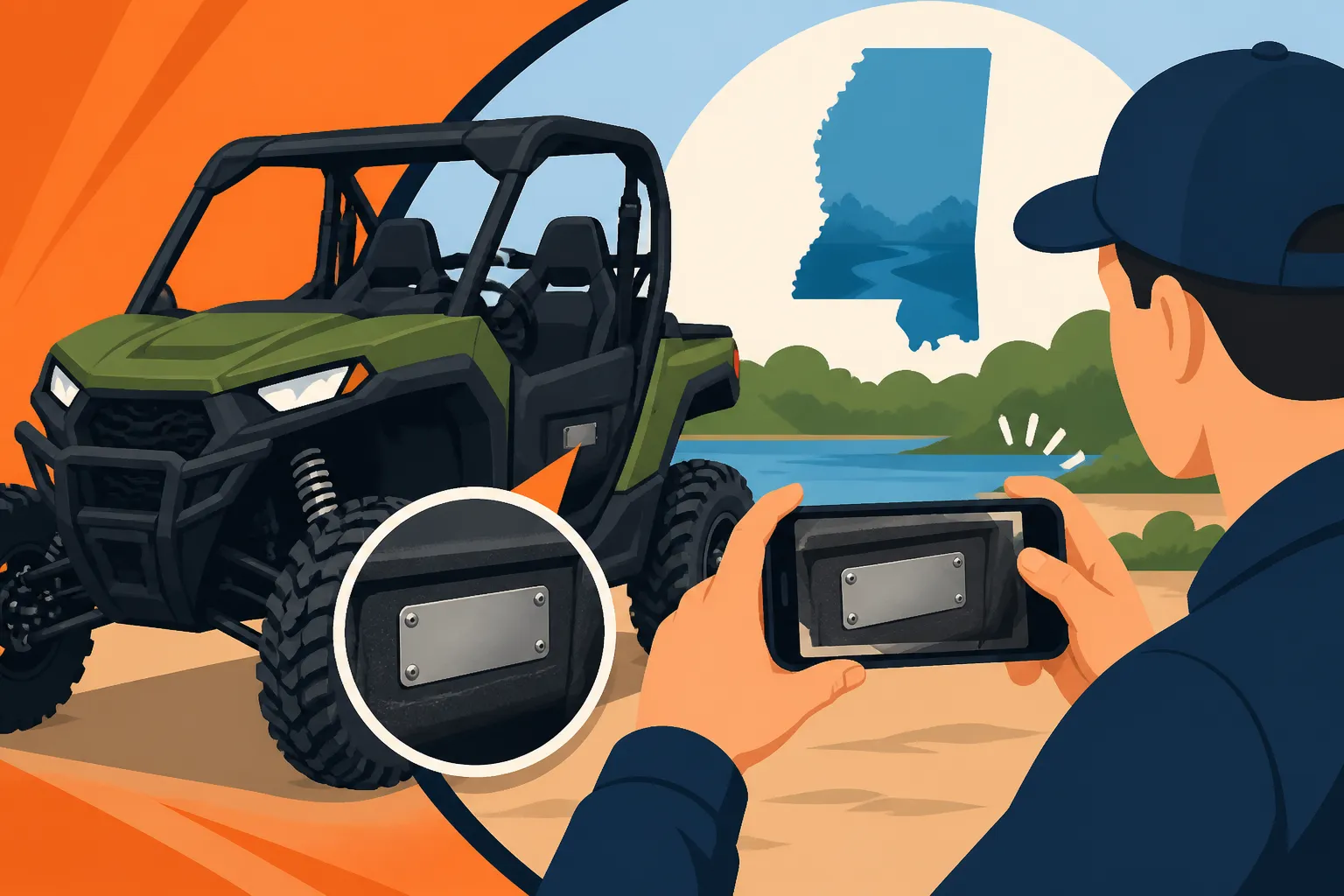
- Manufacturer's Compliance Label: Many machines have a sticker or metal plate, often on the frame, that includes the VIN, manufacturer details, and sometimes the build date. While this label is important, always try to get a photo of the VIN stamped directly into the frame as well, as stickers can be removed or damaged. [Reading a Compliance Label] can help you understand what other information is available there.
Always check a few spots. If you're having trouble, consult your owner's manual – it almost always has a diagram showing the VIN's exact location.
Best Practices for Clear Photos
Once you've found the VIN, don't just snap a quick pic. The goal is to capture a photo that is undeniably clear and legible to anyone reviewing it.
- Clean the Area Thoroughly: Dust, mud, grime, and even old oil can obscure the stamped characters. Use a wire brush, a stiff bristled brush, or even some brake cleaner (carefully, away from painted or plastic parts) to ensure the VIN is completely free of debris. You might be surprised how much clearer the numbers become after a good cleaning.
- Optimal Lighting: Natural daylight is usually best. If you're indoors, use strong, direct lighting. Avoid shadows falling across the VIN. If necessary, use a flashlight held at an angle to highlight the stamped characters, making them pop out from the frame.
- Multiple Angles and Distances: Take several photos. Get a close-up shot that fills the frame with just the VIN, ensuring every character is distinct. Then, take a slightly wider shot that shows the VIN in context on the frame, so the buyer can see its location.
- Stabilize Your Shot: A blurry photo is useless. Steady your hand, brace your arm, or even use a small tripod if you have one. Ensure the camera is in focus directly on the VIN.
- Review Immediately: After taking the photos, zoom in on them on your phone or camera screen. Can you read every single character clearly without squinting? If there's any doubt, retake it until it's perfect. Remember, a picture is worth a thousand words, and in this case, a clear VIN photo is worth avoiding a thousand headaches. For machines built after the cutoff, [Finding a Build Date on a Frame] is as important as the VIN itself for titling.
Documenting the Compliance Label
In addition to the VIN stamped on the frame, many ATVs and UTVs have a compliance label or sticker. This label typically contains the VIN, the manufacturer's name, the vehicle's gross vehicle weight rating, and, crucially, the manufacture date. While not always the primary source for the VIN itself, it serves as an excellent cross-reference. A buyer will often check this label, especially if they are trying to determine if the machine falls under the new titling laws. Take clear photos of this label as well, ensuring all text is readable. This provides additional layers of verification and transparency for potential buyers.
Sharing Your VIN Photo Safely and Responsibly
Once you have those perfect, clear VIN photos, the next question is how and when to share them. While transparency is good, you also want to protect your privacy and prevent any misuse of your machine's unique identifier. There's a balance to strike, especially in the context of a private sale.
When to Share and With Whom
Resist the urge to plaster your VIN photo all over your initial online listing. While it shows good faith, it's generally a better practice to share the VIN with serious, qualified buyers only after they've expressed genuine interest, perhaps after an initial conversation or inquiry.
Here’s a good workflow:
- Initial Inquiry: A potential buyer reaches out, asks some questions about the machine, and seems legitimately interested.
- Pre-Screening: You can have a brief chat with them, perhaps over the phone, to gauge their seriousness.
- Share the VIN: Once you feel confident they are a serious prospect, you can then send them the clear VIN photos. This allows them to run their own checks (like seeing if it's been reported stolen or if any liens are associated with it) before they invest time in driving out to see the machine. It demonstrates you're a trustworthy seller without exposing the VIN to every casual browser.
- In-Person Verification: When the buyer comes to see the machine, encourage them to visually inspect the VIN on the frame itself and compare it to the photos you sent, as well as any paperwork you have, like the MCO or title. This final step solidifies their confidence.
Protecting Your Privacy and Information
While sharing the VIN is important for the sale, you need to be mindful of what other information you're sharing.
- No License Plates: For ATVs and UTVs, this isn't usually an issue since [Mississippi Issues No License Plate] for these machines. However, if you have a trailer with a plate in the photo, make sure to obscure or blur it.
- Personal Information: Ensure your photos don't accidentally capture personal documents, your address, or any other sensitive information. When taking wider shots of the machine, be aware of what's in the background – a clear view of your house number or identifying landmarks isn't ideal for public listings.
- Digital Tools for Sharing: When sending photos, use secure methods like direct messaging through a trusted platform, or email. You could also redact other irrelevant information in a wider shot if necessary, though focusing tightly on the VIN is usually the better approach.
Remember, the goal is to provide enough information for a buyer to make an informed decision and trust you, without oversharing or compromising your personal security.
Using a Bill of Sale and Other Documents
The VIN photo is one piece of the puzzle, but it’s part of a larger documentation process. When you get to the point of sale, a comprehensive bill of sale is crucial. This document should explicitly include the VIN, clearly stating that the buyer has verified it. You can easily create a professional bill of sale using resources like LawDepot, which offers templates that help ensure all necessary information is included. A good bill of sale protects both you and the buyer by outlining the terms of the transaction, the "as-is" condition of the machine, and confirming the transfer of ownership. It's not just a formality; it's a legal safeguard. [What Your Bill of Sale Must Show] goes into more detail about the essential elements.
| VIN Photo Best Practices | Common Mistakes to Avoid |
|---|---|
| Clean the VIN area thoroughly | Taking photos with dirt/mud obscuring numbers |
| Use bright, direct lighting | Shooting in dim light or with shadows |
| Take multiple angles/distances | One blurry, far-away shot |
| Verify legibility immediately | Assuming the photo is clear without checking |
| Share with serious buyers only | Posting VIN publicly on initial listing |
| Focus only on the VIN | Including personal info/plates in photos |
| Cross-reference with labels | Relying only on a worn sticker VIN |
What Else to Do Before a Delta Sale
Selling an ATV or UTV is more than just posting an ad and shaking hands. Especially in a place like the Mississippi Delta, where folks appreciate a straightforward deal, doing your homework and preparing your machine properly can make all the difference. Beyond the critical VIN photo, there are several steps you should take to ensure a smooth, legitimate, and successful transaction.
Gathering All Your Paperwork
Before you even think about listing your machine, get all your ducks in a row concerning documentation. This is where many private sales hit snags.
- Manufacturer's Certificate of Origin (MCO): For newer machines, this is the factory-issued document that acts as the machine's birth certificate. [Mississippi Requires an MCO for a New Machine] for titling. If you bought it new, you should have this.
- Title (If Applicable): If your machine was manufactured after July 1, 2025, it must be titled in Mississippi. You should have this title in hand, free of any liens. Even for older machines, if you voluntarily titled it, having that document ready is a huge plus. Make sure your name matches the name on the title.
- Bill of Sale from Previous Owner: If you bought the machine used, having the bill of sale from your purchase is important. [Mississippi Bills of Sale for a Used Machine] explains what needs to be on it. This establishes a clear chain of ownership.
- Maintenance Records: Keep a folder of all service records, oil changes, and repairs. This shows a buyer that you've cared for the machine and can justify your asking price.
- Accessory Documentation: If you've added significant accessories (winch, light bar, upgraded suspension), have receipts or documentation for those as well.
Having all these papers neatly organized and ready to present adds immense credibility to your listing and helps justify your asking price. Using a service like LawDepot to draft a comprehensive bill of sale is a smart move for the actual transaction, protecting both buyer and seller.
Cleaning and Presenting Your Machine
First impressions matter, whether you're selling a house or a mud machine. A clean, well-presented ATV or UTV will always attract more serious buyers and fetch a better price than a machine covered in the last season's mud.
- Deep Clean: Wash the entire machine thoroughly. Get into all the nooks and crannies. A pressure washer can be your friend here, but use it carefully around electrical components and bearings.
- Tire Shine: Make those tires look fresh.
- Engine Bay: Wipe down the engine and transmission areas. A clean engine suggests a well-maintained machine.
- Frame Inspection: While cleaning, pay close attention to the frame for any cracks or damage that you might have overlooked. Be honest about any issues.
- Fluid Check: Top off fluids, and ensure there are no obvious leaks.
- Test Ride: Take it for a quick spin to ensure everything is in working order. Check the brakes, lights, and gauges.
A machine that looks good and runs well tells a buyer you've taken pride in your ownership, and that confidence translates into a smoother sale.
Delta-Specific Considerations
Selling privately in the Mississippi Delta has its own unique flavor. The wide-open spaces, the prevalence of farming and hunting, and the general community feel can influence how you conduct your sale.
- Meeting Location: While you might prefer your home, consider a public, well-lit location if you're uncomfortable. A local police station parking lot (call ahead to ask permission) or a busy retail parking lot can offer a safer environment for transactions. This is especially true when dealing with cash.
- Cash Transactions: Many private sales are still cash-based. If you're accepting cash, plan to meet at your bank to verify large sums immediately. Never accept checks from strangers unless you're willing to wait for them to clear fully before releasing the machine.
- Farm Use Context: Many machines in the Delta are used for farm or hunting club work. Be ready to speak to your machine's utility features or how it's suited for these purposes. [Mississippi Machines Used Only on a Farm] still benefit from a clear chain of ownership, even if they aren't primarily recreational.
- Local Knowledge: Buyers from the Delta often know their machines and the local riding conditions. Be prepared for detailed questions about performance in mud, on levees, or through fields. Honesty about your machine's capabilities and history will be appreciated. [Buying From a Seller in the Delta] means understanding the local buyer's perspective.
By taking these additional steps, you not only improve your chances of a quick and fair sale, but you also protect yourself and ensure a positive experience for both parties involved.
Disclaimer
This article is for general informational purposes only and does not constitute professional advice. Laws, prices and regulations vary by location and change over time. Consult a qualified professional for guidance on your specific situation.