65 Inches and 2,000 Pounds
Navigating the world of off-road vehicles in Mississippi can feel like trying to solve a puzzle with missing pieces, especially when you’re trying to figure out what type of machine you actually own or are looking to buy. The distinctions between ATVs and UTVs, or "Recreational Off-Highway Vehicles" (ROVs) as the state often calls them, can be really murky, and understanding these differences is crucial for everything from titling to where you can legally ride. This guide is here to cut through that confusion, focusing specifically on the larger, heavier machines that typically fit the "65 inches and 2,000 pounds" description, and what that means for you as a rider or owner in the Magnolia State.
Understanding Mississippi's Off-Road Vehicle Definitions
It's easy to lump all off-road vehicles into one big category, especially when you're just eager to hit the trails or tackle some chores around the property. However, Mississippi law draws some pretty important lines between different types of machines, and these distinctions aren't just for bureaucrats; they directly impact how you title your vehicle, and in some cases, even where you're permitted to take it. Ignoring these definitions can lead to headaches down the line, whether it's at the tax collector's office or if you happen to encounter law enforcement while out on a ride.
The Legal Distinction: ATV vs. ROV
In Mississippi, the legal framework often distinguishes between what most of us call an ATV (All-Terrain Vehicle) and what is formally known as a Recreational Off-Highway Vehicle, or ROV. This distinction typically hinges on a few key characteristics, primarily width, weight, and the seating/steering configuration. While both are designed for off-road use, their design differences lead to different legal classifications. Think of it like cars versus trucks; both are motor vehicles, but they're regulated differently in many contexts due to their inherent design and purpose.
For instance, an ATV is generally a smaller, saddle-seated machine designed for a single rider, or occasionally two if it's a factory-designed two-up model. ROVs, on the other hand, usually resemble a small car or utility truck, with side-by-side seating, a steering wheel, and often a roll cage. These aren't just arbitrary design choices; they signify a different class of vehicle in the eyes of the law, which is essential to grasp before you invest in a machine or head out on your next adventure. Knowing which category your machine falls into is the first step in ensuring you're compliant with state guidelines.
What Qualifies as an ATV in Mississippi?
When the state of Mississippi talks about an ATV, it generally refers to a machine that meets specific criteria regarding its dimensions and weight. Specifically, a traditional ATV is often defined as having a width limit of [Mississippi ATV Width Limit of 50 Inches] and a weight limit of [Mississippi ATV Weight Limit of 1,000 Pounds]. These are the quads and three-wheelers you typically see, designed for agility and single-rider recreation or light utility work. They have handlebars for steering, and the rider straddles the engine.
These limits are in place for various reasons, including trail design, safety, and operational characteristics. Trails in national forests, for example, often have width restrictions that directly align with the 50-inch standard, meaning anything wider simply won't fit or isn't allowed. Understanding that your machine, if it's a traditional quad, likely falls within these parameters helps you anticipate rules and restrictions. It means you're operating a vehicle that the state considers distinct from its larger, more robust cousins, which we'll dive into next.
The 65-Inch and 2,000-Pound Mark: Defining the ROV
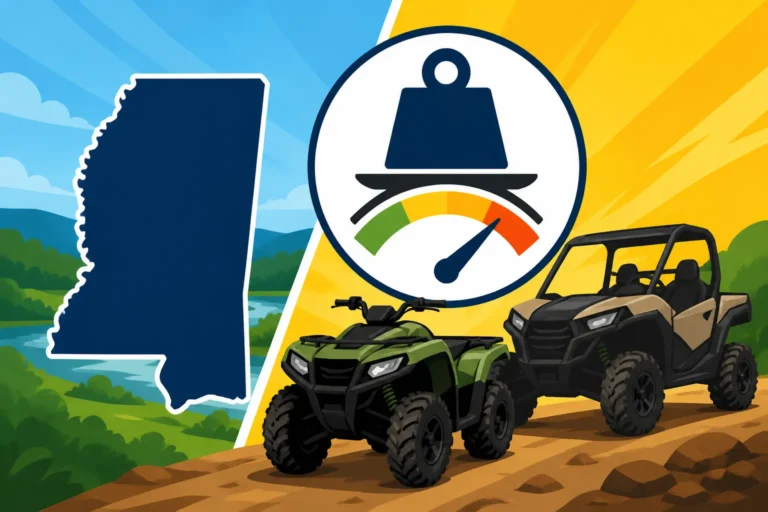
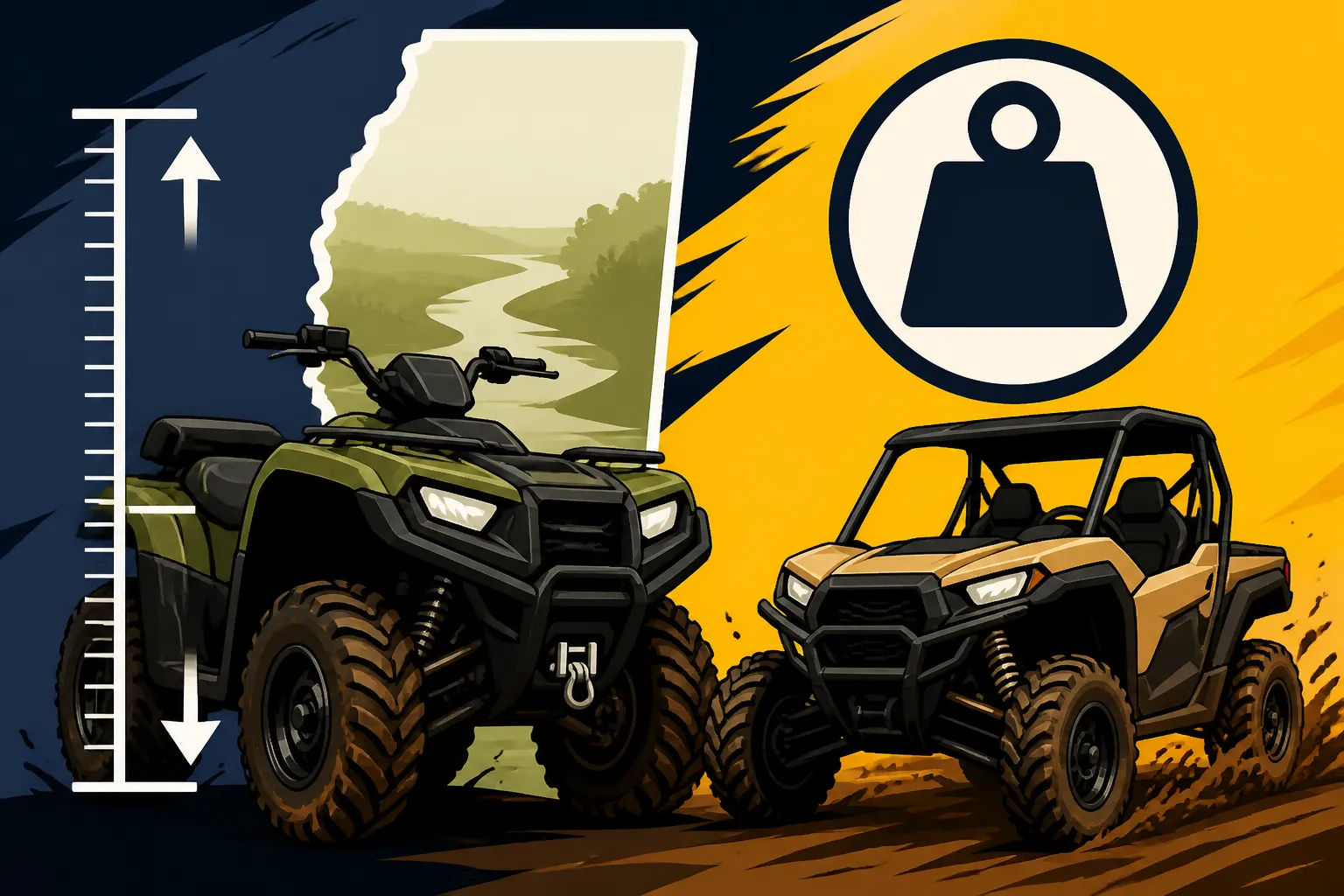
When you move beyond the traditional ATV, you start entering the realm of the Recreational Off-Highway Vehicle, or ROV. These are the machines that push past the 50-inch width and 1,000-pound weight limits, often to accommodate more passengers, greater cargo capacity, or more robust capabilities. The specific figures of 65 inches and 2,000 pounds are crucial benchmarks that help define these larger machines within Mississippi's legal framework. They represent a significant jump in size and utility compared to their smaller ATV counterparts.
Side-by-Sides and UTVs Fall into This Category
The machines you typically see fitting the "65 inches and 2,000 pounds" description are what most people commonly call side-by-sides or UTVs (Utility Terrain Vehicles). These vehicles are designed with features more akin to a car or small truck, including bench or bucket seating for two or more passengers, a steering wheel, and often a roll-over protection structure (ROPS) or full cab. Their wider stance and heavier build provide increased stability, more carrying capacity, and often greater towing capability, making them popular for both recreational trail riding and heavy-duty work on farms or construction sites.
For instance, if you're looking at [Titling a Side-by-Side in Mississippi], you'll definitely be dealing with the ROV classification. These machines are increasingly popular, offering a blend of utility and recreation that many riders find appealing. The ability to carry tools, hunting gear, or even multiple passengers comfortably is a huge draw. However, that added size and weight also come with specific regulatory considerations, which are vital to understand before you commit to a purchase or plan your next ride. Their robust nature means they interact differently with terrain and regulations than smaller ATVs.
Why Size and Weight Limits Matter for ROVs
The reason these size and weight limits for ROVs are so important isn't just about technical specifications; it has real-world implications for owners. First and foremost, these dimensions dictate access. Many established trails, particularly those managed by public agencies, were originally designed for narrower ATVs. A 65-inch wide side-by-side might simply be too wide for certain gates, bridges, or single-track paths, effectively restricting where you can ride. This is a common frustration for UTV owners who find themselves excluded from trails that accommodate ATVs. You'll often find [Mississippi Trails With Width Limits] that explicitly call out these dimensions.
Beyond trail access, the weight impacts transport, safety, and infrastructure. A 2,000-pound machine requires a more robust trailer and towing vehicle. During operation, its weight has a different impact on soft terrain and can require different driving techniques, especially on steep inclines or muddy conditions. From a regulatory perspective, the state uses these dimensions to differentiate vehicles for titling purposes and, importantly, to inform rules about operating them, such as safety equipment or even where they might be allowed in certain local ordinances. It's not just about the numbers; it's about what those numbers mean for your entire off-roading experience.
Practical Implications for Owners and Buyers
Understanding the legal definitions of ATVs and ROVs in Mississippi isn't just an academic exercise; it has very real, practical implications for anyone who owns, is considering buying, or regularly uses these machines. From the paperwork you need to fill out to where you can actually enjoy your ride, these distinctions ripple through nearly every aspect of off-road vehicle ownership in the state. Getting it wrong can lead to unnecessary complications, fines, or even issues with your vehicle's legality and resale value.
Titling Requirements Based on Vehicle Type
One of the most significant practical implications of these classifications comes down to titling. As of a certain date, any off-road machine manufactured after a specific cutoff is required to be titled in Mississippi. This applies equally to smaller ATVs and larger ROVs. So, if you're purchasing a brand-new side-by-side that's 65 inches wide and weighs 2,000 pounds, it absolutely needs a title. This is aligned with the rule that [ATVs Made After July 2025 Must Be Titled]. The titling process ensures proper ownership documentation, aids in preventing theft, and is crucial for official transfers of ownership.
When you purchase a new ROV from a dealer, they should provide you with a [Mississippi Requires an MCO for a New Machine], which is essential for obtaining your title. For used machines, a proper [Mississippi Bills of Sale for a Used Machine] is paramount. This bill of sale should clearly identify the vehicle and the transaction details. Whether you have a quad or a hefty UTV, the principle is the same: the state wants a clear record of ownership for newer machines. Without a title, selling your machine later on can become a huge hassle, and proving ownership if it's ever stolen becomes much more difficult.
Riding Restrictions and State Regulations
Perhaps the most frustrating practical implication for many off-road enthusiasts is the set of riding restrictions that apply to both ATVs and ROVs. Mississippi maintains a very strict stance: [Mississippi Bans ATVs on Public Roads]. This prohibition generally extends to ROVs as well, meaning your large side-by-side cannot legally be driven on state highways, county roads, or city streets, unless specifically permitted by a local ordinance (which are rare and highly specific). This often comes as a shock to new owners, especially those moving from states with more lenient road access laws.
Furthermore, as mentioned before, the sheer size of a 65-inch wide ROV can limit your access to certain trails. While some private parks and larger trail systems are designed to accommodate these wider vehicles, many public trails, particularly in national forests, enforce strict width limits. For example, you might find that while your smaller quad is perfectly fine, your side-by-side is too wide for trails designated for 50-inch machines. Even on public hunting lands, rules like [Mississippi WMA Designated Roads Only] mean you can't just wander wherever you please; you're often confined to established routes, and sometimes even those have width restrictions. It's crucial to check with land managers or local authorities before you load up and head out.
Insurance, Financing, and Other Considerations
While Mississippi does not currently mandate liability insurance for off-road vehicles, including large ROVs, it's a significant practical consideration. Given the cost of these machines and the potential for accidents, carrying comprehensive coverage is highly advisable. Many riders ask, [Why Mississippi Riders Still Buy ATV Insurance], and the answer often boils down to protecting their investment against theft, damage, or liability in an accident. A large, expensive side-by-side represents a substantial financial commitment, and protecting that with insurance is just smart planning, even if it's not legally required.
Financing a machine, especially a larger, more expensive ROV, is another area where practical considerations come into play. Lenders will require proper documentation, including titles for newer machines, to secure the loan. Interest rates and loan terms can vary, so it's wise to shop around. Beyond purchase and insurance, don't forget the ongoing costs: fuel, maintenance (which can be more expensive for larger, more complex machines), and potential upgrades. Considering the full financial picture before you buy is essential to avoid surprises down the road, ensuring your enjoyment isn't overshadowed by unexpected expenses.
The Importance of Accurate Documentation
In the world of off-road vehicles, especially as regulations evolve, having your paperwork in order is paramount. It's not just about ticking boxes for the state; it's about protecting yourself, your investment, and ensuring smooth sailing when it comes to ownership, sales, and even accident claims. For a machine that measures 65 inches and 2,000 pounds, the stakes can be higher due to its significant value and the complexity of its classification.
Bills of Sale and Manufacturer's Certificates
Whether you're buying a new side-by-side or picking up a used ATV, the foundation of legal ownership starts with the right documents. For a brand new ROV straight from the dealer, you absolutely need a Manufacturer's Certificate of Origin (MCO). This document is like the birth certificate for your machine and is indispensable for obtaining your title. Without it, you’ll face significant hurdles. When buying used, a comprehensive bill of sale is your best friend. It needs to clearly state the seller and buyer information, the machine's make, model, year, and VIN (Vehicle Identification Number), the purchase price, and the date of sale. [What Your Bill of Sale Must Show] is not just a suggestion; it's a critical checklist for a legitimate transaction.
This is where tools can become incredibly helpful. Crafting a legally sound bill of sale or other necessary documents can feel daunting, but services like LawDepot offer templates and guidance to help you create official-looking and legally robust paperwork. Having a clear, professional document prevents disputes and ensures that all parties understand the terms of the sale. It’s peace of mind wrapped in paper, ensuring that your large ROV has a clear and unquestionable ownership history, which is vital for titling and future resale. Never underestimate the power of thorough paperwork.
Avoiding Pitfalls with Unclear Definitions
One of the biggest pitfalls for off-road enthusiasts in Mississippi is falling victim to unclear or misunderstood definitions. You might assume your 65-inch side-by-side is just a "big ATV," but as we've discussed, the state makes clear distinctions. Mistaking an ROV for a standard ATV can lead to incorrect titling applications, issues with insurance policies, or even legal trouble if you're riding in areas where one is permitted and the other isn't. The nuances in the law, though subtle, carry significant consequences.
For instance, if you submit paperwork for an ATV title when your machine clearly fits the ROV description, you might experience delays or rejection from the county tax collector's office. [Mississippi Title Questions Collectors Hear] often revolve around these definitional ambiguities, as clerks strive to ensure applications are accurate. Moreover, if your insurance policy is based on an incorrect classification, you could find yourself without coverage when you need it most. It's always best to be precise and understand exactly how your specific machine is defined under Mississippi law to avoid these headaches. Using platforms like LawDepot for custom legal forms can help ensure you’re using the correct terminology and meeting all necessary criteria for your specific vehicle type.
Key Differences Between ATVs and ROVs in Mississippi
To help clarify the distinctions we've been discussing, here's a table summarizing the general characteristics and typical legal definitions of ATVs versus ROVs in Mississippi. Keep in mind that specific models can sometimes blur these lines, but these are the common categories.
| Feature | ATV (All-Terrain Vehicle) | ROV (Recreational Off-Highway Vehicle, Side-by-Side/UTV) |
|---|---|---|
| Typical Width | Generally 50 inches or less | Often up to 65 inches, sometimes wider |
| Typical Weight | Generally 1,000 pounds dry weight or less | Often up to 2,000 pounds dry weight or more |
| Seating | Saddle-style seat, often for one, sometimes two (factory two-up) | Bench or bucket seats, side-by-side, for two or more |
| Steering | Handlebars | Steering wheel |
| Control | Straddle position | Sit-in position, often with seatbelts and roll cage |
| Typical Use | Recreation, sport, light utility | Recreation, heavy utility, hunting, family riding |
| Titling for New Machines | Required for machines made after July 2025 | Required for machines made after July 2025 |
| Road Access | Generally prohibited on public roads | Generally prohibited on public roads |
Final Thoughts for Mississippi Off-Road Enthusiasts
The passion for off-road riding runs deep in Mississippi, whether you're tearing up a mud pit in a high-powered side-by-side or navigating tight trails on a nimble quad. But enjoying these incredible machines responsibly and legally requires a solid understanding of the rules that govern them. The state's distinctions, particularly around the size and weight that categorize an ROV like the 65-inch, 2,000-pound beast, are not just arbitrary numbers; they are foundational to how you interact with the law, your land, and fellow riders.
Staying Informed is Key
The landscape of off-road vehicle regulations, while often slow to change, does evolve. New bills can be introduced, local ordinances can be enacted, and interpretations of existing laws might shift. For this reason, staying informed is absolutely critical. Don't rely solely on what you heard at the last campfire gathering or from a buddy. Make it a practice to check official sources, such as the Mississippi Department of Revenue or your local county tax collector's office. Clerks at these offices are on the front lines and can often answer specific questions about titling and classification, helping you avoid common missteps. [Mississippi Title Questions Collectors Hear] frequently, so don't hesitate to reach out.
Additionally, if you plan to ride on specific public lands, like a Wildlife Management Area (WMA) or a National Forest, always consult their specific rules and regulations before you go. These rules can supplement state law and may impose additional restrictions, particularly concerning vehicle size and permissible riding areas. Being proactive and seeking out current information will save you a lot of potential headaches and ensure your riding experiences remain enjoyable and problem-free.
Protecting Your Investment
Your ATV or ROV, especially a larger side-by-side, represents a significant investment of time, money, and passion. Understanding the precise legal definitions, like the 65-inch width and 2,000-pound weight limits, is a crucial step in protecting that investment. Proper titling for newer machines ensures clear ownership and protects against theft and fraud. Knowing the legal riding areas prevents fines and potential impoundment of your vehicle. And having all your documentation in order, from the MCO to a well-crafted bill of sale (which you can easily create with resources like LawDepot), secures your ownership rights.
Beyond the legalities, consider the physical protection of your machine. Regular maintenance, smart riding practices, and appropriate insurance coverage all play a role in the longevity and value of your off-road vehicle. By being diligent about all these aspects—from the paperwork to the way you ride—you ensure that your 65-inch, 2,000-pound powerhouse continues to provide years of thrilling adventures and reliable service across the diverse terrain of Mississippi. Happy riding, and stay safe out there!
Disclaimer
This article is for general informational purposes only and does not constitute professional advice. Laws, prices and regulations vary by location and change over time. Consult a qualified professional for guidance on your specific situation.