50 Inches Wide and 1,000 Pounds Dry
The world of off-road vehicles can feel like a maze, especially when you're trying to figure out the specific rules for your pride and joy in Mississippi. Many folks scratch their heads wondering if their machine, whether it’s a nimble quad or a beefy side-by-side, even needs a title, and what those seemingly arbitrary width and weight limits really mean for them. This guide is here to untangle the confusion surrounding Mississippi's legal definitions for ATVs and ROVs, explaining how your machine's size and build date directly impact titling requirements and your responsibilities as an owner.
Decoding Mississippi's ATV and ROV Definitions
It might seem like a small detail, but how the state of Mississippi legally defines your off-road machine makes a huge difference in what you need to do to keep things above board. We're not just talking about what you call it in conversation; these are specific classifications that dictate titling requirements, and even where you can legally ride. It's not always intuitive, and many riders find themselves surprised by the nuances.
The "ATV" You Think You Know (50 Inches and Under)
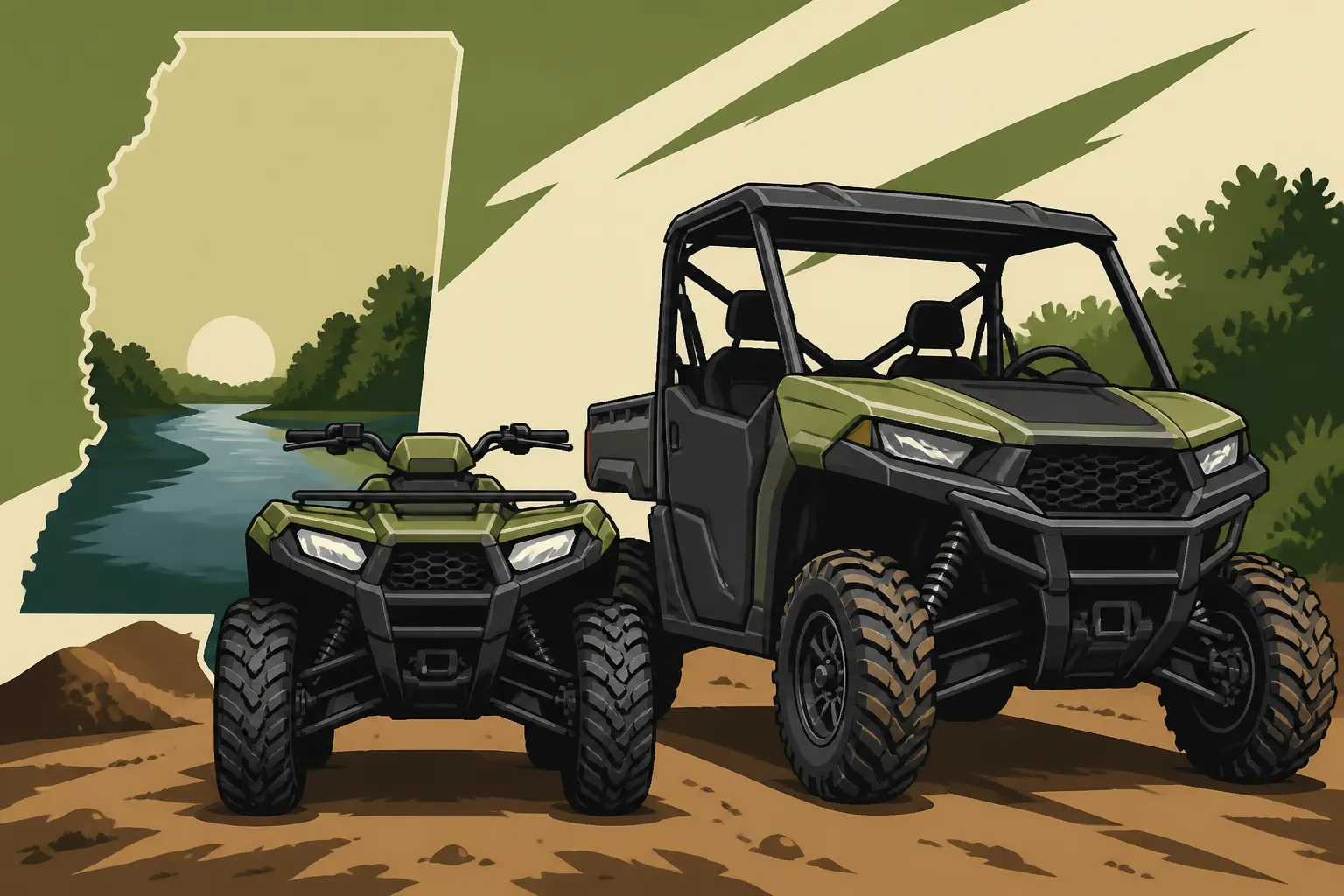
For many years, when someone said "ATV," we typically pictured a four-wheeled quad, designed for a single rider, nimble enough to weave through tight trails. Mississippi's legal definition largely aligns with this common understanding, but it adds crucial numerical parameters. An All-Terrain Vehicle (ATV) in Mississippi is specifically defined as a motorized vehicle, generally with three or more wheels, that is 50 inches or less in width. Crucially, it also has a dry weight (meaning without fuel or fluids) of 1,000 pounds or less. This distinction is paramount because it sets the baseline for how the state views and regulates these machines. If your quad falls within these dimensions, the state classifies it as an ATV, and this classification is the first step in understanding its titling journey.
This definition often leads to confusion, especially for owners of older, smaller machines or those who have custom-built quads. While your machine might look like a classic ATV, if it somehow exceeds the 50-inch width or the 1,000-pound dry weight, it might not technically be an ATV in the eyes of Mississippi law. This isn't just bureaucratic jargon; it directly impacts whether certain rules or trail access limitations apply to your specific vehicle. Understanding this core definition helps you avoid potential headaches down the road, ensuring you're classifying your machine correctly for all official purposes, including titling.
Understanding Recreational Off-Highway Vehicles (ROVs)
Then there's the other big player in the off-road world: the Recreational Off-Highway Vehicle, or ROV. Many of us know these as side-by-sides or UTVs, and they've exploded in popularity because they offer more passenger capacity and often greater utility. Mississippi law distinguishes ROVs from ATVs by their larger dimensions. An ROV is generally defined as a motorized vehicle designed for off-highway use, often with four or more wheels, that exceeds the ATV's limits: it can be up to 65 inches in width and have a dry weight of up to 2,000 pounds. These machines are typically designed to carry multiple passengers side-by-side, hence the common "side-by-side" moniker.
The distinction between an ATV and an ROV based on these dimensions is more than just semantics; it reflects the differing capabilities and uses of these machines. A larger ROV might be better suited for hauling gear, working on a farm, or accommodating a family for a trail ride, but its size can also limit access to certain trails designed specifically for narrower ATVs. Knowing whether your machine is an ATV or an ROV according to these state definitions is critical. It guides how you approach titling, potential insurance considerations, and certainly, where you can and cannot safely and legally enjoy your ride. The bigger dimensions mean a different set of expectations from the state, both in terms of paperwork and practical application.
Why These Dimensions Matter for Titling
Understanding the physical specifications of your off-road machine – its width and dry weight – isn't just about knowing what kind of vehicle you own. In Mississippi, these dimensions are intrinsically linked to whether your machine needs a title, especially with upcoming changes in the law. It's a common point of confusion, and getting it right is essential for hassle-free ownership, buying, and selling.
The July 2025 Cutoff and Your Machine's Size
The state of Mississippi has made it clear that a significant change is coming: as of July 1, 2025, all ATVs and ROVs manufactured on or after that date will be required to have a title. This means if you're eyeing a brand-new model from 2026 or later, regardless of whether it’s a compact 50-inch ATV or a wider 65-inch ROV, it will need a title. The dimensions become crucial because they confirm which type of machine is being titled and ensure that the correct procedures are followed. For example, a manufacturer’s certificate of origin (MCO) for a larger ROV might list different specifications than one for a smaller ATV, but both will trigger the mandatory titling process if they’re built after the cutoff date. You can learn more about this in [Mississippi Machines Built After July 2025].
This hard cutoff date simplifies some aspects but places a new burden on buyers and dealers to ensure proper titling from the get-go. No longer will new machines exist in a titling gray area. The size of the machine still serves as its core identifier within the legal definitions of an ATV or ROV, guiding the paperwork you'll receive from the dealer and what the county tax collector will expect. If you purchase a machine built on or after July 2025, understanding its dimensions will confirm its classification, which in turn reinforces the need for its title and how it will be processed.
Voluntary Titling for Older, Smaller Machines
What about all those machines built before July 1, 2025? Many riders in Mississippi own older quads and side-by-sides that have never been titled, and frankly, some may not even know what an MCO is anymore. For these machines, titling remains voluntary. However, even with voluntary titling, the precise definitions of an ATV (50 inches wide, 1,000 pounds dry) and an ROV (up to 65 inches wide, 2,000 pounds dry) still play a role. If you choose to voluntarily title your older machine, it will be identified and recorded based on these same dimensions and classifications. For instance, if you have a classic three-wheeler that's clearly under 50 inches, it would be titled as an ATV. You can find more details about this option in [Mississippi Voluntary Titles for Older Machines].
There are many good reasons to pursue a voluntary title for an older machine. It provides clear proof of ownership, which can be invaluable if your machine is ever stolen or if you decide to sell it. Trying to sell an untitled machine can be a real hassle, as many buyers are wary of machines without clear lineage. The process for these older machines might involve using a bill of sale, or even a title bond if you lack adequate paperwork, and confirming its type and dimensions helps the county tax collector accurately process your application. Even if it's not mandated, establishing a clear paper trail, identified by your machine's specific type and size, offers peace of mind and simplifies future transactions.
Practical Implications for Owners and Buyers
Beyond the legal definitions and titling requirements, the physical characteristics of your ATV or ROV have tangible, everyday implications. From the moment you decide to buy or sell, to how you ensure and even use your machine, its size and type woven into Mississippi's legal framework will affect your experience. These aren't just abstract rules; they're realities that every off-road enthusiast needs to consider.
Buying and Selling Based on Machine Type and Size
When you're in the market for a new-to-you off-road machine, or when it's time to let your current one go, the state's definitions of ATVs and ROVs directly influence the transaction. If you're buying a machine built after the July 2025 cutoff, you'll naturally expect to receive a title. But what if you're looking at an older machine? Its classification as an ATV or ROV, determined by its size, will dictate what paperwork is most appropriate for proving ownership if it was never titled. For example, a proper bill of sale becomes critical for older, untitled machines. These documents, which clearly identify the machine's make, model, VIN, and often its type (ATV or ROV), are essential. You might even use a service like LawDepot to generate a legally sound [Mississippi Bills of Sale for a Used Machine] that accurately reflects the machine's type and dimensions, ensuring a smooth transfer of ownership.
When selling, accurately representing your machine’s type and dimensions helps avoid misunderstandings and potential legal issues. Buyers will want to know if they're getting a true "ATV" that fits 50-inch trails or a larger "ROV" that offers more space. This clarity builds trust and streamlines the sale process. For older machines without titles, the bill of sale acts as your primary document. For newer machines, the title itself will carry this crucial information. Ensuring all documents reflect the correct classification prevents future complications, such as a buyer struggling to obtain a title later because the machine was misidentified during the sale.
Insuring Your ATV or ROV in Mississippi
While Mississippi currently does not mandate insurance for ATVs or ROVs, many savvy riders choose to protect their investment and themselves with a policy. Here again, the state’s definitions for ATVs and ROVs, primarily based on their size and capacity, come into play with insurance providers. Insurance companies use these classifications to assess risk and determine coverage options. A smaller, single-rider ATV (50 inches, 1,000 pounds) might fall into a different risk category than a larger, multi-passenger ROV (65 inches, 2,000 pounds). This can affect everything from policy premiums to the types of coverage available, such as liability, collision, or comprehensive coverage.
When you contact an insurance agent for a quote, one of the first questions they’ll ask is about the type and specifications of your machine. Providing accurate information, consistent with Mississippi’s legal definitions, ensures you get the right coverage for your specific vehicle. For example, if you mistakenly describe your 60-inch side-by-side as an ATV, you might find yourself with an inadequate policy that doesn't fully cover the machine's true value or usage. Many riders discover [Why Mississippi Riders Still Buy ATV Insurance] even without a state mandate, recognizing the financial protection it offers. Whether it's protecting against theft, accidental damage, or liability if you're involved in an incident, an insurance policy tailored to your machine's correct classification provides peace of mind on and off the trails.
Navigating the Titling Process for Different Machine Types
Getting a title for your off-road machine in Mississippi, especially with the upcoming changes, requires attention to detail. The process isn't one-size-fits-all; it changes based on whether your machine is brand new or used, and critically, what type of machine it is according to the state's definitions. Knowing these distinctions can save you a lot of time and frustration at the county tax collector's office.
Titling a New ATV vs. ROV in Mississippi
For those acquiring a brand-new ATV or ROV that was manufactured on or after July 1, 2025, the titling process will begin at the dealership. The cornerstone of titling a new machine is the Manufacturer’s Certificate of Origin, or MCO. This document is essentially the birth certificate of your vehicle, detailing its make, model, year, VIN, and importantly, its exact type (ATV or ROV) and specifications, including width and dry weight. Dealers are expected to provide this MCO to you, and it’s a critical piece of paperwork when you go to your county tax collector to obtain your title. You can learn more about this in [Mississippi Requires an MCO for a New Machine].
While the fundamental requirement of an MCO remains the same for both new ATVs and ROVs, the specific details on that MCO will reflect whether your machine is 50 inches wide or 65 inches wide, and its corresponding dry weight. The county tax collector will process your title based on this information, ensuring your title accurately reflects your machine's classification. There generally aren't different application forms for new ATVs versus new ROVs; rather, the descriptive information on the MCO is what guides the process. It's vital to ensure that the MCO is correctly filled out by the dealer and matches the machine you've purchased, as any discrepancies could delay your titling process.
Titling a Used Machine When Papers are Missing
The situation can get a bit trickier when you're trying to title a used ATV or ROV, especially if key paperwork like the original MCO or previous owner's title is nowhere to be found. This is a common scenario, as many older machines were never titled in Mississippi, and documents can easily get lost over years of ownership. While the state encourages voluntary titling for these older machines, the lack of proper documentation shouldn't be an insurmountable barrier. You'll still need to prove ownership and the machine's identity.
In cases where essential papers are missing, Mississippi offers a solution: the title bond procedure. A title bond essentially acts as a guarantee that you are the rightful owner of the machine. This process usually involves applying for a title bond from an insurance or bonding company, which requires you to provide as much information as possible about the machine – including its VIN, make, model, and crucially, whether it's an ATV (50 inches wide) or an ROV (65 inches wide) based on its physical characteristics. Organizations like LawDepot can also help you create legally valid affidavits of ownership or bills of sale that can support your application for a title bond. Understanding [Mississippi Title Bond Procedure] is key here. Once you have the bond, you can then apply for a title through your county tax collector, using the bond to replace the missing ownership documents. This ensures that even machines with a murky paper trail can eventually receive a clear, state-issued title, identified by their correct classification.
Common Pitfalls and Expert Tips
Navigating the world of ATV and ROV titling in Mississippi can have its challenges. It's easy to make a mistake, especially with evolving regulations and the specific definitions involved. Knowing the common pitfalls and having a few expert tips in your back pocket can save you a lot of grief and ensure a smooth process.
Avoiding Misclassification and Its Consequences
One of the most significant pitfalls is misclassifying your off-road machine. Imagine you have a side-by-side that measures 60 inches wide and weighs 1,500 pounds dry. By Mississippi's definitions, that's clearly an ROV. However, if you mistakenly try to title it as an ATV (which is limited to 50 inches wide and 1,000 pounds dry), you're setting yourself up for problems. The county tax collector's office will eventually catch the discrepancy when they cross-reference the VIN and model information. This could lead to your application being rejected, requiring you to restart the process, or even worse, creating a situation where your title doesn't accurately reflect your vehicle, which could cause headaches during a future sale or insurance claim.
The consequences of misclassification aren't just bureaucratic delays. An incorrectly titled machine might be subject to different regulations or even perceived as being improperly registered if its true identity isn't documented. Always be honest and precise when providing information to the [Mississippi County Tax Collectors and Titles]. If you're unsure whether your machine is an ATV or an ROV, measure it. Check the manufacturer's specifications. It's always better to take a few extra minutes to confirm your machine's classification than to face the frustration of having your application rejected or owning a vehicle with an inaccurate title.
Essential Documents and Information You'll Need
To ensure a seamless titling process, whether for a new or used machine, having all your ducks in a row with documentation is crucial. The most important piece of information is always your machine's Vehicle Identification Number (VIN) or serial number. This unique identifier is critical for tracking your machine, verifying ownership, and preventing theft. Before you even head to the tax collector, locate your VIN, clean it off, and even [Photographing a VIN Before a Delta Sale] is a smart move for your records. This can also help you perform a preliminary check against stolen vehicle databases, a crucial step when buying used, as detailed in [Checking a Used Quad Against Stolen Machine Records].
Here's a breakdown of the essential documents and information you'll likely need, tailored for clarity:
| Document/Information | For New Machines (2025+) | For Used Machines (Voluntary) | Notes |
|---|---|---|---|
| VIN / Serial Number | Mandatory | Mandatory | Found on the frame; crucial for all applications. |
| Manufacturer's Certificate of Origin (MCO) | Mandatory | If available | "Birth certificate" for new machines. |
| Bill of Sale | Dealer provides | Essential | Proves purchase for used machines, especially if untitled. Can use LawDepot. |
| Previous Title | N/A | If available | For used machines with a prior title. |
| Proof of Identity | Mandatory | Mandatory | Driver's license or state ID. |
| Proof of Mississippi Residency | Mandatory | Mandatory | Utility bill, lease agreement, etc. |
| Title Bond | N/A | If MCO/Title missing | Replaces lost ownership papers for used machines. |
| Payment for Fees | Mandatory | Mandatory | For title application, sales tax (if applicable). |
Having these documents complete and accurate will significantly streamline your visit to the county tax collector. Don't forget that if you're buying a used machine and the seller doesn't have an MCO or old title, a robust bill of sale or the title bond process will be your path forward. Services like LawDepot can assist in creating professional and legally recognized bills of sale.
Beyond Titling: Riding Rules and Machine Specifications
While titling is a significant aspect of ATV and ROV ownership in Mississippi, the dimensions and classifications of your machine extend their influence beyond just paperwork. They also play a critical role in where and how you can legally and safely operate your off-road vehicle, impacting everything from trail access to tire choices.
How Dimensions Impact Where You Can Ride
The physical size of your ATV or ROV, specifically its width, is a major factor in determining where you can legally and practically ride in Mississippi. Many designated off-road trails, particularly those within public lands like national forests, have specific width restrictions. For instance, the popular [Bethel OHV Trails in Mississippi] explicitly caters to machines that are 50 inches or less in width. If your machine is an ROV, which by definition can be up to 65 inches wide, you might find yourself excluded from these narrower, ATV-specific trails. This isn't just about fitting; it's about trail integrity and safety. Wider machines can damage narrower trails and create safety hazards for other riders.
This distinction means that owning a larger ROV might limit your options for public trail riding compared to a standard ATV. While there are private parks and larger trails that accommodate wider side-by-sides, it’s crucial to always check the rules and regulations of any riding area before you load up your trailer. Moreover, Mississippi has very strict laws against riding ATVs and ROVs on public roads. Your machine's classification or size does not grant you any special exceptions to this general ban. Regardless of whether it's a 50-inch quad or a 65-inch side-by-side, public road access is severely restricted, and breaking these rules can lead to fines and other penalties. Always assume public roads are off-limits unless explicitly stated otherwise by a local ordinance for specific, limited use (which is rare for ATVs/ROVs, more common for golf carts).
Understanding Non-Highway Tire Definitions
Another often-overlooked aspect of your machine's specifications, tied back to its off-road classification, is the type of tires it uses. Mississippi law includes definitions for "nonhighway tires," which are generally understood to be tires designed specifically for off-road use, not intended for sustained speeds or prolonged use on paved public roads. These tires typically feature aggressive tread patterns that provide superior grip on dirt, mud, sand, and rocks, but they wear quickly and handle poorly on asphalt. The presence of these nonhighway tires is a characteristic that further reinforces your machine's identity as an ATV or ROV – a vehicle primarily designed for off-road environments.
Understanding [Mississippi Nonhighway Tire Definitions] is important for two main reasons. First, it underscores the intended use of your ATV or ROV. These machines are built for the challenging terrain away from public streets, and their tires are a clear indicator of that design. Second, it serves as another layer of confirmation for law enforcement and titling authorities about the nature of your vehicle. While you won't be titling your tires, the fact that your machine comes equipped with these specialized tires aligns with its legal classification as an off-road vehicle. Attempting to use a machine with these tires on public roads can draw attention and reinforce a deputy's understanding that the machine is not street-legal, potentially leading to citations. Always ensure your machine, from its dimensions to its tires, is consistent with its intended and legal use.
Disclaimer
This article is for general informational purposes only and does not constitute professional advice. Laws, prices and regulations vary by location and change over time. Consult a qualified professional for guidance on your specific situation.