Muddy Bottoms Is in Louisiana, Not Mississippi
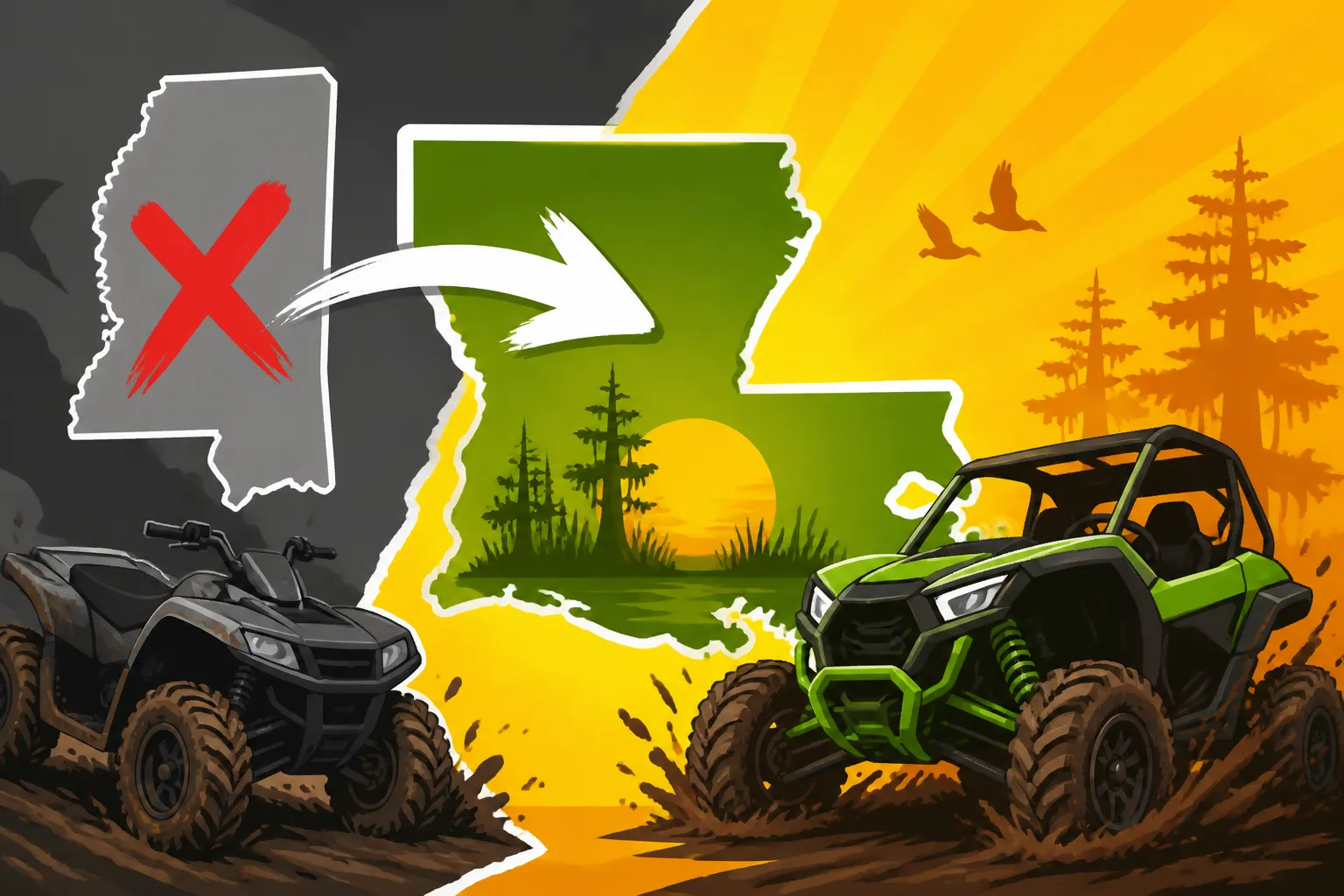
If you’re searching for a Mississippi mud park and keep finding Muddy Bottoms, the state line is the detail that changes your plans: Muddy Bottoms Off Road Trails is in Louisiana, not Mississippi. This guide explains what that means for trip planning, how to confirm a destination before you tow, and how to find riding options that are actually in Mississippi.
Where Muddy Bottoms Is and Why the State Matters
Muddy Bottoms is a Louisiana destination
Muddy Bottoms Off Road Trails is associated with Sarepta in northern Louisiana, not with a Mississippi town or trail system. That distinction can be easy to miss when search results mix regional riding parks, trail directories, and social posts. A park may show up in a search for Mississippi riding simply because riders from Mississippi consider it for a weekend trip.
The state line matters for more than the drive. It can affect which local rules apply, what the park requires at check-in, what permits or passes are relevant, and which agency to contact with questions. Don’t assume Mississippi rules, passes, or rider requirements carry over to a Louisiana facility. Check the park’s own information before you leave, especially if you’re bringing a youth rider, a side-by-side, or a machine with unusual dimensions.
It also helps to distinguish a named private riding park from public land. A private park controls access through its own entry process and posted rules. Public trails and forest roads are governed by the land manager, and a forest pass or other requirement may apply. A place appearing in a Mississippi-focused search does not make it part of Mississippi’s riding network.
Why search results can be misleading
Search engines often group nearby destinations by the words people use, not by state boundaries. Someone searching for “Mississippi mud riding” may see a Louisiana park because it attracts regional riders. A listing may also use broad labels such as “near Mississippi” or “serving Mississippi riders,” which describe its audience rather than its location.
Map pins can add to the confusion. A route planner may display the destination name without making the state prominent, or a search result may show a town name that isn’t familiar to an out-of-state visitor. Before you load the trailer, check the full street address and state on the park’s official information, then compare that location with your route. For a practical overview of the location question, see [Checking Which State a Park Is In](Checking Which State a Park Is In).
A map app is useful, but it should not be your only confirmation. Tools such as onX Offroad can help you inspect where a destination sits relative to roads and land boundaries, but the park’s own directions and rules should settle questions about access, operating days, and permitted machines. A pin is a starting point, not proof that the park is open or that your vehicle can ride there.
Plan the Trip Before You Load the Trailer
Verify the destination and its current access details
Before setting out for Muddy Bottoms, confirm the exact location and check the operator’s current information for opening days, entry procedures, fees, permitted vehicles, age rules, camping arrangements, and any weather-related changes. These details can change, and a general directory listing may not reflect a temporary closure or a new requirement. If something important is unclear, contact the park directly rather than relying on a comment thread or an old review.
It’s worth checking practical details that are easy to overlook when you’re focused on the ride. Ask whether your machine’s width or type is allowed, whether passengers must ride in factory-installed seats, and whether helmets or other protective gear are required. If you plan to camp, verify whether reservations are needed and what facilities are available. For a family trip, find out what rules apply to young riders and whether the park has separate areas or restrictions for smaller machines.
Use onX Offroad, your regular navigation app, or a paper map to review the approach before you leave. Confirm that the route leads to the actual entrance, not simply to the surrounding area. If you’re towing a wide trailer, check whether the final roads are suitable for it and whether there is space to turn around. A little route checking at home is much easier than sorting out a missed turn on a narrow road with a trailer behind you.
Budget time for the state line and the return trip
A trip to a Louisiana park means planning for travel across a state boundary, even if the destination feels like part of the same regional riding scene. Build in time for fuel, food, loading and unloading, and any check-in steps at the park. If the group is traveling in separate vehicles, share the full address and a backup meeting point so nobody ends up following a pin to the wrong entrance.
Remember that the return journey is part of the riding day. Mud, water, and sand can leave a machine and trailer messier than they started. Pack tie-downs, gloves, spare clothes, drinking water, and whatever you use to secure muddy equipment for the drive home. If you’re traveling with children or a larger group, agree on a departure plan before everyone is tired and ready to leave at different times.
| What to confirm | Why it matters | Best place to check |
|---|---|---|
| State and full address | Confirms you are heading to Louisiana rather than a Mississippi site | Park information and a route map |
| Operating days and closures | A listing may not reflect a temporary schedule change | Park’s official updates or direct contact |
| Vehicle types and size limits | Not every trail or facility accommodates every ATV or UTV | Park rules |
| Rider age and safety requirements | Rules may vary by facility and rider | Park rules and check-in instructions |
| Entry, camping, and reservation details | Helps avoid surprises at the gate or campground | Park’s official information |
| Trailer access and parking | The entrance road and parking area may affect larger rigs | Park directions and direct questions |
For broader planning ideas closer to home, [Mississippi Private Mud Parks](Mississippi Private Mud Parks) can help you distinguish in-state options from regional destinations. If you’re comparing places that accommodate larger machines, also review [Mississippi Trails That Allow Side-by-Sides](Mississippi Trails That Allow Side-by-Sides).
Finding Riding Options That Are Actually in Mississippi
Start with the type of riding you want
Mississippi has different kinds of riding opportunities, and they aren’t interchangeable. A private mud park may offer managed access and facilities, while a public forest riding area follows designated routes and land-manager rules. A trail that appears on a map may not be open to ATVs, and a road that looks rideable is not automatically a legal trail. Decide whether you want mud, forest routes, camping, family-friendly riding, or room for a side-by-side before choosing a destination.
Use [Mississippi ATV Trails: Where to Ride](Mississippi ATV Trails: Where to Ride) as a starting point, then verify access with the park or land manager responsible for the specific site. If you’re considering national forest riding, [Mississippi National Forest Riding Explained](Mississippi National Forest Riding Explained) can help you understand why designated routes and access requirements matter. Public-land access is not the same as unrestricted riding across the forest.
A mapping app can help you compare locations, but check what its markings mean. onX Offroad may be useful for viewing route context and planning where to go, but don’t treat a line on a map as permission to ride. Confirm the route’s status with the responsible operator or agency, particularly after storms or during seasonal closures.
Match the destination to your machine and group
A destination that works well for a narrow ATV may not suit a wider side-by-side. Before driving across Mississippi or into Louisiana, compare your machine’s dimensions and type with the site’s posted limits. Ask about passenger rules, youth restrictions, and whether any areas are reserved for smaller machines. These details can shape the whole day: a group with mixed vehicles may need to choose a park with suitable routes for everyone or make a different plan.
Think through the group’s experience, too. A beginner may prefer clearly marked routes and a less demanding day, while experienced mud riders may be looking for a different kind of terrain. Don’t assume that a family-friendly label means every route is appropriate for every rider. Confirm what the park means by that description and ask about supervision, protective gear, and areas suitable for younger participants.
To compare destinations without getting lost in search results, keep a short list of what your group needs: machine type, width, rider ages, terrain, camping, and travel distance. Then use that list to check each location’s rules directly. [Mississippi Trails With Camping](Mississippi Trails With Camping) may be useful if staying overnight is part of your plan, while [Mississippi Riding Areas Reachable Without a Truck](Mississippi Riding Areas Reachable Without a Truck) speaks to a different practical concern for riders without a tow vehicle.
Common Planning Mistakes and How to Avoid Them
Treating “near Mississippi” as “in Mississippi”
The most common mistake is assuming a regional park belongs to Mississippi because it appears in a Mississippi search or attracts Mississippi riders. The fix is simple: confirm the state in the full address, not just the place name or search heading. Then check that the route takes you to the park entrance and that you understand any requirements for crossing the state line with your equipment.
A second mistake is assuming a Mississippi pass or rule applies at a Louisiana facility. Private parks set their own entry requirements, and public lands follow the rules of their managing agencies. Before leaving, make a small checklist of documents, permits, safety gear, and vehicle requirements based on the destination’s own instructions. If you’re combining multiple riding locations on one trip, check each one separately.
A third mistake is relying on old information. An outdated post can still appear in search results long after schedules, conditions, or access arrangements change. Confirm the details close to your departure, particularly after heavy rain or when your plans depend on a specific facility being open. For Mississippi trail conditions and trip preparation, [Checking Trail Conditions Before You Load the Trailer](Checking Trail Conditions Before You Load the Trailer) is a useful reminder to verify access before towing.
Building a simple pre-trip routine
A repeatable checklist reduces the odds of arriving at the wrong place or discovering a restriction at the gate. A day or two before departure, confirm the destination’s address, opening status, rules, and any reservation or entry steps. Check the route on a map, note fuel stops, and share the plan with everyone traveling in the group.
On the morning of the trip, check for new updates and make sure the trailer is secure. Bring water, basic tools, tie-downs, protective equipment, and a way to communicate if your group separates. If the destination is in Louisiana, make that clear in the group message; it prevents a friend from navigating to a Mississippi riding area with a similar description.
After your ride, secure muddy equipment before driving home and check the trailer and machine for loose straps or gear. If you’ve had a long day, take a break before starting the return trip. Good planning isn’t just about getting to the park; it also means getting everyone and every machine home safely.
Muddy Bottoms may be a reasonable regional destination for Mississippi riders, but it is still a Louisiana park. Confirm the location, rules, and access directly, and choose Mississippi alternatives when you specifically need an in-state riding area. That small distinction can save a long drive, a frustrating gate-side surprise, and a day built around the wrong assumptions.
Disclaimer
This article is for general informational purposes only and does not constitute professional advice. Laws, prices and regulations vary by location and change over time. Consult a qualified professional for guidance on your specific situation.