Mississippi Riding Areas Reachable Without a Truck
Getting to a Mississippi riding area can be harder than choosing one when you have an ATV but no pickup or trailer. The practical options are usually to rent a machine, arrange a tow, or choose a riding park with access and services that fit your setup. This guide explains what to check before you book, load up, or assume you can ride there from nearby.
The realistic ways to ride without owning a truck
Rent a machine near the riding area
If you do not have a truck, renting an ATV or side-by-side can remove the biggest logistical headache: transporting your own machine. The tradeoff is that rental availability, pickup arrangements, age rules, required documents, and permitted riding areas can differ from one business to another. Do not assume that a riding park itself rents machines just because the park welcomes riders.
Start by searching around the area you want to visit, then contact both the park and any rental businesses you find. Ask where you are allowed to ride the rented machine, whether it can be taken onto designated trails, and whether the rental includes transport to the trailhead. Some rentals may be intended for private property or guided trips only. If the machine must be collected from a shop, you may still need a trailer or a vehicle approved to tow one.
This approach can work well for a visitor staying near Perkinston, Meridian, or another destination with a private riding venue or local rental options. It is less convenient if you are planning a remote ride in a national forest, where you may need to travel from the rental location to a specific staging area. Confirm the full route and drop-off plan before paying or making the drive. The guide to [Mississippi Riding Areas That Rent Machines] can help you think through the rental questions to ask.
Borrow or rent a trailer and use a car or SUV
A pickup is not the only vehicle that can move an ATV. Some cars and SUVs can tow a small trailer, but whether yours can do so safely depends on the vehicle’s towing capacity, the trailer, the machine’s weight, and the gear you plan to bring. Check your owner’s manual and the trailer’s specifications instead of estimating by appearance.
Think through the whole load, not only the ATV. A machine, trailer, fuel, riding gear, tools, and passengers all affect the trip. You also need a suitable hitch, working lights, secure tie-down points, and a safe way to load and unload the machine. If the vehicle is close to its towing limit, a long drive through rain, hills, or heavy traffic can make an already stressful trip feel less manageable.
For a first outing, borrowing a properly matched trailer from someone who has towed before may be simpler than buying one. A local rental company may also have a trailer, but confirm that it can carry your machine and that your vehicle is approved to tow it. If you are still comparing the overall logistics, [Mississippi Trailer Costs for Hauling] covers the kinds of expenses to plan for, while [Mississippi Trailheads With Trailer Parking] can help you consider whether the destination has an appropriate place to unload.
Ride with someone who already has transport
For many riders, the easiest no-truck plan is joining a friend or family member who already owns a tow vehicle and trailer. That can save money and reduce the number of unfamiliar tasks on your first trip. It also means you should agree ahead of time on departure, loading, fuel, food, and what happens if someone wants to leave early.
Make sure the trailer has enough room for every machine and that the tow vehicle can handle the combined load. Ask whether your ATV will be secured with its own tie-downs and where your gear will go. A machine that is simply squeezed into a crowded trailer can be damaged or become a safety problem during transport.
A group plan is only useful if everyone understands the destination’s rules. Check whether the park allows the machines you are bringing, whether the route has width restrictions, and what permits or passes each rider needs. If you are coordinating several people, [Mississippi Group Ride Planning] offers useful considerations for keeping the trip organized.
| Transport option | Best fit | Main thing to confirm |
|---|---|---|
| Rent a machine | Visitors without a machine or trailer | Where the rental may be ridden and how it reaches the trail |
| Tow with a car or SUV | Owners with a tow-capable vehicle | Vehicle capacity, trailer fit, hitch, and secure loading |
| Go with another rider | Friends or family with a trailer | Space, tie-downs, trip timing, and park rules |
| Ride at a nearby private venue | Riders looking for a contained day trip | Current access, machine rules, fees, and any rental options |
Mississippi riding areas to consider
Bethel OHV Trail near Gloster
Bethel is one of the Mississippi destinations riders commonly look at when they want designated off-highway trails. It is associated with the Homochitto National Forest area near Gloster, so it is important to plan for a proper staging location rather than assuming you can ride from a nearby road, business, or place to stay.
A machine’s size matters here. The trail system is associated with a 50-inch width limit, so check your ATV or side-by-side before making the trip. Do not rely on a model name or a quick visual guess; measure the machine at its widest point and check the applicable trail rules. [Bethel's 43 Miles Are Built for 50-Inch Machines] explains why that detail can determine whether a machine is suitable.
Bethel is not a practical “ride there from town” destination if you have no way to transport your ATV to the trailhead. Plan for a rental that explicitly serves the trail, a tow-capable vehicle and trailer, or a ride with someone who can haul your machine. Before leaving, check trail conditions and closures, especially after rain. [Bethel Closes on Short Notice When It Rains] and [Checking Trail Conditions Before You Load the Trailer] are useful reminders that a long drive does not guarantee an open ride.
Red Creek Off-Road near Perkinston
Red Creek Off-Road is a private riding destination near Perkinston that may suit riders who want a managed venue rather than a remote forest trail. Private parks can be more straightforward for a planned day out, but “private park” does not automatically mean rentals, transport, or access without your own machine. Contact the park directly and ask what a rider without a truck can realistically do.
In particular, ask whether the park has machine rentals, whether they must be reserved, and whether the rental includes any gear or instruction. Confirm the park’s operating schedule and admission requirements before setting off. Those details can shape the entire day, especially if you are driving a long distance or coordinating a group. The guide to [Red Creek Off-Road Opens Friday and Saturday Only] highlights why checking the schedule matters.
If you are using a car rather than a truck, do not plan to unload an ATV in an informal roadside spot and ride to the entrance. You need permission to unload and a legal way to transport the machine from your vehicle to the riding area. For trips where you are carrying your own machine, check parking and trailer arrangements in advance. A little phone time before the drive is much easier than arriving with a trailer and discovering that your setup does not fit the park’s expectations.
Meridian and other local riding options
Riders looking around Meridian may also investigate Meridian OHV Park, while those elsewhere in the state can compare private mud parks, forest trails, and other riding venues. The important question is not simply which park is closest. It is whether you can reach that park with the machine you have, whether the venue permits that type of machine, and whether there is a legitimate rental or staging arrangement.
Call or check the venue’s own information before making plans. Ask whether the park is open to the public on your intended day, whether it accepts ATVs and side-by-sides, and whether machines must arrive on a trailer. If rental service is mentioned, verify whether the rental is actually available at the location or requires pickup elsewhere. Also ask about helmets, waivers, age requirements, noise limits, and any machine-size restrictions.
For a broader comparison of destinations, see [Mississippi Private Mud Parks] and [Mississippi Trails That Allow Side-by-Sides]. If you are heading into a national forest instead of a private park, remember that a forest pass or access permission does not mean every road or trail is open to ATVs. The guide to [Mississippi National Forest Riding Explained] helps distinguish designated riding opportunities from roads or areas where motorized riding is not allowed.
How to choose a destination that works without a truck
Check transport before choosing the trail
Start with the transport plan, then choose the riding destination. If a rental business can deliver or provide a machine at the venue, that may make a private park the easiest option. If you already own a machine but only have a car, first confirm whether the vehicle can safely tow a properly rated trailer. If neither is workable, ask around for a ride with someone who has transport before planning a remote trail outing.
A map can help compare distances, but it cannot confirm a rental’s delivery boundary, a park’s current access rules, or a trail closure. onX Offroad can be useful for reviewing routes and getting a sense of the surrounding area, but treat it as a planning aid rather than permission to ride. Confirm access and restrictions with the land manager or park before you go.
Check the final route from your unloading point to the riding area, too. Riding an ATV along a public road to bridge a short gap is not a safe workaround. Mississippi’s road rules are restrictive, and a title or trail pass does not make an ATV street-legal. For the basic distinction, read [Mississippi ATV Law Flatly Bars ATVs From Public Roads]. If your plan depends on using a public road, stop and find another way to transport the machine.
Confirm what the destination requires
Before you book, ask the park or land manager a short list of practical questions:
- Is the riding area open on the day you plan to visit?
- Are ATVs, side-by-sides, or both allowed?
- Are there width, age, helmet, noise, or passenger rules?
- Is a pass, ticket, waiver, or proof of ownership required?
- Is there parking and space to unload a trailer?
- Are rentals available, and where do you pick up the machine?
- Are routes closed after rain or during particular seasons?
Keep the answers in one place, along with the address, phone number, and any reservation confirmation. If you are heading to a forest trail, carry the required pass and follow posted signs. If you are going to a private park, read its waiver and rules before arriving. onX Offroad can help you orient yourself and keep a route plan handy, but it does not replace a park’s own directions or a posted closure notice.
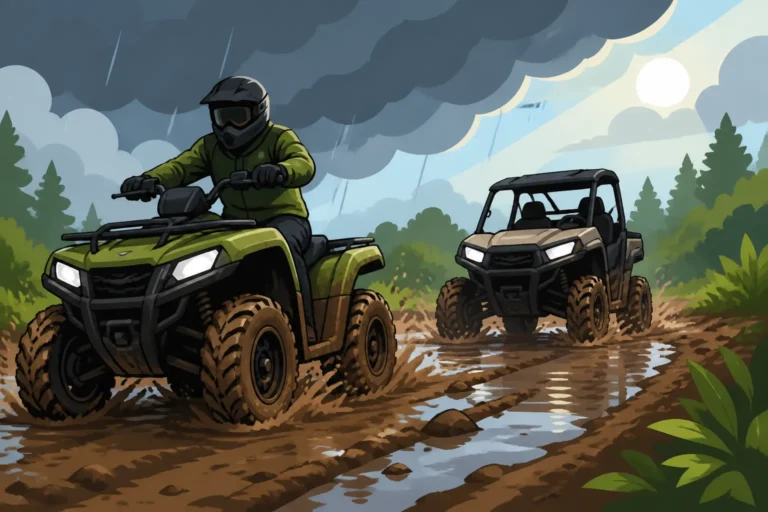
It is also worth having a backup plan. Mississippi rain can change trail conditions quickly, and a venue may close or restrict access when the ground is too wet. Ask whether there is another legal riding option nearby, or whether your reservation can be changed. A flexible plan beats driving hours only to discover that the trail you counted on is unavailable.
A simple no-truck planning checklist
If you do not own an ATV
Look for a rental first, then verify that the rental is permitted at the destination you have chosen. Ask whether transport is included, what identification or safety equipment you need, and whether a reservation is required. Do not assume you can rent a machine at the trailhead or take a rental on any route you see on a map.
For a first visit, a private park with clear check-in instructions may be easier to manage than a remote trailhead. Still, confirm the park’s rules and operating schedule directly. If the rental does not include transport to the riding area, factor in the distance and the possibility that you will need a tow vehicle after all.
If you own an ATV but lack a truck
First, check whether your car or SUV is rated to tow the combined load. If it is, arrange a correctly sized trailer and make sure you can secure the machine safely. If it is not, ask a friend with a suitable setup, or look into a transport service that specifically handles off-road machines. A passenger car’s ability to move an ATV on a trailer should never be assumed from engine size alone.
Once you have transport, verify unloading and parking at the destination. Save the route and contact details in advance; cell coverage may be limited in forested areas. onX Offroad may help you prepare for navigation, but download or carry the information you need before entering an area where phone service is unreliable. Leave enough time to load carefully and inspect your tie-downs before driving.
If the trip still feels complicated
Choose the simplest version of the outing, not necessarily the closest-looking trail. A clear rental arrangement at a private venue may be a better first experience than a longer drive to a public trail that requires a pass, a trailer, and more independent planning. On the other hand, if you already have a machine and a friend who can haul it, a designated forest trail may be a good fit after you confirm access and conditions.
The key is to avoid treating “nearby” as “reachable by ATV.” In Mississippi, the public-road question matters: your machine needs to arrive at a legal riding area by an appropriate transport method. Make the transport plan, confirm the destination’s rules, then plan the ride. That order saves time, money, and the disappointment of reaching a trailhead without a workable way to ride.
Disclaimer
This article is for general informational purposes only and does not constitute professional advice. Laws, prices and regulations vary by location and change over time. Consult a qualified professional for guidance on your specific situation.