Hauling a Machine to a National Forest
There's nothing quite like the excitement of loading up your ATV or UTV, knowing a weekend of adventure in one of Mississippi's beautiful national forests awaits. But let's be honest, the process of actually getting your machine from your driveway to the trailhead can feel like navigating a legal and logistical minefield. You're trying to figure out if your trailer is legal, if your machine meets forest requirements, and what paperwork you absolutely must have with you. This guide is designed to cut through that confusion, giving you a clear, detailed roadmap for safely and legally hauling your off-road vehicle to a Mississippi national forest.
Understanding Mississippi's National Forests and Their Rules
Mississippi is blessed with stunning natural landscapes, and our national forests offer some incredible opportunities for ATV and UTV enthusiasts. However, these aren't free-for-all zones. Each forest, and even specific trails within them, will have its own set of regulations. Ignorance of these rules isn't an excuse, and trust me, forest rangers are well-versed in what's allowed and what's not.
Which National Forests Allow OHV Riding?
When you dream of hitting the dirt, sand, or mud in a national forest, it's crucial to know where you're actually permitted to ride. In Mississippi, the primary destination for public OHV riding within a national forest system is often found within the De Soto National Forest, home to the popular Bethel OHV Trail Complex. This isn't to say other forests don't have any access, but often, that access is limited to designated forest roads for administrative purposes or specific hunting scenarios, not recreational OHV trail riding. It's a common misconception that all national forest land is open to all vehicles, and getting this wrong can lead to fines or worse.
The De Soto National Forest, specifically the Bethel OHV Trails, is a prime example of where you can go. This system provides miles of marked trails designed for off-road vehicles. However, even here, there are specifics. Some trails are width-limited, often to 50 inches, which is a critical detail for side-by-side owners. Always check the specific district's regulations or the official Forest Service website before you load up, because trail conditions and access can change due to weather, maintenance, or seasonal closures. Understanding these nuances from the outset prevents wasted trips and potential legal issues. [Bethel OHV Trails in Mississippi] provides more details on this popular destination.
It's also worth noting that some national forests, like the Holly Springs National Forest in the northern part of the state, may not have designated OHV trail systems at all. They might have extensive horse trails or hiking paths, but these are generally off-limits to motorized vehicles. Never assume; always verify. A quick call to the local ranger district office or checking their online resources can save you a lot of headache and ensure you're heading to a place where your machine is genuinely welcome.
Permitting and Pass Requirements for Forest Use
Think of a national forest pass as your entry ticket to the fun. While you might not need a state-issued "registration sticker" for your ATV in Mississippi, you absolutely will need to budget for and obtain the necessary passes for national forest trail access. These passes help maintain the trails, manage resources, and ensure a quality riding experience for everyone. Trying to sneak onto a trail without one is just asking for trouble, and rangers are adept at checking for them.
The most common requirement for riding OHV trails within Mississippi's National Forests is a National Forest OHV Pass. This is typically an annual pass that covers designated OHV recreation areas across the entire state's national forest system, not just one specific district. The cost might seem like an extra expense, but it's a small price to pay for access to well-maintained trails and the peace of mind that you're riding legally. You can usually purchase these at the local ranger district offices or sometimes through vendors near popular trailheads. [Mississippi Forest Pass Cost] offers a breakdown of what to expect for this essential expense.
Beyond the annual pass, some areas might have daily use fees, particularly at private or specialized parks, but for national forests, the annual pass is usually sufficient. Always keep your pass easily accessible, perhaps laminated and stored with your other important documents. Forest rangers conduct spot checks, and being able to quickly produce your pass will make your interaction smooth and pleasant. Remember, these funds directly contribute to the very trails you're enjoying, so it's an investment in your future riding adventures. [Mississippi National Forest OHV Passes] explains more about the different pass options.
Machine Requirements for Forest Trails
Just because your machine runs great doesn't mean it's automatically legal on national forest trails. There are specific standards designed to protect the environment, reduce noise pollution, and ensure rider safety. Overlooking these requirements can lead to being turned away at the trailhead or even fined. It's not about making things difficult; it's about preserving these natural spaces for everyone.
A crucial requirement for almost all public land riding, including national forests, is a spark arrestor. This is a device fitted to your exhaust system that prevents hot carbon particles from escaping and potentially igniting dry vegetation, which is a serious fire hazard, especially in the South's warm, dry seasons. Most factory ATVs and UTVs come equipped with US Forest Service-approved spark arrestors, but if you've modified your exhaust system, you need to verify it still meets these standards. A ranger can and will check for this, and if you don't have one, your ride might be over before it begins. [Mississippi Spark Arrestor Requirements] details what to look for.
Another common regulation involves machine width and sometimes weight. For many trails, especially those originally designed for ATVs, there's a strict 50-inch width limit. This is especially important for side-by-side owners, as many UTVs exceed this width. Trying to force a wider machine onto a narrow trail not only risks damage to your vehicle but also causes damage to the trail itself and surrounding vegetation. Always check the specific trail's width restrictions before hauling your machine. Some areas might have specific routes for wider vehicles, but it's not a given. [50 Inches Wide and 1,000 Pounds Dry] gives context to common machine limitations. Additionally, noise limits are often enforced. Aftermarket exhausts that make your machine excessively loud can draw attention and result in fines, as quiet enjoyment of the forest is a priority for all users. [Mississippi Sound Limits on Public Land] explains these regulations further.
Safe and Legal Hauling Practices in Mississippi
Getting your machine to the national forest is half the battle, and doing it safely and legally is paramount. The last thing you want is to have your adventure derailed by a roadside stop for an insecure load or an improperly equipped trailer. This section focuses on ensuring your precious cargo arrives intact and without incident.
Choosing the Right Trailer and Tow Vehicle
Selecting the correct trailer and tow vehicle for your ATV or UTV isn't just about convenience; it's a critical safety issue. An undersized trailer or an overloaded tow vehicle is a recipe for disaster on the highway, potentially leading to instability, loss of control, and even serious accidents. Many riders underestimate the combined weight of their machine, fuel, gear, and the trailer itself.
First, consider the gross vehicle weight rating (GVWR) of your tow vehicle and the gross axle weight rating (GAWR) of your trailer. Your ATV or UTV's dry weight is just one piece of the puzzle. Add the weight of fuel, tools, spare tires, coolers, and any other gear you're bringing. Then, factor in the weight of the trailer itself. All these combined weights must be within the limits of both your tow vehicle's towing capacity and your trailer's weight capacity. Overloading either one can strain your vehicle's engine and transmission, overheat brakes, and make steering incredibly difficult. A common mistake is to buy a trailer that "just barely" fits the machine without considering the total load.
Next, ensure your hitch and ball match the trailer's coupler and capacity. A 2-inch ball on a 2-inch coupler might seem fine, but if the ball or hitch assembly is rated for significantly less than your loaded trailer, it's a weak link. Always use a hitch receiver that is properly installed and rated for your expected load. For larger UTVs, an open-deck utility trailer is often preferred over a small ATV-specific trailer, as it provides more space and stability. If you're hauling multiple machines, a larger multi-ATV trailer or even an enclosed cargo trailer might be necessary. Think about tongue weight as well—the downward force the trailer exerts on the hitch. Too little can cause sway; too much can overload your tow vehicle's rear axle. Aim for about 10-15% of the total loaded trailer weight on the tongue.
Securing Your Machine for Transport
This might seem obvious, but improperly securing your ATV or UTV is one of the most common mistakes and a leading cause of roadside incidents. Your machine needs to be rock-solid on the trailer, unable to shift or bounce, even over bumpy Mississippi backroads or sudden stops. Relying on a single strap or just the parking brake is not enough.
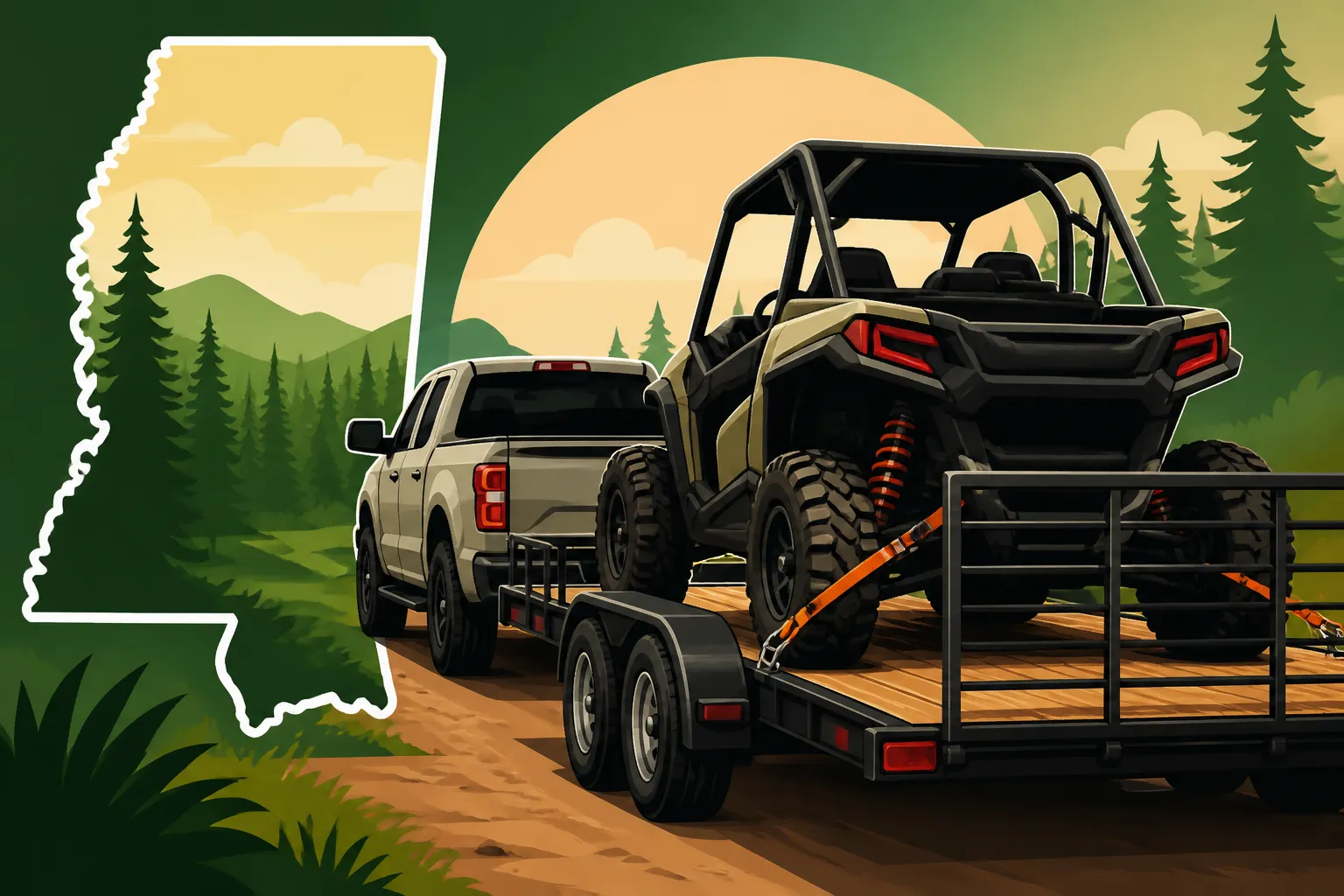
Always use a minimum of four heavy-duty ratchet straps for securing your machine—one at each corner. These straps should be rated for significantly more than the weight of your ATV or UTV. Hook them to solid points on your machine's frame or suspension components, avoiding plastic bodywork or control cables. Angle the straps outwards to create tension that pulls the machine down and slightly forward or backward, preventing any lateral movement. Before cinching them down, apply the parking brake and put the transmission in park (for UTVs) or in gear (for ATVs). Compress the suspension slightly as you tighten the straps; this allows the machine to "settle" and reduces the likelihood of straps loosening during transit.
Beyond the main tie-downs, consider adding extra security. A cable lock run through a wheel or frame component can deter opportunistic theft at rest stops. If you're using an open trailer, a fitted cover can protect your machine from road grime, debris, and weather, though ensure it's tightly secured so it doesn't flap excessively or come loose. After about 15-20 minutes of driving, pull over safely and re-check all your straps. They often loosen slightly as the load settles, and re-tightening them at this point can prevent major issues down the road. This small step can make a huge difference in ensuring your machine arrives safely at the national forest trailhead.
Mississippi Trailer Laws
Hauling a trailer in Mississippi means you need to be aware of the state's specific laws regarding trailer operation. These aren't just suggestions; they're legal requirements that can lead to fines, citations, or even more serious consequences if disregarded. Knowing these rules ensures a smooth journey to your favorite national forest.
First and foremost, your trailer must have functional lights: brake lights, turn signals, and tail lights, all properly wired and synchronized with your tow vehicle. This is critical for visibility, especially during dawn, dusk, or inclement weather, and it's one of the first things law enforcement will check. If your trailer is wide enough to obscure your tow vehicle's rear lights, it's even more important. Many larger trailers also require separate electric or surge brakes, particularly if the trailer's loaded weight exceeds a certain threshold (often around 3,000 pounds, but check specific Mississippi statutes). These brakes are essential for safe stopping, especially when hauling a heavy ATV or UTV.
While Mississippi doesn't require separate registration or a license plate for most utility trailers under a certain weight or size (often under 500 pounds empty weight), you are expected to have proper proof of ownership if questioned. For homemade trailers or older ones, a bill of sale or other ownership documentation is key. If you are ever unsure about your trailer's legal standing or need specific documentation, resources like LawDepot can provide customizable bill of sale templates or other legal forms to ensure you have your paperwork in order, even for what seems like a simple utility trailer. This is particularly important if you've bought a used trailer from a private party and want to ensure you have a clear record of the transaction. Always carry your tow vehicle's registration and proof of insurance, as well, as these are universally required.
Preparing for Your National Forest Adventure
The journey doesn't end when you arrive at the trailhead. A successful national forest riding trip requires careful preparation, from the gear you pack to the documents you carry. Being prepared for anything will enhance your experience and keep you safe on the trails.
Essential Gear for Forest Riding
Beyond the machine itself, what you bring with you into the national forest can make or break your day. These aren't just "nice-to-haves" but often necessities, especially when you're miles from civilization on a remote trail. Think about safety, recovery, and communication.
Safety gear starts with the basics: helmets, goggles, gloves, long pants, and sturdy boots are non-negotiable for riding. Even if Mississippi's helmet law only applies to riders under 16, a helmet protects everyone. Beyond personal protection, a well-stocked first-aid kit is essential. Minor scrapes and cuts are common, but being able to treat a sprain or stop bleeding from a more serious injury until help arrives can be life-saving. Carry plenty of water and some high-energy snacks, as dehydration and fatigue can creep up quickly, especially on hot Mississippi days.
For machine recovery and maintenance, a basic tool kit with wrenches, screwdrivers, tire repair kit, and a small air pump can fix many trailside issues. A winch is invaluable for getting unstuck from deep mud or pulling a downed tree off the trail, so ensure yours is in good working order and you know how to use it safely. A tow strap is also a great backup. Navigation is crucial: cell service can be spotty or non-existent in remote parts of the national forest, so don't rely solely on your phone. A physical map of the trail system, a GPS device, or a downloaded offline map are vital. Finally, a small shovel, a flashlight (even for daytime rides, for emergencies), and bug spray (especially during Mississippi's warmer months) will make your ride more comfortable and safe.
What to Do Upon Arrival at the Trailhead
You've successfully hauled your machine, navigated the roads, and finally arrived at the national forest trailhead. Don't just immediately unload and hit the throttle. There are a few crucial steps to take to ensure a smooth and enjoyable start to your ride. Rushing this part can lead to overlooking critical details.
First, identify and utilize designated parking areas for trailers. These spots are designed to accommodate larger vehicles and prevent congestion or blockage of trail entrances. Be mindful of others and park efficiently. Once parked, take a moment to look for any posted signs or bulletin boards. These often contain vital, up-to-the-minute information about trail closures, specific rules for the day, fire warnings, or changes in permit requirements. [Checking Trail Conditions Before You Load the Trailer] is something you should have done before leaving home, but a quick check at the trailhead can confirm any last-minute updates.
Before unloading your ATV or UTV, conduct a quick visual inspection of your machine. Check tire pressure, ensure all fluid levels are good, and look for any loose components that might have vibrated free during transit. This is also the time to ensure your national forest pass is displayed if required, and that you have all your personal safety gear on. Many trailheads also have staging areas where you can safely unload, warm up your machine, and gather your group without blocking others. Take a moment to stretch, hydrate, and brief your riding partners on the day's plan and any known trail hazards.
Important Documentation to Carry
Even though you're hitting the trails for fun, riding on public lands means you need to be prepared to prove who you are, who owns your machine, and that you're authorized to be there. Getting stopped by a ranger or law enforcement without the right paperwork can turn a great day sour in a hurry.
You should always carry personal identification, like your driver's license. If you have any young riders with you, and they're under the age where a license is required, they might need to carry proof of completing an approved ATV safety course. Mississippi law often requires riders under 16 on public lands to have such a certificate. [Mississippi Safety Certificates as an Alternative] explains these requirements in detail. This isn't just about avoiding a ticket; it's about ensuring young riders have the knowledge to operate their machines safely.
Regarding your machine, while Mississippi does not register ATVs, you should still carry proof of ownership. This could be your bill of sale, a manufacturer's certificate of origin (MCO) for new machines, or a voluntary title if you've obtained one. If you're riding a machine that isn't legally yours (e.g., you borrowed it from a friend or family member), consider carrying a notarized letter of permission from the owner. This helps avoid any questions about theft and proves you have the owner's consent. Services like LawDepot can help you generate official-looking and legally sound documents such as a bill of sale or a temporary use agreement if you're buying a used machine or borrowing one. [Mississippi Bills of Sale for a Used Machine] is a good resource for understanding what a valid bill of sale should contain. Even though [Mississippi Has No Insurance Mandate] for ATVs, carrying proof of any comprehensive or liability insurance you might have for your machine is always a good idea in case of an accident.
Common Pitfalls and How to Avoid Them
Even the most seasoned riders can make mistakes. Avoiding common pitfalls comes down to vigilance, respect for the rules, and thorough preparation. Don't let a preventable oversight ruin your national forest adventure.
Overlooking Weather and Trail Conditions
Riding in Mississippi means dealing with weather that can change on a dime and trail conditions that swing wildly between dry and dusty to deep, sticky mud. Heading out without checking these vital factors is a recipe for a miserable (and potentially dangerous) day.
Before you even load your machine onto the trailer, make it a habit to check the weather forecast for the specific national forest area you're heading to. A sunny morning can quickly turn into an afternoon thunderstorm, making trails slick and treacherous. Heavy rains can transform easy creek crossings into raging torrents and fill low-lying areas with deep, machine-swallowing mud. Riding in these conditions not only poses a safety risk but can also lead to trail damage, which can result in temporary closures. Always consider how recent precipitation might have affected the trails.
Beyond the general weather forecast, actively seek out trail condition reports. Many national forest districts have dedicated phone lines or website sections where they post current conditions, closures, or advisories. Private parks like [Red Creek Off-Road in Mississippi] will often post updates on their social media pages. Pay attention to any warnings about closures due to flooding, fallen trees, or maintenance. Ignoring these warnings can lead to citations if you ride on a closed trail, and it also puts search and rescue personnel at risk if you get stuck or injured. Sometimes, it's simply better to reschedule your trip if conditions are too hazardous; the trails will still be there for another day.
Ignoring Local Ordinances or Forest-Specific Rules
While the national forest sets its own rules, your journey to and from the trails, and sometimes even within areas adjacent to the forest, might be governed by additional local ordinances. It's a patchwork of regulations that can be confusing, but ultimately, it's your responsibility to know them.
For instance, while you're primarily concerned with national forest regulations, you might pass through small towns or counties on your way to the trailhead that have their own rules regarding ATVs and UTVs on public roads. Many Mississippi towns have strict bans on ATVs and UTVs on city streets, even for short distances, with some exceptions for golf carts or low-speed vehicles. [Mississippi Bans ATVs on Public Roads] is a statewide reality, so don't assume you can hop on a road for a quick connection between two trail sections or to grab gas. Getting caught doing so can result in a fine and spoil your trip before you even get to the dirt.
Furthermore, national forests might have specific rules for different sections or during certain seasons. During hunting season, for example, there might be restrictions on OHV use in certain areas or specific times to minimize disturbance to wildlife and hunters. [Mississippi Hunting Season Trail Advice] is crucial reading if you plan to ride during these times. Always look for signage at the entrance to the forest or at specific trailheads, as these can provide crucial last-minute information. If you're ever in doubt about a specific rule or ordinance, err on the side of caution or contact the local forest ranger district or county sheriff's office for clarification. Resources like LawDepot are helpful for obtaining official documents, but for current rules and ordinances, always go directly to the governing authority.
Inadequate Preparation for Breakdowns or Emergencies
The thrill of off-road riding often comes with the inherent risk of breakdowns, getting lost, or encountering unexpected emergencies. Being unprepared for these scenarios can turn a minor inconvenience into a serious, even life-threatening, situation, especially in remote national forest settings where help can be hours away.
One of the biggest mistakes riders make is assuming their machine is invincible or that problems only happen to "the other guy." Even well-maintained ATVs and UTVs can experience flat tires, fouled spark plugs, dead batteries, or bent tie-rods. Carrying basic repair tools, spare parts like spark plugs and fuses, and a tire repair kit with a portable air pump is fundamental. Knowing how to perform basic trailside repairs is equally important. If you don't, consider taking a basic maintenance course or riding with someone who does. A powerful winch and recovery straps are also essential for getting unstuck from mud or navigating obstacles.
Beyond machine breakdowns, think about personal emergencies. Getting lost is a real possibility, especially on unfamiliar trails or if trail markers are sparse. A reliable GPS device or a paper map and compass, along with the knowledge of how to use them, can guide you back to safety. A satellite communication device (like a personal locator beacon or satellite messenger) is an invaluable investment for areas with no cell service, allowing you to call for help even from the most remote locations. Always let someone know your riding plan, including your intended route and estimated return time. This "float plan" ensures that if you don't check in, someone knows where to start looking. Remember, help isn't always a quick phone call away in a national forest, so self-reliance and thorough preparation are your best defense.
Disclaimer
This article is for general informational purposes only and does not constitute professional advice. Laws, prices and regulations vary by location and change over time. Consult a qualified professional for guidance on your specific situation.