Reporting a State Park Incident Within 24 Hours
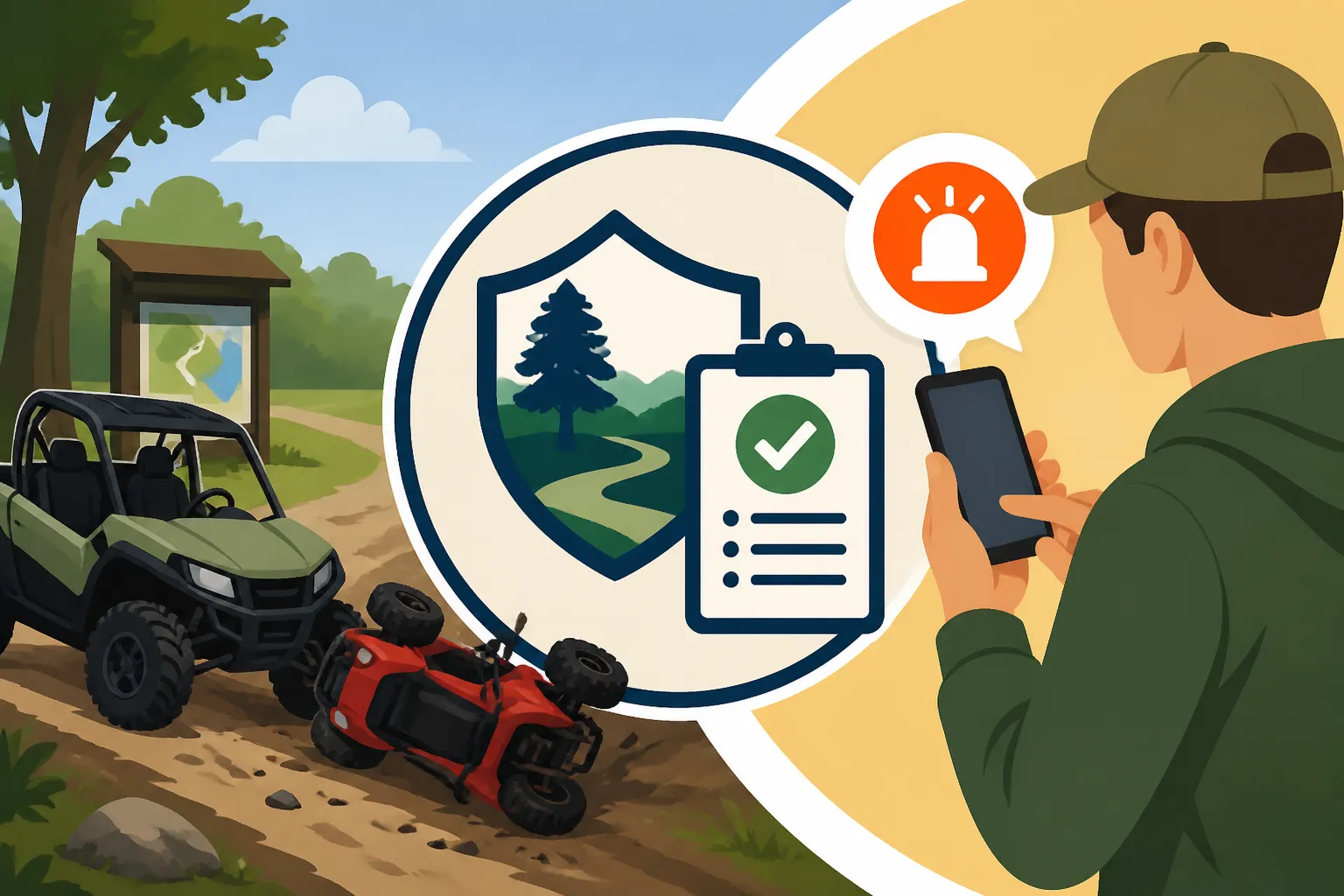
An ATV or UTV crash at a Mississippi state park can leave you focused on injuries, machine damage, and getting home. Reporting still matters: parks may require an incident to be reported within 24 hours, and waiting can make it harder to document what happened. Here’s how to respond, what to record, and how to follow up without treating a park report as a substitute for emergency care or an insurance claim.
What the 24-hour reporting requirement means
Mississippi state parks require riders to report an incident within 24 hours. Treat that window as a deadline, not as a reason to wait. If someone is hurt, a machine is damaged, or park property is involved, notify park staff as soon as it is safe to do so. Ask which reporting process applies at that park and whether staff need to see the location or machine.
The requirement is separate from the steps you may need to take with emergency responders, your insurer, or other people involved. Filing a park incident report does not necessarily satisfy those other obligations. Likewise, contacting an insurer does not mean park staff have been notified.
The most important practical point is to report promptly and keep a record of the contact. If the incident occurs after the office has closed, use the park’s posted instructions or contact emergency services if there is an urgent safety issue. Follow up with park staff as soon as they are available, and confirm that your report was received within the park’s time limit.
What counts as an incident
Use a cautious approach. Report events involving an injury, collision, rollover, damaged park property, or a near miss that creates a serious safety concern. A machine that strikes a gate, sign, barrier, tree, or another vehicle may involve park property or another person, even if the damage looks minor. If you are unsure whether an event needs to be reported, ask park staff rather than deciding on your own that it does not count.
Rules and procedures can differ by park, activity, and the documents you signed before riding. Review the park’s instructions and any waiver or activity paperwork. The information in Mississippi State Park Waiver Steps can help you understand why it is useful to know what you agreed to before an incident happens. If you want to confirm that riding is allowed at your destination and what restrictions apply, check Which Mississippi State Parks Allow Machines and Mississippi State Park ATV Rules.
A park report is an account of an event, not a decision about who is legally responsible. Stick to what you observed and avoid guessing about causes or assigning blame. If another rider, visitor, or employee was involved, get their information if it is safe and appropriate to do so.
Don’t confuse reporting with permission to ride
An incident report does not change the park’s riding rules or make an otherwise prohibited activity permissible. Check that the park allows the type of machine and riding you plan to do, and follow its access, equipment, passenger, and safety requirements. Mississippi State Park Rules for Riders Under 16 may be useful when a young person is part of the group.
If your machine has been involved in an incident, don’t assume it can be driven or ridden back to the parking area. A damaged tire, steering component, brake, or suspension part can create another crash. Ask park staff for a safe way to move it, and use recovery or transport help if needed.
What to do at the scene
Put safety and medical needs first. If anyone is seriously injured, in immediate danger, or needs urgent medical attention, contact emergency services. Do not delay that call to find a park form or complete an insurance notification. Move people away from traffic, water, fire, or unstable equipment only when it is safe to do so.
Once immediate hazards are addressed, contact park staff promptly. Tell them where the incident happened, what type of machine was involved, whether anyone is hurt, and whether park property or another person’s property may be damaged. Ask what they want you to do next, including whether you should remain at the scene, move the machine, or complete a written report.
A useful sequence is:
- Check for injuries and immediate hazards. Call for emergency help when needed. Do not put yourself or others at further risk to inspect a wrecked machine.
- Notify park staff. Use the park’s posted contact or reporting instructions. If staff are not immediately available, note whom you contacted, when you called, and what instructions you received.
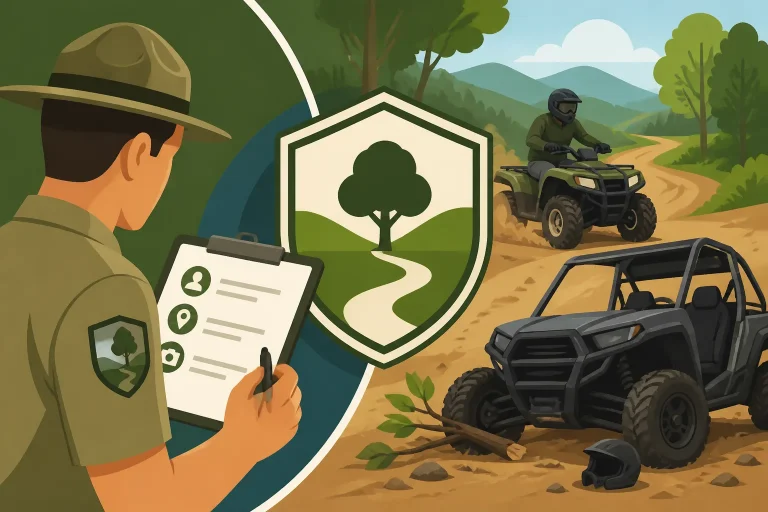
- Preserve the scene when safe. Avoid moving a machine or debris before documenting the location, unless it creates a hazard or staff direct you to move it.
- Record the basic facts. Write down the date and approximate time, trail or area, direction of travel, weather, and a straightforward description of what happened.
- Exchange information where appropriate. Get names and contact details for involved riders and witnesses. Do not pressure anyone to accept blame or sign an account they do not understand.
- Ask how to submit the report. Confirm the deadline, the correct park contact, and whether the park wants photographs, a written statement, or additional paperwork.
- Keep copies and follow up. Save your notes, photographs, report confirmation, and any instructions from park staff.
Use clear, factual language. For example, describe where the machine was, what it contacted, and what happened next. If you did not see the moment of impact, say so. Separate what you personally observed from what another person told you.
Information to collect
You do not need to investigate the incident yourself. Collect practical details while they are fresh, but do not let documentation delay first aid or the report. A short set of accurate notes is more useful than a long account filled with uncertain details.
| Information | What to note |
|---|---|
| Time and location | Date, approximate time, trail or park area, and nearby landmarks |
| People involved | Names and contact details, if available and appropriate |
| Machine details | ATV or UTV type, identifying details, and visible damage |
| Event description | What you saw and the order in which events occurred |
| Injuries or hazards | Whether anyone was hurt and any continuing safety concern |
| Property damage | Any damage to park property or another person’s property |
| Witnesses | Names and contact details, if they agree to provide them |
| Report contact | Staff member or office contacted, time, and instructions received |
Photographs can help preserve details that may be difficult to describe later. If it is safe, take pictures of the scene from more than one angle, the machine’s damage, relevant signs, and visible marks or obstacles. Avoid photographing injured people unless it is necessary for a legitimate reporting purpose. Do not post images or speculate about fault on social media while details are still being established.
Keep a copy of the park’s written instructions and the report you submit. If park staff give directions by phone or in person, write down the time, the person’s name if provided, and the instructions. Ask how to obtain confirmation that the report was received. State Parks Keep Your Signed Waiver on File explains why it is sensible to retain your own paperwork as well.
After you notify the park
A park report may be only one part of the follow-up. If a person was injured or property was damaged, contact your insurer and ask what information it needs. The policy may require prompt notice, photographs, estimates, or other documentation. Do not assume the park will send your report to your insurance company. For more on the separate insurance side, see Insurance After a Southern Collision.
If the incident involved another rider or visitor, keep communications calm and factual. Exchange contact information and cooperate with reasonable requests from park staff. Avoid agreeing to pay for damage or making a formal statement about fault before you understand what happened and what your insurer requires. This does not mean avoiding responsibility; it means keeping the initial record accurate while the facts are reviewed.
If an injury is involved, keep records of medical care and any follow-up instructions. If the machine needs repair, retain photographs, service paperwork, and relevant estimates. These documents may help explain the sequence of events to park staff or an insurer. Do not repair or discard damaged parts before asking whether the park or insurer needs to inspect them.
The report may not resolve every question. If staff request additional information, provide it through the channel they specify and keep a copy. If you believe a detail in the report is wrong, ask how to submit a correction or add a clarification. Be specific: identify the statement in question and explain what you believe is accurate, based on what you observed.
If the incident is reported after the event
If you learn about the reporting requirement after leaving the scene, contact the park promptly rather than assuming it is too late. Explain when the event occurred, why you did not report it earlier, and what you have done since. Ask whether the park will accept a late report and what further steps are available. A late report does not guarantee that the park will treat the deadline as met, but waiting longer can make the record less complete.
If you were unable to report because of an injury, emergency, or another serious obstacle, explain that clearly and provide any relevant information the park asks for. Keep a note of when you first became able to contact staff and when you did so.
Be ready before the ride
You can make a stressful situation easier by knowing the park’s process before unloading. Read posted rules, keep any waiver or access paperwork, and save the park’s contact instructions where they are easy to find. Carry a charged phone, but do not rely on mobile service being available everywhere. Tell your group who should call for help and where you will meet if riders become separated.
Before setting out, make sure you know how to identify your machine and where you are riding. Keep proof of ownership and other relevant documents accessible, but secure them so they will not be lost or damaged on the trail. Mississippi Proof of Ownership on the Trail covers the paperwork question, while Who to Call After an ATV Crash Off-Road is useful for thinking through emergency contacts and the first response.
The deadline is the key takeaway: report an incident to park staff as soon as you safely can, and no later than the park’s 24-hour limit. Handle injuries and immediate dangers first, give a factual account, and keep proof of your report and follow-up. Those steps help create a clear record without confusing a park report with emergency response, insurance notice, or a decision about fault.
Disclaimer
This article is for general informational purposes only and does not constitute professional advice. Laws, prices and regulations vary by location and change over time. Consult a qualified professional for guidance on your specific situation.